
Eating Out and Losing Weight: A Practical Restaurant Plan
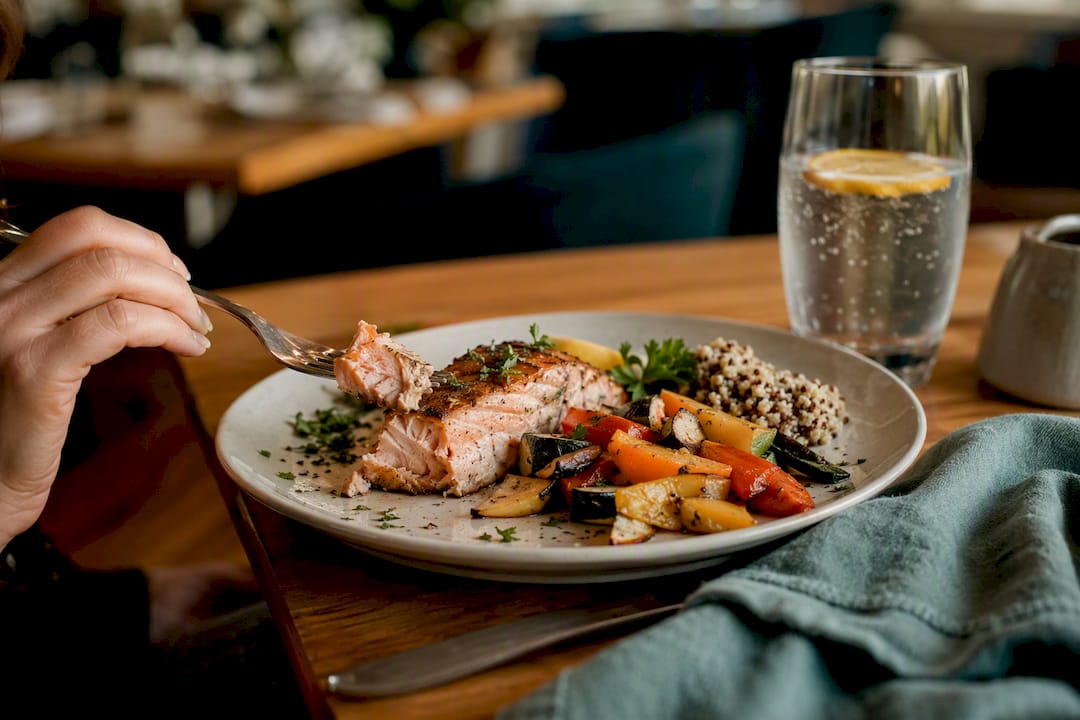
Yes, you can lose weight while eating out, and it doesn’t require calorie math at the table. Three structural rules make the difference: anchor your order around 30 to 40 grams of protein, keep sauces and dressings on the side, and skip liquid calories. Restaurant meals often run over 1,200 calories per plate, largely because portions run 2 to 4 times larger than standard reference sizes. Coach Jill Byrne builds her coaching around exactly this kind of structure, because rules you can repeat beat rules you have to calculate.
Order protein first, then build the rest of the plate around it.
Ask for sauces, dressings, and dips on the side, every time.
Choose water, sparkling water, or unsweetened tea over soda, juice, or cocktails.
Quick fact: A typical restaurant entrée can pack in more calories than many people eat in an entire day’s worth of home meals, driven almost entirely by portion size rather than ingredients.
Key Takeaways
Losing weight while eating out depends on structural rules, not calorie counting: protein first, sauces on the side, and controlled portions and drinks every time.
Point | Details |
Anchor on protein | Target 30 to 40 grams of protein per restaurant meal to control hunger for hours afterward. |
Control sauces and drinks | Request dressings and sauces on the side, and choose water or unsweetened tea over soda or cocktails. |
Manage portions upfront | Box half the meal before eating, split an entrée, or order a starter as your main course. |
Plan before you arrive | Check the menu, decide your order in advance, and avoid arriving overly hungry. |
Get a personalized plan | Coachjillbyrne builds restaurant-specific ordering rules and accountability tailored to your actual dining habits. |
This article is general information, not a substitute for advice from a qualified doctor. Consult a qualified healthcare professional about your own circumstances before acting on anything here.
Table of Contents
Ten Practical Ordering Tips for Eating Out Weight Loss
Small ordering decisions add up faster than most people expect. These ten moves work across nearly any restaurant, and none of them require you to explain yourself to your dining companions.
Check the menu online before you go and pick your protein choice in advance.
Ask how the dish is prepared and request grilled, broiled, or poached over fried or sautéed in butter.
Get all sauces, dressings, and gravies served on the side.
Ask the kitchen to hold or reduce cheese, butter, and creamy toppings when a lighter version is possible.
Box half the entrée before you start eating, not after you’re already full.
Split an entrée with a dining partner or order an appetizer-sized portion as your main.
Default to water, sparkling water with lime, or unsweetened iced tea instead of sugary drinks.
Skip the bread basket or ask that it not be brought to the table at all.
Pause at the halfway point, take a breath, and check whether you’re actually still hungry.
Eat slowly. Give the meal at least 20 minutes so your body has time to register fullness.
Checking the menu ahead of time and asking about preparation methods are two of the highest-leverage habits you can build, according to guidance from the American Heart Association.
Pro Tip: If you’re worried about looking difficult in front of friends, keep your language simple: “Dressing on the side, please” or “No bread, thank you” rarely draws a second glance from servers or your table.
How Do You Build a Balanced Restaurant Plate?
The plate that keeps you full without overeating almost always follows the same pattern: roughly 30 to 40 grams of protein, a generous portion of vegetables, and a modest amount of carbohydrate. That protein target isn’t arbitrary. Harvard Health identifies 30 to 40 grams per meal as the range most associated with lasting satiety, which matters when the alternative is a bread basket and a dessert menu working against you.
Translate that into a simple visual: half the plate vegetables, a quarter lean protein, a quarter carbohydrate. It works whether you’re looking at a printed menu or a chalkboard special.
A few sample orders that hit this pattern without any special requests:
Grilled salmon with roasted vegetables and a small sweet potato.
Tofu or chicken stir-fry loaded with extra vegetables over a modest portion of brown rice.
Grilled chicken bowl with mixed greens, black beans, and salsa instead of dressing.
Protein-forward ordering also travels well. AARP’s guidance on eating out points to roughly 30 grams of protein per meal as a workable target that holds up whether you’re at a diner or a sit-down restaurant, which means you don’t need a different rulebook for every cuisine.
What’s the Best Way to Handle Oversized Portions?
Restaurant portions are consistently larger than what your body actually needs in one sitting, and research on portion size confirms bigger servings lead people to eat more, almost automatically. Fighting that trend takes a plan made before the food arrives, not willpower once it’s in front of you.
Ask the server to box half the meal in the kitchen, before it reaches your table.
Split a full entrée with someone else at the table, or order two starters instead of one main.
Use your hand as a rough gauge: a palm-sized portion is close to 3 ounces of protein, and a fist-sized portion is about 1 cup of vegetables.
If boxing at the table feels awkward, simply ask upfront: “Could you box half of this before you bring it out?”
Our guide to portion control breaks down more of these visual cues if you want a deeper reference to keep on your phone.
Where Do Hidden Calories Come From at Restaurants?
Sauces, dressings, and drinks do more damage to a meal than the entrée itself most of the time. A pasta dish drenched in cream sauce, a salad buried under ranch, or a specialty cocktail can each add several hundred calories before you’ve touched the main ingredients.
Sauces and dressings served on the food, rather than on the side, are the single biggest hidden source.
Restaurant kitchens often cook with more oil and butter than a home kitchen would use for the same dish.
Specialty coffees, sugary cocktails, and soda add liquid calories that provide no fullness in return.
Requesting sauce on the side typically saves 200 to 400 calories without changing what you’re actually eating. Dip your fork into the sauce instead of pouring it over the food, and you get the flavor without the full dose.
What Are the Best Swaps by Cuisine?
Every cuisine has a version of the same trap: refined carbs, heavy sauces, and oversized starches. Knowing the swap in advance means you’re not scanning the menu under pressure while your table waits.
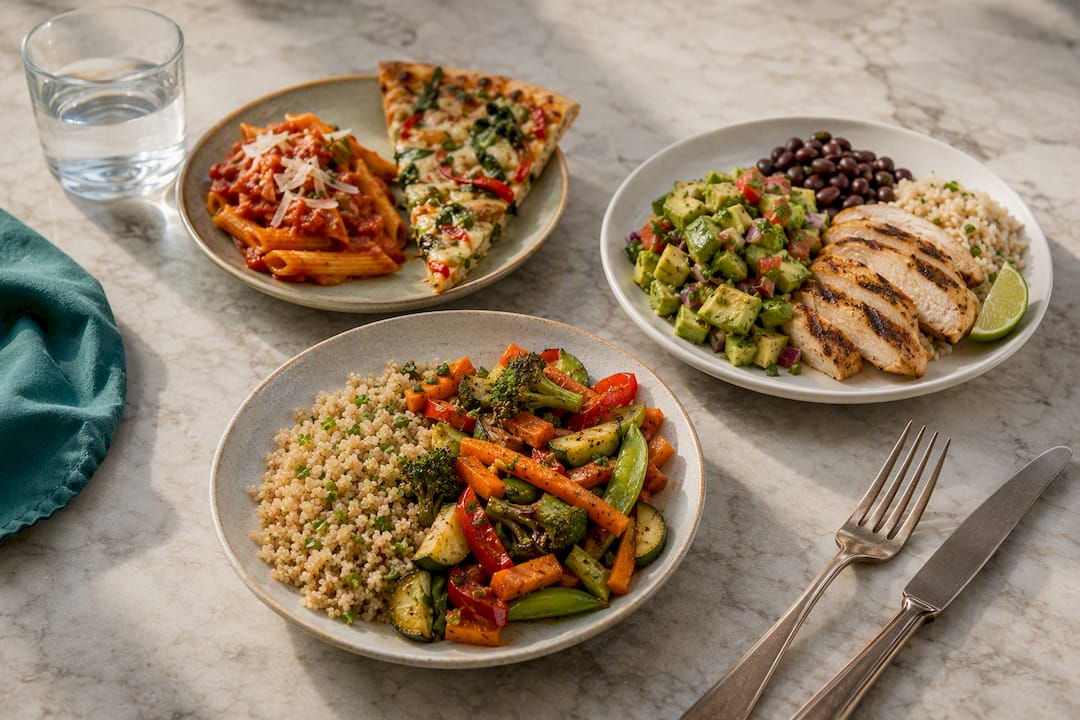
Italian: Choose tomato-based sauces over cream sauces, pick thin-crust pizza loaded with vegetables, and ask for extra vegetables instead of a second starch. Request half the usual cheese portion.
Mexican: Favor grilled chicken, steak, or fish over fried options. Share the chip basket or skip it, swap refried beans for black or pinto beans, and ask for salsa instead of crema or sour cream.
Asian: Steamed or stir-fried dishes beat anything battered or deep-fried. Ask for sauce on the side, and swap white rice for extra vegetables when the kitchen allows it.
Fast food: Look for grilled protein bowls or salads, hold the mayo and cheese, swap fries for a side salad or fruit cup, and stick with water. Preparation clues like grilled, steamed, and broiled are reliable signals across almost any menu, even at unfamiliar or ethnic restaurants where you can’t predict every dish. A quick script works everywhere: “Can I get that grilled instead of fried, with the sauce on the side?”
How Should You Plan a Restaurant Meal Ahead of Time?
The decisions that matter most happen before you sit down. Check the menu ahead and pick two or three acceptable options so you’re not choosing while hungry and staring at a laminated page. If you know you’ll be eating later than usual, have a small protein-rich snack of 150 to 250 calories about an hour before. Skipping meals earlier in the day to “save calories” for dinner tends to backfire into overordering once you arrive.

Pick one indulgence lane for the meal, not two. A glass of wine or dessert, not both. Deciding this before you’re at the table removes the in-the-moment negotiation entirely.
Pro Tip: Keep two go-to phrases ready: “No bread, please” and “Dressing on the side.” Neither requires an explanation, and both become automatic after a few uses.
What Do I Actually Tell Clients About Restaurant Meals?
The biggest mistake I see is treating restaurant meals as a test you either pass or fail. That all-or-nothing mindset is what turns one indulgent dinner into a lost weekend. Habits that repeat matter more than any single meal being perfect.
One client built a standing order at her favorite Italian spot: grilled chicken, double vegetables, sauce on the side, one glass of wine. She used it two or three times a week for months, and it stopped requiring any thought at all. Another simply started asking for a box before the meal arrived, every time, no exceptions. Neither strategy is glamorous. Both work because they’re repeatable, not because they’re strict. Consistency, applied loosely, beats intensity applied occasionally, which is the core of how I coach people through sustainable weight loss in real life, not in theory.
Get Personalized Restaurant Rules That Actually Stick
Reading a list of tips is one thing. Having a coach build ordering rules around your actual favorite restaurants, your schedule, and your specific goals is another. Coachjillbyrne is the alternative to generic diet advice for eating out consistently. Instead of guessing which swap applies to your go-to spots, you get a plan matched to the places you already eat.

Coaching with Jill means personalized meal rules built around the restaurants you actually visit, habit accountability that catches slip-ups before they become patterns, and realistic meal plans that account for social dinners, travel, and GLP-1 medication support if that applies to you. If you want ordering rules built specifically for your life instead of a one-size-fits-all list, book a session with Coach Jill Byrne and get a plan that fits the way you actually eat.
Sources
FAQ
Can you still lose weight if you eat out regularly?
Yes. Weight loss depends on your overall weekly pattern, not any single meal, so eating out two or three times a week is compatible with steady progress if you apply consistent ordering rules.
Is it healthy to lose one pound a week?
Losing about one pound a week is considered a safe, sustainable pace for most adults, and it’s achievable even with regular restaurant meals when portions and protein are managed.
What are some tips for losing weight faster without giving up eating out?
Focus on protein-first ordering, sauces on the side, and skipping liquid calories. These three changes typically produce faster results than cutting out restaurants entirely, because they’re easier to maintain long term.
Is it realistic to lose two pounds a week?
Two pounds a week is possible for some people, particularly early in a weight-loss effort, but it usually requires a larger calorie deficit than one pound a week and isn’t sustainable for everyone. A coach can help determine a realistic weekly target based on your starting point.
How do I estimate calories at a restaurant with no nutrition information listed?
Use the plate method as a stand-in for exact numbers: aim for a palm-sized portion of protein, a fist-sized portion of vegetables, and a smaller carbohydrate portion, then request sauces on the side to control the biggest hidden calorie source.
Recommended
I really appreciate Coach Byrne's focus on structural rules like "protein first" and planning ahead by checking menus online, rather than calorie counting. It's such a practical, low-stress approach to eating out. This kind of proactive planning also makes a huge difference when you're traveling, ensuring a smoother experience from the start. For instance, if you're exploring destinations like Mongolia, having your connectivity sorted out beforehand is invaluable, and I work with https://cellesim.com/ja/esim-mongolia which simplifies that process.