
Fat Loss vs. Muscle Loss: What Actually Differs

Most people step on the scale hoping to see fat disappear. What they often don’t realize is that approximately 25% of lost weight during a typical diet comes from lean muscle mass, not fat. That single fact changes how you should approach every calorie deficit, every workout, and every meal plan.
Fat loss and muscle loss are distinct physiological processes. Fat loss reduces the body’s stored energy reserves, primarily triglycerides held in adipose tissue. Muscle loss, by contrast, depletes skeletal muscle, the tissue responsible for your resting metabolism, physical strength, and long-term weight maintenance. Knowing how fat loss vs. muscle loss differs is not just academic. It determines whether your weight loss actually improves your health or quietly undermines it.
Fat loss: Reduction in stored body fat, primarily from adipose tissue, used for energy when calories are restricted.
Muscle loss: Breakdown of skeletal muscle protein, often triggered by aggressive calorie deficits, inadequate protein, or lack of resistance training.
Why it matters: Muscle is metabolically active tissue. Losing it slows your resting calorie burn and makes sustained fat loss progressively harder.
When muscle loss happens: During any calorie deficit, but especially during rapid or extreme dieting.
Pro Tip: Track body composition, not just scale weight. Two people can weigh the same but have dramatically different amounts of muscle and fat. A DEXA scan or consistent bioelectrical impedance readings give you a far clearer picture of your actual progress.
Table of Contents
How to tell if you’re losing fat or muscle
Distinguishing fat loss from muscle loss requires more than watching the number on a scale. The scale measures total body mass, which includes fat, muscle, water, and bone. None of those are labeled separately.
Body composition testing gives you the clearest data:
DEXA scan (dual-energy X-ray absorptiometry): The gold standard for measuring fat mass versus lean mass. Accurate, but typically requires a clinical or research setting.
Bioelectrical impedance analysis (BIA): Available in consumer-grade scales and handheld devices. Convenient, but hydration and fasting state significantly affect readings. Always measure at the same time of day, under the same hydration conditions, for reliable tracking.
Skinfold calipers: Low cost, but accuracy depends heavily on the technician’s skill.
Beyond testing, your body gives observable signals. Muscle loss often shows up as decreased strength during workouts, a noticeable “jiggle” in areas that previously felt firm, and declining performance in activities you previously handled with ease. Fat loss, by contrast, tends to show up as looser clothing, a softer appearance in the mirror, and reduced measurements at the waist and hips without a corresponding drop in strength.
Sign | Fat Loss | Muscle Loss |
Scale weight | Decreases | Decreases |
Strength in workouts | Maintained or improved | Noticeably declining |
Clothing fit | Looser overall | May loosen but feel “flabbier” |
Muscle firmness | Maintained | Reduced, more “jiggle” |
Energy levels | Stable or improved | Often fatigued, sluggish |
Body composition test | Fat mass down, lean mass stable | Lean mass decreasing |
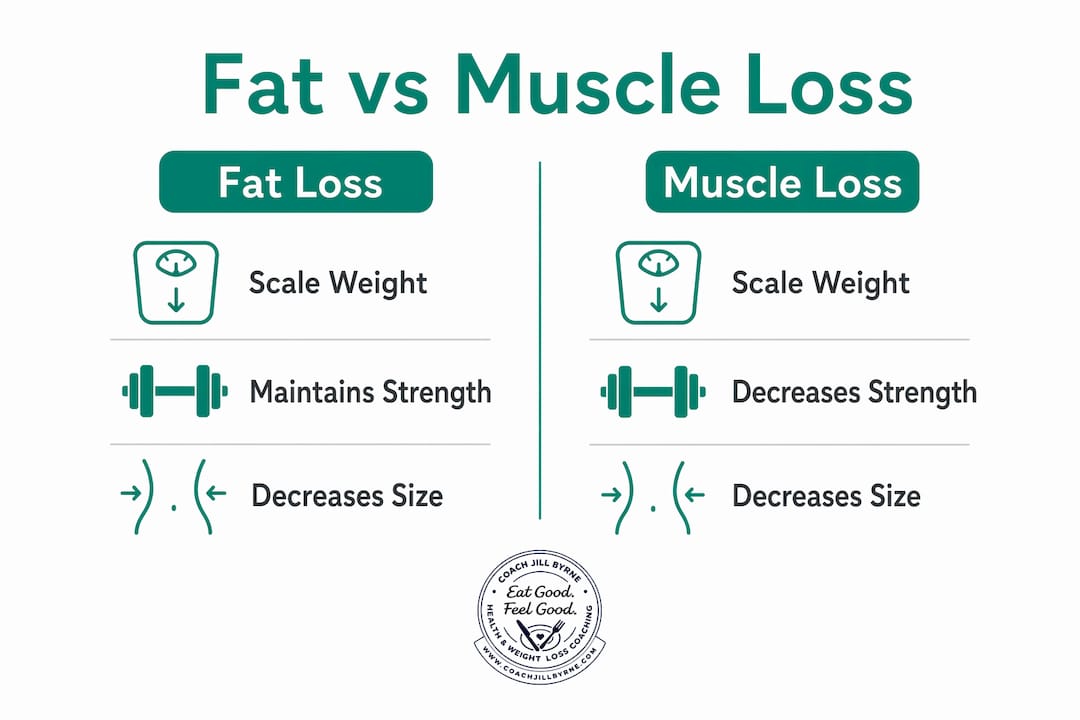
One practical note: muscle tissue is denser than fat, so the same weight of muscle takes up less physical space. Someone gaining muscle while losing fat may see little change on the scale but a clear change in how their clothes fit and how their body looks.
What proportion of weight loss is actually fat?
Clinical research consistently shows that weight loss during a calorie deficit is not pure fat. Approximately 25% of lost weight is fat-free mass, which includes skeletal muscle. The remaining 75% comes from fat stores.

That shift happens fast. Rapid weight loss exceeding roughly 2.2 lbs per week increases the proportion of muscle lost relative to fat. The body, under severe caloric stress, accelerates muscle protein breakdown to meet its energy demands. The result is a smaller number on the scale but a worse body composition.
Several factors influence where your weight loss falls on that spectrum:
Rate of weight loss: Slower loss preserves more muscle.
Protein intake: Adequate dietary protein reduces muscle breakdown during a deficit.
Exercise type: Resistance training signals the body to protect muscle tissue.
Age: Older adults lose muscle more readily during calorie restriction.
Sex: Men generally carry more muscle mass, but women face accelerated muscle loss after menopause.
Diet composition: Very low-carbohydrate diets can initially deplete glycogen and water, making early weight loss appear larger than actual fat loss.
Understanding this composition is why the difference between fat loss vs. weight loss matters so much in practice. Losing weight is easy. Losing fat while keeping muscle requires a deliberate approach.
Why losing muscle during weight loss is a serious problem

Muscle is metabolically active tissue, meaning it burns calories even when you’re sitting still. Every pound of muscle you lose reduces your resting energy expenditure, making it progressively harder to maintain a calorie deficit without eating less and less.
The metabolic consequences compound over time. A lower resting metabolic rate means the calorie intake that once produced a deficit no longer does. This is one of the primary drivers of weight regain after dieting. Muscle loss also carries direct physical consequences beyond metabolism:
Reduced strength: Everyday tasks become harder, and injury risk increases.
Impaired physical function: Particularly problematic for older adults, where muscle loss accelerates age-related functional decline.
Increased metabolic disease risk: Muscle loss raises health risks in people with diabetes, cardiovascular conditions, and other metabolic diseases.
Slower recovery: Less muscle means longer recovery times from illness, surgery, or injury.
Weight cycling risk: When weight is regained after muscle loss, it tends to return as fat rather than muscle, worsening body composition over successive diet cycles.
Preserving muscle is not about aesthetics alone. It’s about protecting your metabolism, your physical capacity, and your long-term health.
Evidence-based strategies to lose fat without losing muscle
The most effective approach combines three elements: a moderate calorie deficit, adequate protein intake, and consistent resistance training. Research confirms that this combination outperforms any single strategy for preserving lean mass during weight loss.
Keep the calorie deficit moderate. A deficit of 300–500 calories per day supports fat loss without triggering the aggressive muscle breakdown that comes with extreme restriction.
Prioritize protein at every meal. Protein provides the amino acids needed to maintain and repair muscle tissue during a deficit. Aim for a distribution across meals rather than concentrating intake in one sitting.
Lift weights regularly. Resistance training paired with sufficient protein is the most direct signal you can send your body to protect muscle while losing fat.
Lose weight gradually. Targeting 1–2 lbs per week keeps the body in a state where fat is the primary fuel source, not muscle protein.
Sleep consistently. Poor sleep elevates cortisol, a hormone that promotes muscle breakdown and fat storage.
Manage stress. Chronic stress has the same cortisol-driven effect on muscle tissue as sleep deprivation.
Stay hydrated. Hydration supports both muscle function and accurate body composition tracking.
Pro Tip: Pair your resistance training sessions with a protein-containing meal or snack within a few hours. This timing supports muscle protein synthesis when your muscles are most receptive to nutrients.
Gradual weight loss is not a compromise. Losing weight at 1–2 lbs per week allows you to maintain and even build muscle when combined with consistent resistance training and adequate protein. The scale moves more slowly, but what you keep is worth far more than what you lose.
How Coachjillbyrne approaches sustainable fat loss and muscle preservation
Coachjillbyrne’s nutrition coaching is built around the same principles the research supports: real food, adequate protein, gradual progress, and consistent accountability. The coaching model avoids extreme restriction precisely because aggressive deficits are where muscle loss accelerates and metabolic adaptation sets in.
Key strategies within the Coachjillbyrne coaching framework include:
Habit-based nutrition: Building consistent eating patterns around whole, minimally processed foods rather than rigid meal plans that collapse under real-life pressure.
Portion awareness: Teaching clients to recognize appropriate portions without obsessive calorie counting, which supports a sustainable deficit.
Protein prioritization: Structuring meals so protein anchors each one, supporting muscle retention throughout the fat loss process.
Accountability check-ins: Regular touchpoints that keep clients on track without the all-or-nothing mentality that derails most diets.
Mindset coaching: Addressing the behavioral patterns that lead to common weight loss diet mistakes like extreme restriction followed by rebound eating.
GLP-1 nutrition support: Clients using GLP-1 medications receive specific guidance on maintaining protein intake and muscle-protective habits during rapid appetite suppression.
The coaching approach recognizes that sustainable fat loss habits are built through small, repeatable changes, not dramatic overhauls. Clients who preserve muscle during their weight loss phase are the ones who maintain their results.
The physiology of fat loss vs. muscle loss
Fat loss and muscle loss operate through entirely different biochemical pathways. Understanding those pathways helps explain why certain dieting behaviors produce muscle loss even when fat loss is the goal.
Fat loss occurs when the body is in a calorie deficit and mobilizes triglycerides stored in adipose tissue. Fatty acids are released into the bloodstream and oxidized for energy. This process is relatively slow and requires sustained caloric restriction over time.
Muscle loss follows a different sequence. When calories drop sharply, the body first depletes glycogen, the carbohydrate stored in muscle and liver. Once glycogen is exhausted, the body turns to fat for fuel, but it also converts muscle protein to glucose through a process called gluconeogenesis. This is the mechanism that makes rapid weight loss so destructive to lean mass. The body essentially cannibalizes muscle to keep blood glucose stable.
The speed of this progression depends on the severity of the deficit and the availability of dietary protein. A deep calorie cut with low protein intake accelerates muscle protein breakdown. A moderate deficit with high protein intake slows it considerably. This is why protein intake is not optional in a fat loss plan. It’s the primary dietary brake on muscle catabolism.
How different diets affect fat vs. muscle loss
Diet type shapes the fat-to-muscle loss ratio in meaningful ways, and not all approaches perform equally.
Standard calorie deficit diets produce the most predictable results when protein is adequate. The 75% fat to 25% lean mass split holds reasonably well at moderate deficits with sufficient protein intake.
Ketogenic diets produce rapid early weight loss, but a significant portion of that initial loss is glycogen-bound water, not fat. Once the body adapts to ketosis, fat oxidation increases. However, if protein intake is insufficient, muscle loss remains a risk. Ketogenic approaches can support fat loss effectively, but they require careful attention to protein targets.
Very low-calorie diets (under 800 calories per day) consistently produce higher rates of muscle loss. The calorie restriction is too severe for the body to spare lean mass, regardless of protein intake. These approaches are sometimes used medically under supervision, but they carry real risks for body composition.
High-protein diets across any calorie level tend to preserve more lean mass than lower-protein equivalents. Protein’s role in muscle retention is consistent across diet types. The delivery vehicle matters less than the protein content.
One pattern worth noting: weight cycling, the repeated loss and regain of weight, tends to worsen body composition over time. Muscle lost during a deficit is harder to regain than fat, so each cycle can leave you with a higher fat percentage than before. This is one of the strongest arguments for choosing a sustainable approach from the start rather than cycling through aggressive diets.
How age and sex affect muscle loss during weight loss
Age and sex are two of the most significant variables in how much muscle you lose during a calorie deficit, and both deserve direct attention.
Age is the clearer factor. Adults begin losing muscle mass naturally starting in their 30s, a process called sarcopenia. By the time someone reaches their 60s or 70s, this baseline loss accelerates. When a calorie deficit is added on top of age-related muscle decline, the combined effect on lean mass can be substantial. Older adults and people with metabolic diseases face the highest risks from muscle loss during weight loss, making protein intake and resistance training even more critical in these groups.
Sex influences muscle loss through hormonal differences. Men generally carry more absolute muscle mass, which provides some buffer during dieting. Women, particularly postmenopausal women, experience a drop in estrogen that accelerates muscle loss and makes it harder to rebuild. Postmenopausal women are among the groups most vulnerable to the adverse effects of muscle loss during weight loss, which is why resistance training and protein adequacy are especially important for this population.
Athletes represent a different challenge. They carry more muscle mass to begin with, but they also have higher protein turnover rates. During a calorie deficit, athletes need higher protein intakes than sedentary individuals to maintain their lean mass.
The practical takeaway: the older you are and the further past menopause you are, the more deliberately you need to protect muscle during any weight loss effort.
How to rebuild muscle after a weight loss phase
Muscle lost during a diet can be rebuilt, but it takes time and a structured approach. The body does not automatically restore lean mass once calories return to maintenance. You have to actively signal muscle growth through training and nutrition.
Resistance training is the primary driver of muscle rebuilding. Progressive overload, gradually increasing the weight or volume of your training over time, is the mechanism that stimulates muscle protein synthesis. Without it, extra calories tend to go toward fat storage rather than muscle repair.
Protein intake remains the nutritional foundation. Rebuilding muscle requires a consistent supply of amino acids, particularly leucine, which directly triggers muscle protein synthesis. Distributing protein across three to four meals per day supports this process more effectively than concentrating it in one or two large servings.
Calorie surplus or maintenance: A modest calorie surplus supports muscle gain, but it is not strictly required for everyone. People returning from a significant deficit can often rebuild some muscle at maintenance calories, particularly if they were previously untrained or had significant muscle loss. The process is slower than in a surplus, but it avoids adding fat back unnecessarily.
Patience is the most underestimated factor. Muscle rebuilds more slowly than fat accumulates. A realistic expectation for natural muscle gain is measured in months, not weeks. Rushing this phase by eating aggressively tends to add fat rather than muscle. A gradual, protein-rich approach to sustainable weight loss and muscle rebuilding produces the most durable results.
Coachjillbyrne: nutrition coaching that protects your muscle while you lose fat
Most weight loss programs focus on the number going down. Coachjillbyrne focuses on what that number is made of.

For anyone who has lost weight only to feel weaker, slower, or heavier again within months, the missing piece is almost always muscle preservation. Coachjillbyrne’s personalized nutrition coaching addresses exactly that, combining real food nutrition, protein-forward meal planning, and habit-based accountability to help you lose fat without sacrificing the lean mass that keeps your metabolism working. The coaching is practical, not prescriptive. No rigid meal plans that collapse under real life. No extreme restriction that accelerates muscle breakdown. Just clear, consistent guidance tailored to where you are and where you want to go.
Whether you’re managing weight loss alongside a GLP-1 medication, recovering from a cycle of restrictive dieting, or simply ready to approach fat loss the right way, Coachjillbyrne offers the structure and support to get there. Start your coaching consultation today and build a plan that protects your muscle from day one.
FAQ
How do you tell if you’re losing fat or muscle?
The clearest signs of muscle loss are declining strength during workouts, a “jiggle” in previously firm areas, and fatigue that wasn’t there before. Body composition testing, such as DEXA scans or consistent bioelectrical impedance readings, provides the most reliable data.
Is 10 pounds of muscle the same as 10 pounds of fat?
Ten pounds of muscle and ten pounds of fat weigh the same, but muscle is denser and takes up less physical space. This is why someone gaining muscle while losing fat may see little change on the scale but a noticeable change in how their body looks and how their clothes fit.
How long does fat get “jiggly” before you lose it?
The “jiggly fat” phenomenon occurs as fat cells lose lipid content but retain their structure temporarily. This is a normal part of fat loss and typically resolves as the body continues to metabolize stored fat. There is no fixed timeline, as it varies based on the rate of fat loss and individual physiology.
How do you lose fat without losing muscle?
The most effective approach combines a moderate calorie deficit of 300–500 calories per day, adequate protein at every meal, and consistent resistance training at least two to three times per week. Losing weight at 1–2 lbs per week minimizes the proportion of lean mass lost relative to fat.
Key Takeaways
Preserving muscle during fat loss requires a moderate calorie deficit, consistent resistance training, and adequate protein intake at every meal, not just a lower number on the scale.
Point | Details |
Fat vs. muscle loss ratio | Approximately 25% of weight lost during typical dieting comes from lean muscle mass, with the remainder from fat, based on clinical research. |
Rapid weight loss risk | Losing more than 2.2 lbs per week increases the proportion of muscle lost relative to fat. |
Muscle and metabolism | Muscle burns calories at rest; losing it lowers your resting metabolic rate and makes sustained fat loss harder. |
Three-part preservation strategy | Combining a moderate calorie deficit, adequate protein, and resistance training is the most evidence-based approach to preserving muscle during fat loss. |
Coachjillbyrne approach | Coachjillbyrne’s nutrition coaching builds protein-forward, habit-based plans that protect lean mass throughout the fat loss process. |
Recommended
Comments