
How to Lose Weight Together as a Couple

When you decide to lose weight together as a couple, you double your chances of long-term success. Research backs this up, and so does real-world experience. Shared lifestyle changes, sometimes called “partner-supported weight management” in behavioral health circles, produce better outcomes than solo efforts because you and your partner can hold each other accountable, cook healthier meals together, and push through setbacks as a team. This guide covers goal setting, meal planning, exercise routines, emotional support, and how to troubleshoot the common friction points that derail couples before they reach their goals.
Table of Contents
Key Takeaways
Point | Details |
Set shared and individual goals | Balance couples fitness goals with personalized targets to avoid frustration and stay motivated. |
Plan and cook meals together | Healthy eating together increases adherence and strengthens your relationship at the same time. |
Move as a team | Scheduling couple workout ideas into your week makes physical activity a shared habit, not a chore. |
Focus on behaviors, not the scale | Process-based accountability reduces conflict and produces more consistent weight loss results. |
Seek support when needed | Professional coaching or behavioral therapy helps couples navigate emotional barriers and plateaus. |
How to lose weight together as a couple through shared goal setting
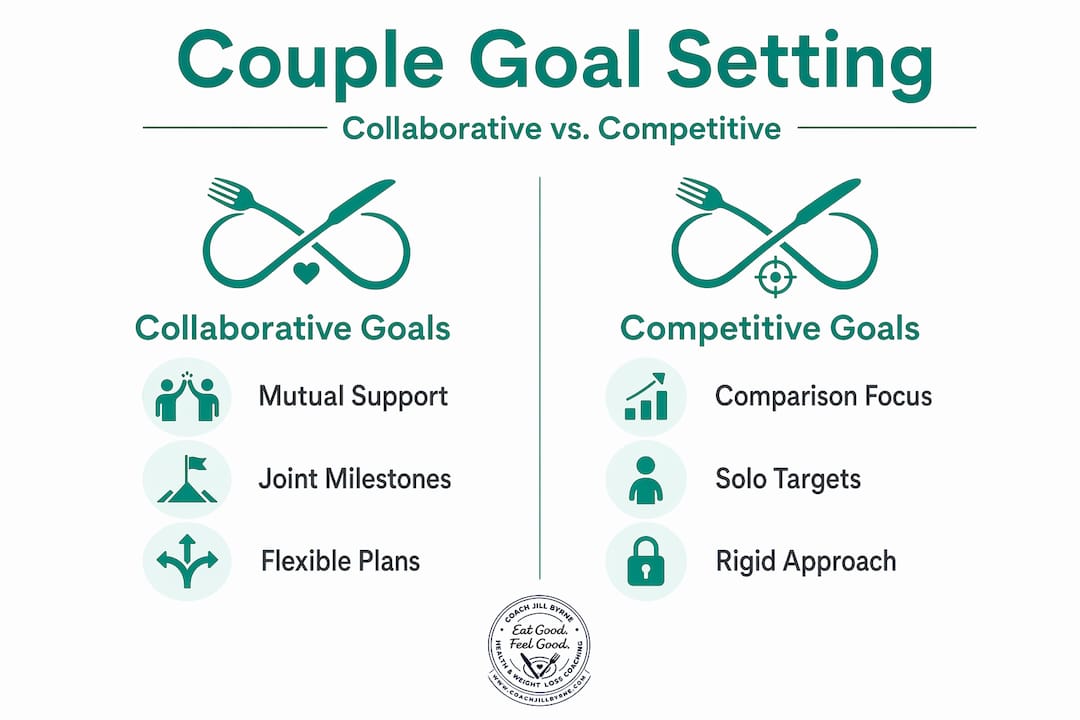
Goal setting is where most couples either build momentum or lose it before they even begin. The key distinction to understand is this: shared goals and individual goals are not the same thing, and you need both. Social support from a partner with aligned goals significantly improves adherence and helps couples handle setbacks together rather than alone.
Start by sitting down and writing out what each of you wants to achieve. One partner may want to lower blood pressure. The other may want to fit into clothes they stopped wearing three years ago. Both goals are valid, and both can coexist inside a shared routine. The problem happens when couples collapse everything into one identical target and ignore individual needs entirely.
Here is how to build a goal-setting system that actually works:
Write down behavioral goals, not just outcome goals. “We will cook at home four nights per week” is more useful than “We will lose 15 pounds.” Behavior is what you control directly.
Set a realistic initial target. According to NIDDK guidelines, 5 to 10 percent weight loss over six months is a healthy and achievable starting point for most adults.
Schedule weekly check-ins. Not weigh-ins. Conversations. Talk about what worked, what felt hard, and what you want to adjust. Keep the tone supportive and curious, not critical.
Track progress in a shared space. A whiteboard on the fridge, a shared notes app, or a simple journal both of you update keeps goals visible and top of mind.
Revisit goals every four to six weeks. Life changes. Schedules shift. Your goals should adapt without guilt.
Pro Tip: Write your couples fitness goals on paper and place them somewhere visible. Studies consistently show that written goals produce higher follow-through rates than goals kept only in your head.
The most sustainable couples fitness goals are the ones that feel collaborative, not competitive. When one partner is ahead, the instinct to compare numbers kills motivation. Redirect that energy toward celebrating each other’s behavioral wins instead.
Meal planning for two: building a nutrition plan you both enjoy
Nutrition is where most couples face their first real disagreement. One of you loves spicy food. The other finds salads boring. Neither of you agrees on what “healthy” means at dinner time. The good news is that you do not need identical palates to build a realistic nutrition plan that supports both of your goals.

A sound eating plan for weight loss centers on fruits, vegetables, lean proteins, whole grains, and healthy fats. NIDDK recommendations suggest keeping added sugars below 10 percent of daily calories, saturated fat below 10 percent, and sodium below 2,300 mg per day. These are not rigid rules to obsess over. They are practical guardrails that help you make better choices at the grocery store and in the kitchen.
Here is a practical meal planning process you can do together each week:
Choose three to four dinners you will cook at home. Pick recipes that share base ingredients to reduce waste and prep time.
Shop together with a list. Unplanned grocery trips lead to impulse purchases. A shared list keeps you aligned and on budget.
Prep on the same day. Sunday prep sessions become a shared ritual when you do them together. Chop vegetables, portion proteins, and cook grains in bulk.
Build flexible lunches from dinner leftovers. This reduces the midday temptation to grab fast food when you are busy.
Swap out one processed item per week. Gradual substitutions are more sustainable than overnight overhauls. Replacing processed snacks with whole food options adds up over months.
Mindful eating as a couple is underrated. Turn off the TV at dinner, sit at a table, and eat slowly enough that you actually taste what you prepared. This practice reduces overconsumption and turns a meal into a point of genuine connection.
Pro Tip: If your taste preferences differ, identify the shared components you both enjoy, like roasted vegetables or grilled chicken, and customize the seasoning or sides individually. Healthy eating together does not mean eating identically.
Exercise routines that work for both of you
Physical activity is the second pillar of a healthy weight loss plan, and it is also one of the best opportunities for couple workout ideas that build your relationship alongside your fitness. The Cleveland Clinic recommends 150 minutes of cardio per week plus strength training at least twice a week for sustainable results. That sounds like a lot until you break it into 30-minute daily sessions that you do together.
Couples who make movement a shared habit tend to stay consistent longer than those who treat exercise as a solo obligation. Here are practical ways to build exercise routines for partners that last:
Start with daily walks. A 30-minute walk after dinner checks off your cardio requirement, requires no equipment, and gives you uninterrupted time to talk.
Try a fitness class together. Yoga, cycling, dance, or kickboxing classes introduce structure and a social element that keeps things fresh.
Create a home environment that removes excuses. One couple lost 95 pounds combined in six months, partly because owning a home treadmill made daily movement non-negotiable. Small environmental changes produce lasting behavioral shifts.
Respect individual preferences. One partner may love running. The other prefers swimming. Build a weekly schedule that includes both joint and solo activities so neither person resents the routine.
Use childcare and household planning intentionally. If you have kids, alternate who handles morning duties so both of you get a consistent workout window.
The goal is not to mirror each other’s every move. It is to create a shared commitment to movement that fits your actual lives, not an idealized version of them.
Emotional support and behavioral strategies for staying the course
Weight loss is as much a mental challenge as a physical one. Stress, boredom, and emotional triggers drive more overeating than genuine hunger does. Behavioral health therapy helps identify these emotional drivers and develop coping strategies that support long-term weight maintenance for couples.
You do not need to be in a crisis to benefit from professional behavioral support. Even a few sessions with a counselor who specializes in health and wellness can help you and your partner communicate better about food, body image, and motivation. Here are the foundational emotional support habits that matter most:
Name your triggers without blame. If your partner tends to overeat when stressed about work, acknowledge it with curiosity rather than frustration. Ask how you can help instead of pointing out the behavior.
Use process-based accountability. Behavior-focused check-ins centered on habits, like steps walked, vegetables eaten, or home-cooked meals, reduce conflict more effectively than fixating on the number on the scale.
Separate your identity from your results. A bad week does not make either of you a failure. Normalize setbacks as part of the process, not evidence that the plan is broken.
Ask each other regularly: “How can I support you better?” This simple question prevents assumptions from building into resentment.
“The best weight loss support for couples is not about policing each other’s plates. It is about choosing, every day, to be each other’s biggest advocate.”
When emotional eating becomes a recurring pattern that neither of you can address alone, seeking professional guidance is a sign of strength, not weakness.
Navigating common challenges and maintaining results long term
Even motivated couples hit friction points. One partner loses weight faster. Motivation dips after the first month. A vacation or holiday season disrupts the routine. How you handle these moments determines whether your progress stalls or continues.
One of the most underappreciated risks in couple weight loss is what researchers call “identity mismatch.” This happens when both partners follow an identical plan without accounting for individual hunger levels, schedules, or metabolic needs. The result is that one person feels deprived while the other feels fine, and tension builds. Tailoring plans individually while sharing behavioral habits works better than enforcing identical programs on two very different bodies.
Common challenge | Practical solution |
One partner loses weight faster | Focus on shared behavioral goals; avoid comparing individual results |
Motivation drops after week four | Introduce a new activity or short-term health challenge for couples to reset engagement |
Differing hunger levels | Individualize portions while keeping the same core meals |
Setbacks from travel or holidays | Plan one anchor habit to maintain, like daily walks, to preserve momentum |
Resentment over progress gaps | Shift the conversation from results to relationship; celebrate non-scale victories together |
For some couples, prescription medications combined with lifestyle changes may become part of the conversation. These are decisions made with a physician, not between partners. What matters is that both of you maintain shared habits regardless of what medical support one or both of you may receive, so the lifestyle foundation stays intact. You can also review how to order weight loss medication safely if that is a path you are exploring with your doctor.
My honest take on losing weight as a couple
I have worked with many couples over the years, and the ones who succeed long-term share one quality that has nothing to do with their meal plan or workout schedule. They genuinely like each other during the hard weeks, not just the good ones. That sounds obvious, but it is rarer than you would think.
What I have seen consistently is that couples who treat weight loss as a relationship project, rather than a health project happening in parallel, make more progress and sustain it longer. When you frame your shared efforts around sustainable lifestyle habits rather than a finish line, the motivation does not disappear after the first ten pounds come off.
My honest advice: stop trying to lose weight together and start trying to live better together. The weight loss follows. Give each other room to have off days without making it a character flaw. Check in with empathy, not a spreadsheet. And remember that the goal was never just a number. It was a healthier, more connected version of the life you are already building.
— Coach Jill
Ready to take the next step with professional guidance?
Changing your habits as a couple is powerful, but having a professional in your corner makes the process faster, clearer, and more sustainable. At Coachjillbyrne.com, you will find personalized nutrition coaching designed for real life, not crash diets or cookie-cutter programs. Coach Jill Byrne works with clients to build practical eating habits, realistic meal plans, and accountability systems that hold up through the weeks when motivation is low.

Whether you are just getting started or you have hit a plateau after months of effort, structured coaching gives you and your partner a clear plan grounded in real food and sustainable behavior change. Visit Coachjillbyrne.com today to learn more about programs built around lasting results.
FAQ
How much weight can couples realistically lose together?
A healthy and realistic initial target is 5 to 10 percent of body weight over six months. One couple lost a combined 95 pounds in six months through consistent habits, which shows what sustained effort with mutual support can produce.
What are the best couple workout ideas for beginners?
Daily walks, beginner yoga classes, and home workout videos are low-barrier starting points. Aim for at least 150 minutes of moderate activity per week, and add strength training twice weekly as your fitness improves.
How do we handle it when one partner loses weight faster?
Keep your focus on shared behavioral goals rather than individual results. Comparing numbers breeds resentment. Celebrate the habits you are both building, and consider individualized approaches to portions and activity that account for your different bodies and metabolic rates.
Should couples see a professional for weight loss support?
Yes, especially when emotional eating, communication challenges, or persistent plateaus are involved. Behavioral health therapy addresses emotional triggers that drive overeating and helps couples develop better coping strategies together. A nutrition coach can also build a personalized plan for each partner within a shared framework.
How do we stay motivated when life gets in the way?
Identify one anchor habit, like a daily walk or cooking at home three nights per week, and protect it even during busy or disrupted weeks. Consistent small behaviors preserve momentum when bigger goals feel temporarily out of reach.
Recommended
Comments