
Online Weight Loss: What Actually Works in 2026

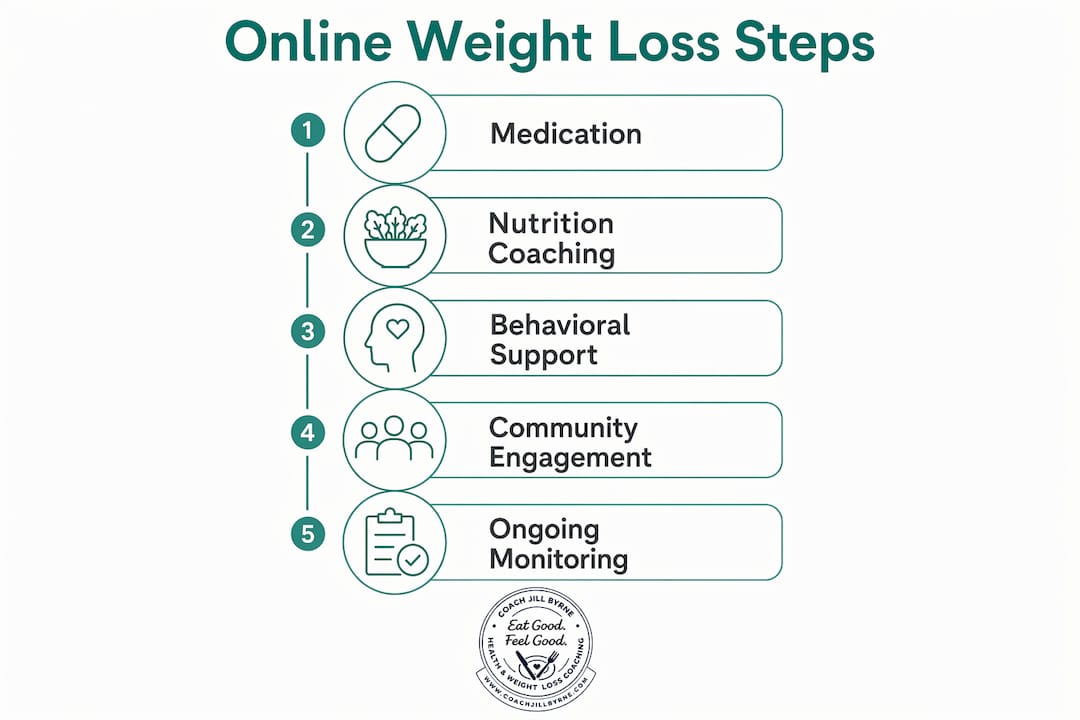
Online weight loss is defined as a structured process combining virtual clinical care, behavioral coaching, and digital support tools to help individuals reduce and maintain body weight without in-person visits. The term covers a wide range of programs, from prescription medication management to nutrition coaching and peer accountability groups. Coachjillbyrne specializes in the behavioral and nutrition side of this process, helping clients build practical habits that last well beyond any single program. What separates effective weight loss online from quick-fix approaches is the integration of clinical treatment, psychological support, and consistent accountability. Understanding how these components work together helps you choose the right path and set realistic expectations from the start.
How do online weight loss programs work?
Online weight loss programs follow a structured intake process designed to match each person with the right level of support. Most programs begin with a virtual consultation where a clinician reviews your health history, current medications, and body mass index. Eligibility for prescription medications typically requires a BMI above a defined threshold, though exact criteria vary by provider.
After the initial assessment, programs generally follow these steps:
Health intake and goal setting. You complete a detailed questionnaire covering medical history, eating patterns, activity levels, and weight history. This data shapes your personalized plan.
Prescription and medication delivery. If eligible, a licensed clinician prescribes medication, which ships directly to your home. Membership fees start around $49/month, with medication costs ranging from $199 to $299 per month for compounded options and up to $1,599 per month for brand-name drugs.
Coaching and habit formation. A health coach or nutrition specialist works with you weekly or biweekly to build consistent eating and movement habits. Coachjillbyrne focuses this phase on real food choices, portion awareness, and meal planning rather than calorie restriction alone.
Progress tracking. Apps, smart scales, and check-in calls allow coaches to monitor trends and adjust your plan before small setbacks become larger ones.
Ongoing accountability. Regular touchpoints keep motivation high and catch behavioral patterns that undermine progress.
Pro Tip: Before signing up for any program, ask specifically what happens after you stop taking medication. Programs that include behavioral coaching alongside medication produce far better long-term outcomes than medication alone.
What role does medication play in online weight loss?
GLP-1 medications are the most clinically significant development in weight management in decades. Semaglutide and tirzepatide are the two most widely prescribed options in online programs. Both work by reducing hunger and slowing digestion, which helps you maintain a calorie deficit without constant hunger signals driving you back to the kitchen.
Key facts about GLP-1 medications in online programs:
Administration: Most GLP-1 medications are weekly self-administered injections. Oral semaglutide exists but is less common in online programs.
Dosing schedule: Doses typically start low and increase over several weeks to reduce side effects like nausea and fatigue.
Side effect management: Staying hydrated, eating smaller meals, and avoiding high-fat foods reduces the most common side effects significantly.
Cost and insurance: Brand-name options are rarely covered by standard insurance plans. Compounded versions cost less but carry different regulatory considerations.
Effectiveness: Structured clinical programs combining medication with coaching report average body weight reductions of 21%–22.5%. That figure reflects programs with active behavioral support, not medication alone.
Pro Tip: Medication reduces appetite, but it does not teach you what to eat. Pairing GLP-1 treatment with nutrition coaching, like the GLP-1 support offered through Coachjillbyrne, addresses the behavioral gap that causes most people to regain weight after stopping medication.
Medication alone produces results, but those results are rarely permanent. The people who maintain weight loss long-term are those who use the reduced appetite window to build new eating habits. That behavioral layer is what Coachjillbyrne focuses on most directly.
How does behavioral support enhance online weight loss success?
Behavioral support is the component most often underestimated and most often responsible for long-term failure when absent. Cognitive Behavioral Therapy (CBT) addresses the underlying thoughts and triggers that drive unhealthy eating habits. Without this work, most people return to old patterns once medication stops or motivation fades.
CBT in weight management targets several specific patterns:
Negative automatic thoughts: Beliefs like “I always fail at diets” or “I have no willpower” are identified and challenged directly.
Emotional eating triggers: Stress, boredom, loneliness, and fatigue are common drivers of overeating. CBT builds awareness of these triggers before they lead to action.
Food noise: The constant mental preoccupation with food is a critical psychological barrier that CBT techniques directly address.
Yo-yo dieting cycles: Addressing psychological eating drivers reduces the relapse patterns that trap many people in repeated cycles of loss and regain.
“Effective long-term weight loss requires addressing the psychological ‘why’ behind eating behaviors. CBT challenges the negative thought patterns that keep people stuck, making it the crucial missing piece for sustained results and avoiding relapse.”
Health coaches play a complementary role by focusing on habit formation rather than therapy. Where a CBT therapist works on thought patterns, a coach like Coachjillbyrne works on the practical side: what you cook, how you shop, and how you structure meals across a real week. Sustainable weight loss depends on both layers working together.
Consistency over intensity produces better long-term results than high-effort bursts followed by burnout. Daily walking, volume eating, and simple meal structures outperform aggressive gym programs for most people over a six-month period. That finding aligns directly with the habit-based approach Coachjillbyrne applies with every client.

What community and tech tools support ongoing weight loss?
Accountability and community are not optional extras in weight loss programs. They are structural components that determine whether results last beyond the first few months. Digital tools including apps, smart scales, and coaching platforms provide the infrastructure for both.
The most effective tools in current online programs include:
Food and activity logging apps: Daily logging creates awareness of patterns that are invisible without data. Apps that sync with wearables reduce the friction of manual entry.
Smart scales: Scales that track body composition, not just weight, give a more accurate picture of progress. Muscle gain can mask fat loss on a standard scale, which discourages people unnecessarily.
Wearable devices: Step counters and heart rate monitors provide passive data that coaches use to adjust activity recommendations without requiring gym attendance.
Coaching platforms: Secure messaging and video check-ins with a coach provide real-time feedback between scheduled sessions.
Online support groups: Peer interaction in moderated communities reduces isolation and provides social reinforcement for healthy choices.
Pro Tip: Weight loss blogs and community forums are most useful when they feature real weight loss stories from people with similar starting points. Reading weight loss success stories from others who faced the same obstacles builds realistic expectations and practical ideas, not just inspiration.
The social component of weight loss is backed by consistent evidence. People who report to a coach or peer group maintain their results at higher rates than those working alone. Coachjillbyrne builds this accountability into every program through regular check-ins and direct access to coaching support. For readers looking to start without restrictive dieting, community and coaching together provide the structure that willpower alone cannot.
Key Takeaways
Effective online weight loss combines clinical medication, behavioral coaching, and community accountability into one integrated system, and no single component produces lasting results on its own.
Point | Details |
Medication requires behavioral support | GLP-1 drugs reduce appetite, but habit coaching prevents weight regain after stopping. |
CBT addresses root causes | Cognitive Behavioral Therapy targets emotional eating and food noise, not just food choices. |
Consistency beats intensity | Daily manageable habits like walking and volume eating outperform high-intensity routines long term. |
Community drives accountability | Peer groups and coaching check-ins significantly improve long-term maintenance rates. |
Cost varies widely | Monthly program costs range from $49 for membership to over $1,599 for brand-name medications. |
What I’ve learned coaching clients through online weight loss
The most common mistake I see is treating medication as the whole plan. Clients come to me after losing 20 or 30 pounds on a GLP-1 program, thrilled with the results, and completely unprepared for what happens when the prescription ends. The appetite comes back. The old habits were never replaced. The weight returns.
What actually works is using the reduced appetite window that medication creates to build new behaviors. That window is precious. When hunger is lower, you have the mental space to learn what a balanced plate looks like, to practice cooking differently, and to notice which emotional triggers send you to the pantry. That is the work Coachjillbyrne does alongside medical treatment.
Weight loss plateaus near the final 5–10 pounds are real and predictable. Shifting focus to body composition and muscle building at that stage matters more than chasing a lower number on the scale. I tell clients to measure how their clothes fit and how their energy levels feel, not just what the scale reads on a given morning.
Psychological readiness is also underrated. Clients who acknowledge their emotional relationship with food before starting a program make faster and more durable progress than those who expect medication or meal plans to do all the work. Reading weight loss maintenance strategies before you start, not after you plateau, changes the entire experience.
Set goals based on what clinical evidence supports, not what social media promises. A 1–2 pound weekly loss is clinically sound and sustainable. Anything faster usually involves muscle loss, which makes long-term maintenance harder.
— Coach Jill
Personalized support from Coachjillbyrne
Weight loss online works best when clinical tools and behavioral coaching operate together, not in separate silos. Coachjillbyrne offers personalized nutrition coaching, GLP-1 nutrition support, and habit-based accountability programs designed to complement medical treatment and produce results that last.

Whether you are currently on a GLP-1 medication and want to build the eating habits that protect your results, or you are looking for a practical weight loss approach without restrictive dieting, Coachjillbyrne provides structured, individualized guidance. Programs include meal planning, portion coaching, clean eating strategies, and regular accountability check-ins tailored to your specific goals and lifestyle. Reach out to Coachjillbyrne to learn which program fits your current stage.
FAQ
What is online weight loss?
Online weight loss is a structured program delivered virtually, combining clinical consultations, prescription medications, nutrition coaching, and behavioral support to help individuals reduce body weight without in-person visits.
How effective are GLP-1 medications in online programs?
Structured programs combining GLP-1 medications with behavioral coaching report average body weight reductions of 21%–22.5%, according to clinical program data. Medication alone produces lower and less durable results.
What does CBT have to do with losing weight?
Cognitive Behavioral Therapy identifies and changes the negative thought patterns and emotional triggers that drive overeating. Without addressing these psychological factors, most people regain weight after stopping medication or a structured diet.
How much does an online weight loss program cost?
Costs vary significantly. Membership fees typically start around $49 per month, with compounded GLP-1 medications adding $199–$299 per month and brand-name options reaching up to $1,599 per month.
Can I lose weight online without medication?
Yes. Nutrition coaching, habit formation, CBT-based behavioral support, and community accountability produce meaningful and sustainable results without medication, particularly when combined into a structured program like those offered through Coachjillbyrne.
Recommended
Comments