
The Role of Home Cooking in Family Health
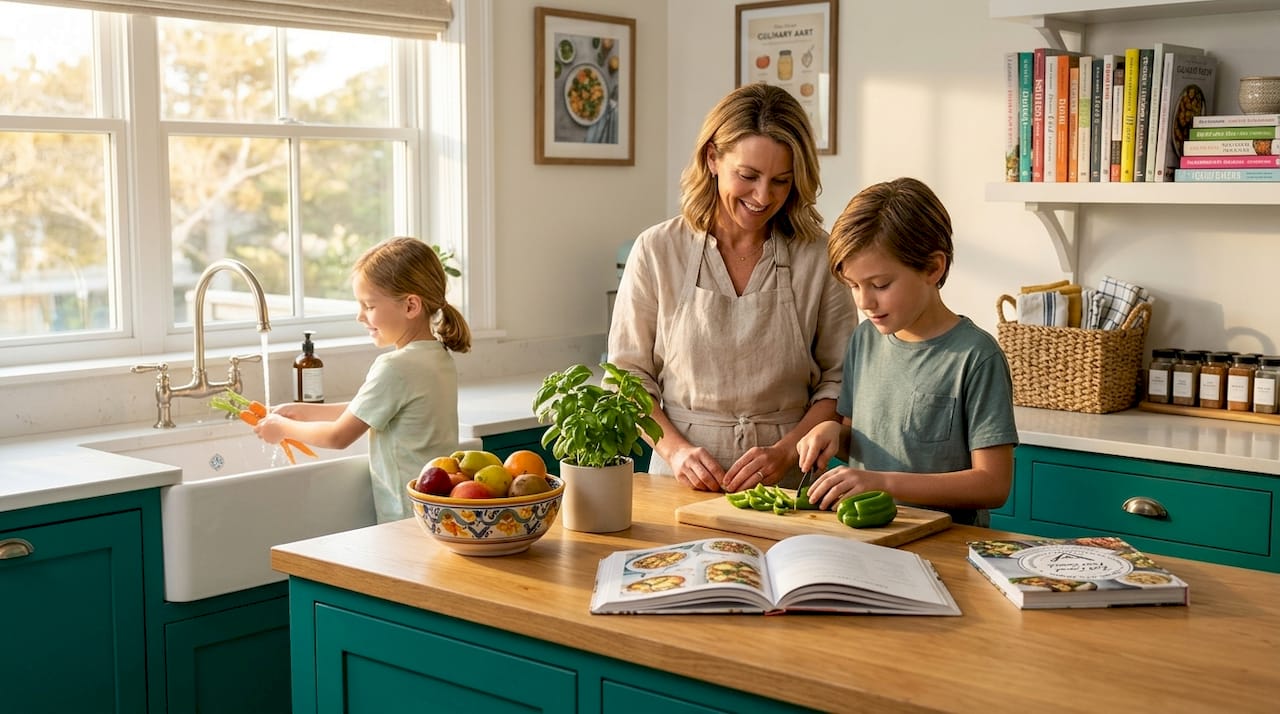
Most families assume that as long as they’re eating some fruits and vegetables, their diet is reasonably healthy. But research on the role of home cooking in family health tells a different story. Preparing meals at home does more than improve nutrition quality. It reduces chronic disease risk, builds emotional resilience in children, strengthens family bonds, and shapes lifelong eating habits. This article breaks down exactly how cooking together affects your family’s physical and emotional well-being, and what you can do starting this week to make it count.
Table of Contents
Key takeaways
Point | Details |
Home cooking improves diet quality | Families who cook at home consistently score higher on dietary quality measures and eat fewer ultra-processed foods. |
Shared cooking builds resilience | Family cooking activities strengthen emotional well-being in children and increase household cohesion. |
HEI-2020 guides better meals | Using the Healthy Eating Index framework helps families make measurable, guideline-based improvements to daily meals. |
Food environment drives behavior | Changing what ingredients are stocked at home is the most reliable way to shift cooking habits long term. |
Consistent routines matter most | Regular family mealtime rituals shape health behaviors over a lifetime more than any single dietary change. |
The role of home cooking in family health and nutrition quality
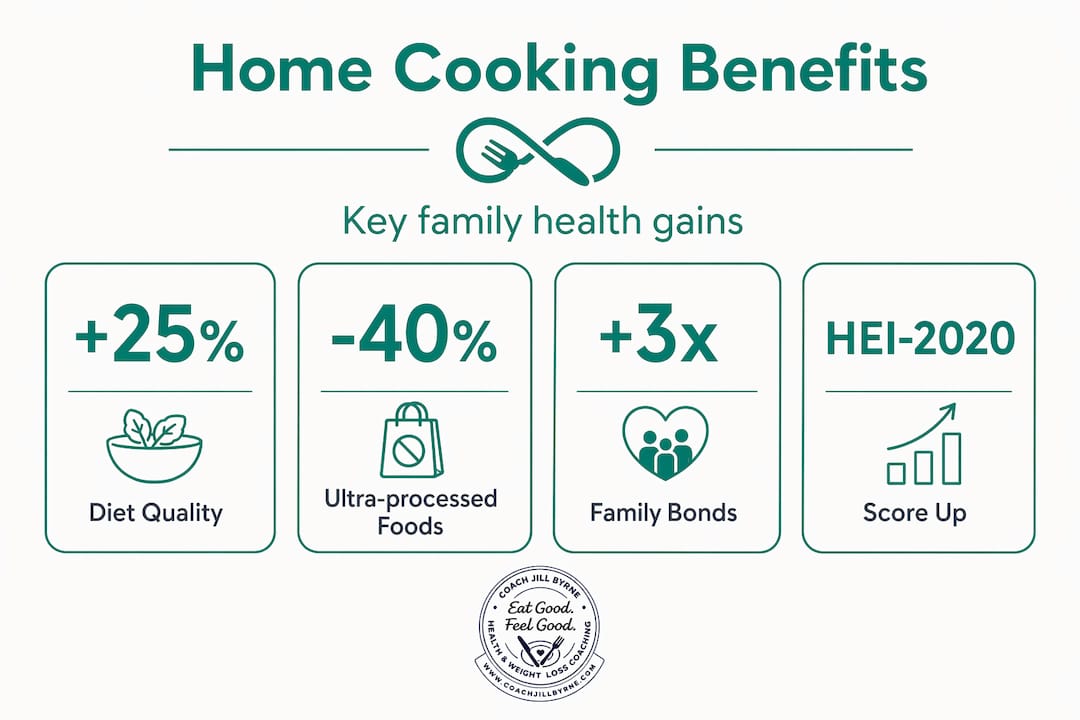
The term “ultra-processed foods” refers to industrially formulated products that go well beyond basic preservation. Think packaged snacks, flavored cereals, fast food, and ready-made frozen meals. These foods typically contain additives, refined starches, and added sugars that whole ingredients do not. The distinction matters because regular ultra-processed food consumption is linked to a 53% increased diabetes risk, and each 10% increase in energy from these foods raises that risk by an additional 10 to 15%.
Home cooking directly counteracts this by giving you control over what goes into every meal. When you prepare food from whole ingredients, you naturally reduce sodium, added sugar, and refined oils without following a strict diet. This is a practical, sustainable shift rather than a restrictive protocol.
Families who cook most meals at home show measurably better diet quality scores. The Healthy Eating Index, which nutritionists use to assess how closely a diet aligns with federal dietary guidelines, scores higher among people who cook more frequently at home. That means more fiber, more nutrients, and less of the additives that drive inflammation and metabolic dysfunction.
Here is where most families lose ground against convenience foods:
Weeknight time pressure pushes families toward fast food or packaged meals
Unfamiliarity with quick, healthy recipes creates a skills gap
A poorly stocked kitchen makes cooking from scratch feel harder than it actually is
Children’s preferences are often shaped early by repeated exposure to processed flavors
Each of these is solvable. The barriers are environmental and behavioral, not permanent.
Pro Tip: Stock your pantry with five to seven go-to whole ingredients each week: canned beans, whole grains like brown rice or quinoa, frozen vegetables, eggs, and olive oil. When these are already on hand, a nutritious weeknight meal takes 20 minutes and a processed alternative loses its appeal. Replacing processed snacks with real food at home follows the same logic.
Meal type | Typical added sugar | Typical sodium | Nutrient density |
Home-cooked dinner | Low to moderate | Controllable | High |
Fast food meal | High | Very high | Low |
Packaged frozen meal | Moderate to high | High | Low to moderate |
Home-cooked snack | Low | Controllable | Moderate to high |
Social and emotional benefits of cooking together as a family
The physical health benefits of home cooking are well documented. The emotional and relational benefits get less attention. That is a gap worth closing.
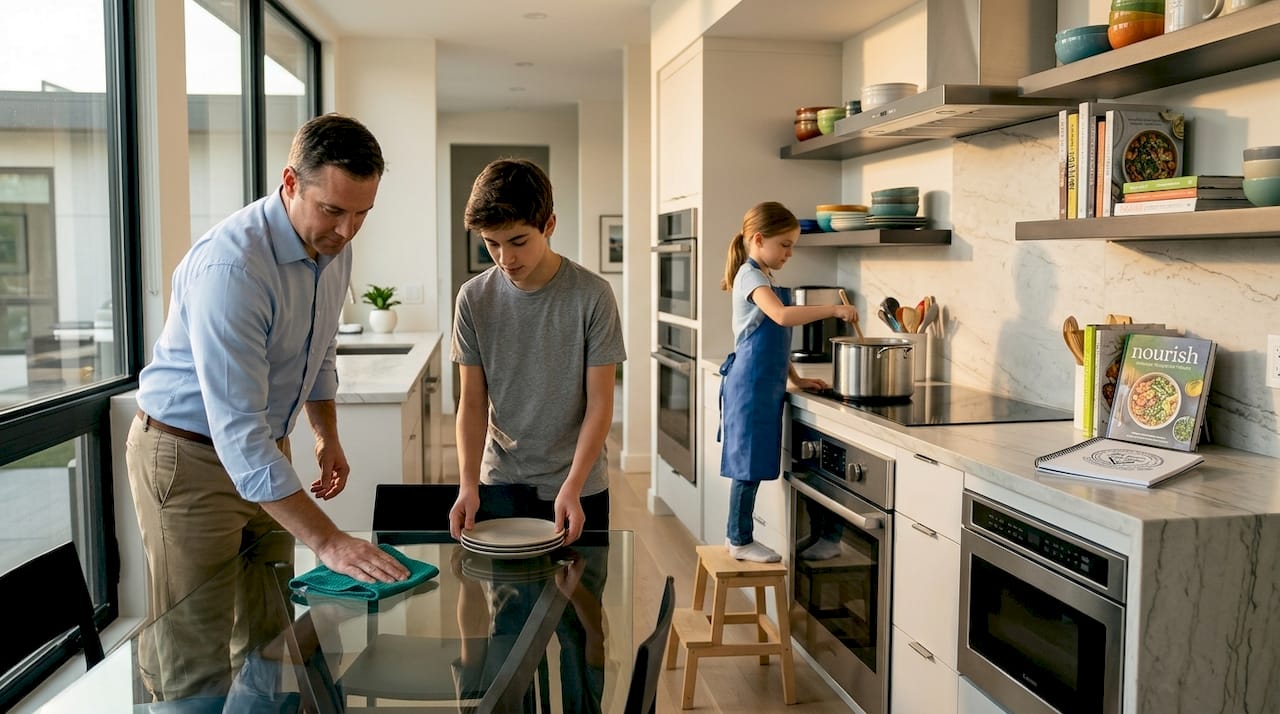
Family cooking activities improve youth emotional well-being and increase household resilience. This was demonstrated clearly in the Flint Families Cook program, a virtual cooking and nutrition program where families received ingredient boxes and instruction from chefs and dietitians. Participants reported not only better nutrition knowledge but stronger family connections. Cooking together created a shared experience that carried emotional weight beyond the meal itself.
Research reinforces this pattern. Shared cooking promotes teamwork, communication, and problem-solving in children. These are not incidental benefits. They are outcomes that show up in school performance, peer relationships, and emotional self-regulation.
“Family meal routines provide repeated exposure to positive interactions that shape health behaviors and social-emotional development over a lifetime.” — University of Colorado Anschutz, Family Medicine
The concept of “family meal routines as rituals” deserves specific attention. A ritual is not just a habit. It is a repeated behavior that carries social meaning. When families eat together regularly, children learn what a healthy meal looks like, how to sit with others, how to have a conversation, and how to feel secure within a household structure. Regular family meals shape lifelong health behaviors far more effectively than isolated dietary changes.
To make cooking a genuinely shared activity rather than a solo task:
Assign age-appropriate tasks. Children as young as three can wash vegetables or tear lettuce. Older kids can measure, stir, and eventually follow simple recipes independently.
Keep the mood relaxed. If cooking feels like a chore or a performance, families disengage. Put on music, make it low-stakes, and focus on the process rather than a perfect result.
Rotate who chooses the meal. When children or partners have input, they are more invested in eating what is prepared and more likely to participate again.
Celebrate small wins. A child who tries one new vegetable has made progress worth acknowledging.
Using the Healthy Eating Index to guide family meal planning
The Healthy Eating Index, specifically the 2020 version called HEI-2020, is the tool nutritionists and researchers use to measure diet quality. It scores diets on a scale of zero to one hundred based on how well they align with the USDA Dietary Guidelines. Understanding its structure gives families a practical checklist for every meal rather than vague advice to “eat healthier.”
HEI-2020 measures two categories of food behaviors: adequacy and moderation.
Adequacy components reward higher consumption of:
Total fruits and whole fruits
Total vegetables and dark green vegetables
Whole grains
Dairy
Total protein foods, seafood, and plant proteins
Fatty acids
Moderation components reward lower consumption of:
Refined grains
Sodium
Added sugars
Saturated fat
Higher HEI-2020 scores correlate with better nutrient intake and reduced risk of losing muscle mass in middle age. This matters because muscle mass is a key predictor of metabolic health and mobility as people age. Home cooking gives you direct control over every one of these components.
The practical application is straightforward. When planning a family dinner, mentally check the adequacy boxes first. Is there a vegetable? A whole grain or legume? A lean protein? Then check moderation. Is the dish heavy in sodium from packaged sauces or seasoning blends? Can you use herbs and spices instead? This internal checklist approach turns HEI-2020 into a real-time cooking tool.
Pro Tip: Try meal planning with a nutrition framework in mind before you shop. Write out three to four dinners for the week and check each one against the HEI adequacy list. You will naturally shift your grocery cart toward whole foods and away from packaged ingredients.
Practical strategies to sustain healthy home cooking routines
Understanding the benefits of home cooking is not the same as making it happen consistently. For many families, the gap between knowing and doing comes down to environment, time, and skills. These are addressable.
Change your home food environment first. Research from the Books and Cooks intervention shows that improving food security and literacy at home produces significant gains in cooking confidence and healthier eating behaviors. The most direct lever is what you keep in your kitchen. If fresh and whole ingredients are visible and accessible, they get used. Processed alternatives hidden or removed from the pantry get chosen far less often.
Build cooking self-efficacy gradually. Families who participate in structured cooking programs report greater confidence and more frequent healthy cooking behaviors over time. You do not need a formal program. Start with two home-cooked dinners per week. Once that feels normal, add a third. Skills compound just like habits do.
Involve children in meal planning, not just cooking. Let kids pick one dinner per week from a curated list of healthy options. This creates buy-in before they even step into the kitchen and reduces mealtime conflict significantly.
Create a consistent cooking time. Families with a set cooking window, such as 5:30 to 6:30 pm on weeknights, treat it like any other appointment. Inconsistency is the most common reason healthy cooking routines break down.
Use ingredient boxes or meal kit services as a bridge. These services remove the planning and shopping barrier entirely while still requiring families to cook. They are not a permanent solution, but they are an effective entry point for families with limited cooking skills or time.
Pro Tip: Batch-cook two to three base ingredients on Sunday, such as a grain, a roasted vegetable, and a protein. These ingredients become the foundation for four or five different weeknight meals with minimal additional effort. This single habit reduces weeknight cooking time by roughly half and makes sustainable habits for busy families genuinely achievable.
My perspective on what home cooking really changes
I have worked with enough families to say this with confidence: the nutrition improvements from home cooking matter, but they are rarely the most significant change families report. What I hear most often is that cooking together changed the atmosphere in their home.
Families who were not talking much at dinner started talking. Parents who felt disconnected from their teenagers found an activity that pulled them back into the same room. Children who refused vegetables began eating them because they had washed, chopped, or stirred those same vegetables twenty minutes earlier.
In my experience, the families who struggle most are not the ones who lack nutrition knowledge. They are the ones whose home food environment works against them. Processed food is everywhere. Cooking requires time they do not feel they have. And the kitchen can feel like one more obligation in an already stretched day.
What I have found actually works is starting so small it feels almost pointless. One home-cooked meal per week. Not a nutritionally perfect meal. Just a real one, made at home, eaten together. That single ritual, repeated consistently, changes what a family believes is possible. The nutrition follows from the confidence and routine, not the other way around.
— Coach Jill
Ready to build your family’s healthy cooking habits?
Making home cooking a consistent part of your family’s life is one of the most effective health decisions you can make. But knowing where to start, and staying consistent when life gets busy, is where many families need structured support.

Coachjillbyrne offers personalized nutrition coaching that helps families build practical meal planning habits, improve cooking confidence, and create sustainable routines that fit real schedules. With one-on-one guidance tailored to your household’s specific needs and goals, you get accountability and clarity rather than generic advice. Whether you are navigating food preferences, time constraints, or simply do not know where to start, Coachjillbyrne provides the structure and support to make lasting change realistic. Explore the coaching programs today and take the first step toward a healthier table.
FAQ
How does home cooking affect family health?
Home cooking improves diet quality by reducing ultra-processed food intake, increasing nutrient density, and strengthening family mealtime routines that shape long-term health behaviors in children and adults.
What are the emotional benefits of cooking together as a family?
Research shows that family cooking activities improve children’s emotional well-being and resilience, promote teamwork and communication skills, and strengthen overall household cohesion beyond nutrition alone.
What is the Healthy Eating Index and how does it help with meal planning?
The Healthy Eating Index-2020 is a scoring tool used to measure how closely a diet aligns with USDA Dietary Guidelines. Families can use its adequacy and moderation components as a practical checklist when planning and preparing meals at home.
How does reducing ultra-processed foods lower chronic disease risk?
Regular ultra-processed food consumption is linked to a significantly higher risk of type 2 diabetes, and home cooking is one of the most practical ways to reduce daily exposure to these foods without following a restrictive diet.
How can busy families cook at home more consistently?
Changing the home food environment, batch-cooking base ingredients on weekends, and starting with just two home-cooked meals per week are the most effective entry points for building a sustainable home cooking routine.
Recommended
Comments