
Why Eating Habits Matter Beyond Medication

Eating habits are the single most reliable predictor of long-term health outcomes, regardless of what medications a person takes. This is the core argument behind why eating habits matter beyond medication: drugs can suppress appetite, lower blood sugar, or reduce inflammation, but they cannot rewire the daily food decisions that determine whether results last. The American Psychological Association and lifestyle medicine researchers both confirm that diet shapes physiology in ways no pill fully replicates. Nutrition science calls this the “food as medicine” principle, and it applies whether you take medication or not. Coachjillbyrne works with clients every day who discover that the real work begins at the table, not the pharmacy.
Why eating habits matter beyond medication: the physiology
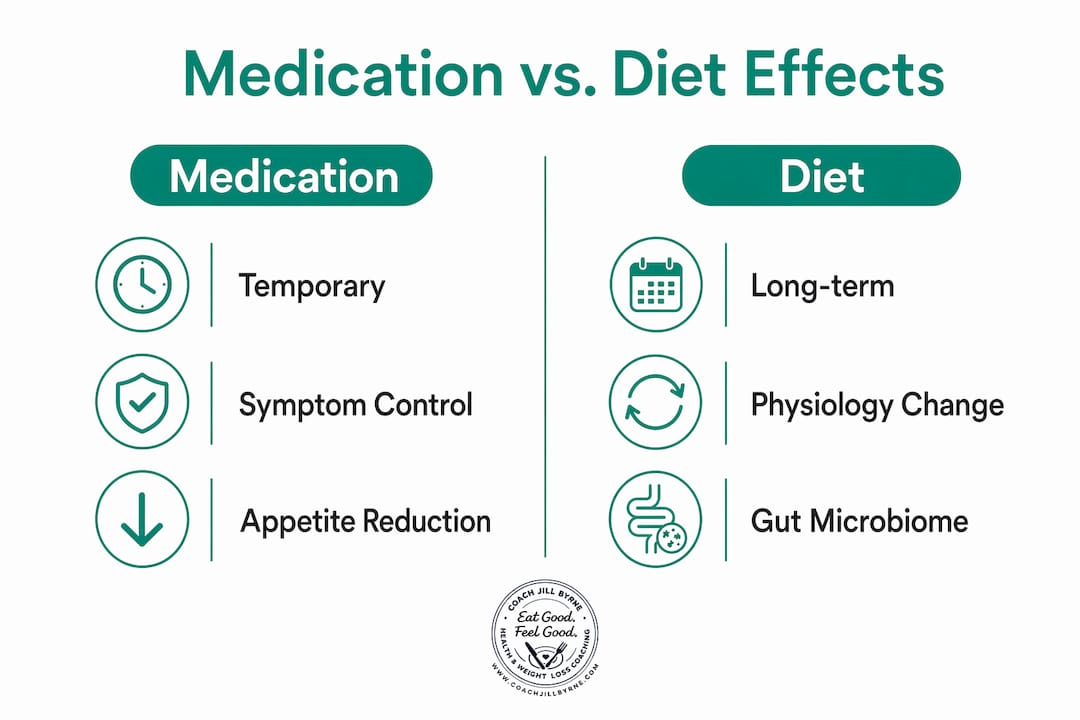
Medication changes what your body does temporarily. Diet changes what your body is over time. That distinction matters enormously when you think about long-term wellness.
Diet directly modulates the gut microbiome, the vast ecosystem of bacteria in your digestive tract that influences metabolism, immunity, and even mood. Early 2026 research confirms that diet patterns shape gut bacteria and the metabolites they produce, which in turn affect systemic health and brain function. No medication currently replicates that effect.

Protein intake is another area where food does what drugs cannot. When people lose weight, they risk losing lean muscle alongside fat. Protein preserves muscle mass during weight loss, supports metabolic rate, and prevents the fatigue and nutrient deficiencies that derail progress. Experts in lifestyle medicine emphasize this point specifically for people using GLP-1 medications, where reduced appetite can lead to dangerously low protein consumption if eating habits are not deliberately structured.
Here is a quick comparison of what medication addresses versus what diet addresses:
Health Factor | Medication effect | Diet effect |
Appetite control | Reduces physiological hunger | Builds meal timing and satiety habits |
Gut microbiome | Minimal direct effect | Directly shapes bacterial diversity |
Muscle preservation | None | Supported by adequate protein intake |
Systemic inflammation | Some reduction | Reduced through whole food patterns |
Mental well-being | Indirect, limited | Improved via neurotransmitter support |
Diet also reduces systemic inflammation through consistent whole food consumption. Mediterranean and plant-rich diets improve gut microbiota diversity and reduce cardiovascular risk markers. That is a biological outcome medication alone does not deliver.
Key physiological areas where diet outperforms medication:
Gut microbiome diversity: Fermented foods, fiber, and variety feed beneficial bacteria.
Nutrient sufficiency: Whole foods supply vitamins and minerals that pills rarely replace fully.
Metabolic rate: Adequate protein and consistent meals keep metabolism stable.
Inflammation control: Whole grains, vegetables, and healthy fats reduce inflammatory markers over time.
What psychological factors must be managed alongside medication?
Medication suppresses appetite. It does not change why you reach for food when you are stressed, bored, or anxious. That gap is where most long-term weight management plans fail.
GLP-1 medications reduce physiological hunger) but leave psychological triggers entirely intact. Emotional eating, stress eating, and habitual snacking are behavioral patterns rooted in routine and emotion, not hunger. Without deliberate habit work, those patterns return the moment medication stops or the dose changes.
The medication period actually creates a rare opportunity. Pharmacological appetite suppression permits habit formation with less willpower) because the physiological drive to overeat is quieter. That window is the best time to practice new behaviors, not coast on reduced hunger. Coachjillbyrne describes this as the most underused advantage in weight loss coaching.
Common behavioral pitfalls that persist without intervention:
Emotional eating: Stress, boredom, and loneliness still trigger food-seeking behavior even when physical hunger is suppressed.
Skipping meals: Reduced appetite can lead to under-eating, which causes nutrient deficiencies and rebound hunger.
Volume-based thinking: Eating less without eating better leads to muscle loss and fatigue, not sustainable wellness.
Lack of meal structure: Without consistent eating times, appetite signals become erratic once medication ends.
Pro Tip: Use the reduced hunger that comes with appetite-suppressing medication to practice eating slowly, stopping at 80% full, and identifying emotional triggers. These habits become automatic over time, which is exactly what you want before medication ends.
The importance of diet in this phase is not just nutritional. It is behavioral. Building routines during a period of lower appetite resistance is far more effective than trying to build them when hunger is at full force.
What practical eating habits build lasting health beyond medication?
Sustainable eating habits follow a clear structure. They are not about perfection. They are about consistency across a small set of reliable behaviors.
1. Build protein-first meals at consistent times
Consistent meal timing) prevents compensatory overeating and stabilizes appetite signals. Aim for 3–4 eating occasions per day at roughly the same times. Each meal should lead with a protein source: eggs, chicken, fish, legumes, or Greek yogurt. This approach preserves muscle, supports satiety, and builds a habitual meal rhythm that functions independently of any medication.
2. Structure your plate around real food categories
Patients focused on nutrient-dense, protein-rich, high-fiber diets during medication achieve longer-lasting results. A practical plate structure looks like this:
Half the plate: non-starchy vegetables (broccoli, spinach, peppers, zucchini)
One quarter: quality protein (chicken breast, salmon, tofu, lentils)
One quarter: whole grains or starchy vegetables (brown rice, sweet potato, quinoa)
This is value-based eating, not volume-based eating. The goal is nutritional density per meal, not just calorie reduction.
3. Eat slowly and address emotional triggers
Eating slowly gives your brain time to register fullness, which takes roughly 20 minutes. Rushing meals bypasses that signal entirely. Alongside slow eating, identify your top two or three emotional eating triggers and create a non-food response for each. That might mean a 10-minute walk, a glass of water, or a brief breathing exercise. These responses need to be practiced repeatedly to become automatic.
4. Prevent nutrient deficiencies with food variety
Focusing only on calorie reduction without nutritional value leads to muscle loss and deficiencies despite weight loss. Rotate protein sources, include leafy greens daily, and add fermented foods like yogurt or kimchi several times per week. Variety is the most practical defense against nutritional gaps.
Pro Tip: Start with one habit change per week rather than overhauling your entire diet at once. Clients at Coachjillbyrne who adopt a stepwise approach consistently report better long-term adherence than those who attempt a complete dietary overhaul on day one.
For readers building healthy eating routines from scratch, a gradual, structured approach produces far more durable results than any short-term plan.
How do eating habits support weight maintenance and wellness long-term?
The most common failure point in weight management is not losing weight. It is keeping it off after medication ends or after a diet program concludes. Eating habits are the primary variable that determines which outcome you get.
Clinical data shows slower weight regain) in people who receive medical support and dietary guidance after stopping medication. Real-world outcomes consistently outperform clinical trial results when behavioral support accompanies treatment. That finding points directly to the importance of diet as a long-term maintenance tool, not just a short-term weight loss strategy.
Nutrition also supports mental well-being in ways that extend far beyond weight. Dietary shifts to whole foods and fermented foods improve depression symptoms and brain antioxidant levels. The impact of nutrition on mood and cognitive function is now well-documented, making healthy eating a mental health strategy as much as a physical one.
“Behavioral consistency during weight-loss medication treatment predicts long-term maintenance of weight loss after stopping medication. A 2024 study showed patients who maintained exercise routines and structured eating during drug treatment retained significantly more weight loss post-medication than those who did not.”
Muscle preservation is another long-term factor that eating habits directly control. Losing muscle during weight loss lowers your resting metabolic rate, which makes future weight gain more likely. Adequate protein intake and resistance-friendly eating patterns protect against that outcome in ways no medication currently addresses.
For those ready to build a plan that lasts, sustainable weight loss strategies grounded in real food and consistent behavior are the most reliable path forward.
Key Takeaways
Eating habits determine long-term health outcomes because they shape physiology, behavior, and mental well-being in ways that medication alone cannot replicate or sustain.
Point | Details |
Diet shapes physiology | Food directly modulates the gut microbiome, inflammation, and muscle mass beyond any medication effect. |
Medication windows are opportunities | Reduced appetite during treatment is the best time to build lasting eating habits with less resistance. |
Behavior must change, not just intake | Emotional eating and trigger-based food habits persist after medication ends without deliberate intervention. |
Protein and meal timing are non-negotiable | Consistent protein-first meals at regular times preserve muscle and stabilize appetite long-term. |
Behavioral support improves outcomes | People with dietary guidance and accountability after medication show slower weight regain than those without. |
What I have learned coaching clients through medication and beyond
The most common misconception I see is that medication does the heavy lifting and food is secondary. That belief is the reason so many people regain weight within a year of stopping treatment.
What I have observed, working with clients on GLP-1 support and general nutrition coaching, is that the medication period is actually a gift if you use it correctly. When hunger is quieter, you have a real chance to practice eating slowly, building plate structure, and identifying what triggers your emotional eating. Most people spend that window eating less of the same foods rather than building better habits. That is a missed opportunity.
The shift from volume-based eating to value-based eating is the single most important mindset change I coach. It is not about eating tiny portions. It is about making every meal count nutritionally. When clients internalize that, the results follow and they last.
Medication handles the “how much” question temporarily. Eating habits answer the “how” question permanently. For readers who want to transition back to healthy eating after medication, the process is gradual, structured, and entirely learnable with the right support.
— Coach Jill
Personalized support for building lasting eating habits
Knowing what to eat is one thing. Building the habits that make it automatic is another. Coachjillbyrne offers personalized nutrition coaching designed for people who want real, lasting results without restrictive dieting or unrealistic plans.

Whether you are currently using weight loss medication, transitioning off it, or simply ready to build a healthier relationship with food, Coachjillbyrne provides structured support tailored to your specific goals. Programs focus on real food nutrition, meal planning, accountability, and the behavioral coaching that makes change stick. Visit Coachjillbyrne to learn more about personalized plans built for long-term wellness.
FAQ
Why do eating habits matter more than medication alone?
Medication manages symptoms like appetite or blood sugar temporarily. Eating habits shape gut health, muscle mass, inflammation, and mental well-being permanently, which determines whether health improvements last after treatment ends.
Can diet replace medication for weight loss?
Diet cannot always replace medication, but it determines whether medication results are maintained. Research shows that people who build strong eating habits during treatment retain significantly more weight loss after stopping medication than those who do not.
What is the most important eating habit to build during medication use?
Consistent protein-first meals at regular times is the most critical habit. Protein preserves muscle mass, stabilizes metabolism, and builds a meal rhythm that functions independently once medication is discontinued.
How does diet affect mental health beyond weight loss?
Dietary shifts to whole foods and fermented foods improve depression symptoms and brain antioxidant levels. The gut-brain connection means that what you eat directly influences mood, focus, and emotional resilience.
What happens to eating habits when medication stops?
Without deliberate habit formation during treatment, pre-existing eating behaviors return when medication ends. Emotional eating, irregular meal timing, and poor food choices resume because medication never addressed the behavioral drivers behind them.
Recommended
Comments