
Build Sustainable Eating Habits Fast: Your 7-Day Plan
The fastest way to build sustainable eating habits fast is to adopt one narrow plate rule tied to a daily cue and repeat it consistently. Start with this: make half your plate vegetables at dinner tonight. That single, specific action is where lasting change begins.
Five things you can do today to build momentum:
Swap one meal to plant-forward (add beans, lentils, or extra vegetables)
Move any leftover vegetables to the freezer before they spoil
Write down one dinner plan for tomorrow night
Pack a lunch for work instead of buying out
Set aside food scraps in a compost container or bag
Pro Tip: Place a bowl of washed fruit on your counter and a bag of pre-cut vegetables at eye level in the fridge. You eat what you see first. Designing your environment this way removes the decision entirely.
Table of Contents
How long does it actually take to form a sustainable eating habit?
Which plate swaps improve your health and lower your environmental impact?
How do meal planning and smart shopping cut food waste fast?
What kitchen shortcuts keep healthy eating realistic when you’re busy?
How do you track progress without becoming obsessive about it?
How does personalized coaching speed up sustainable habit change?
What should you do in week 1 to build real momentum?
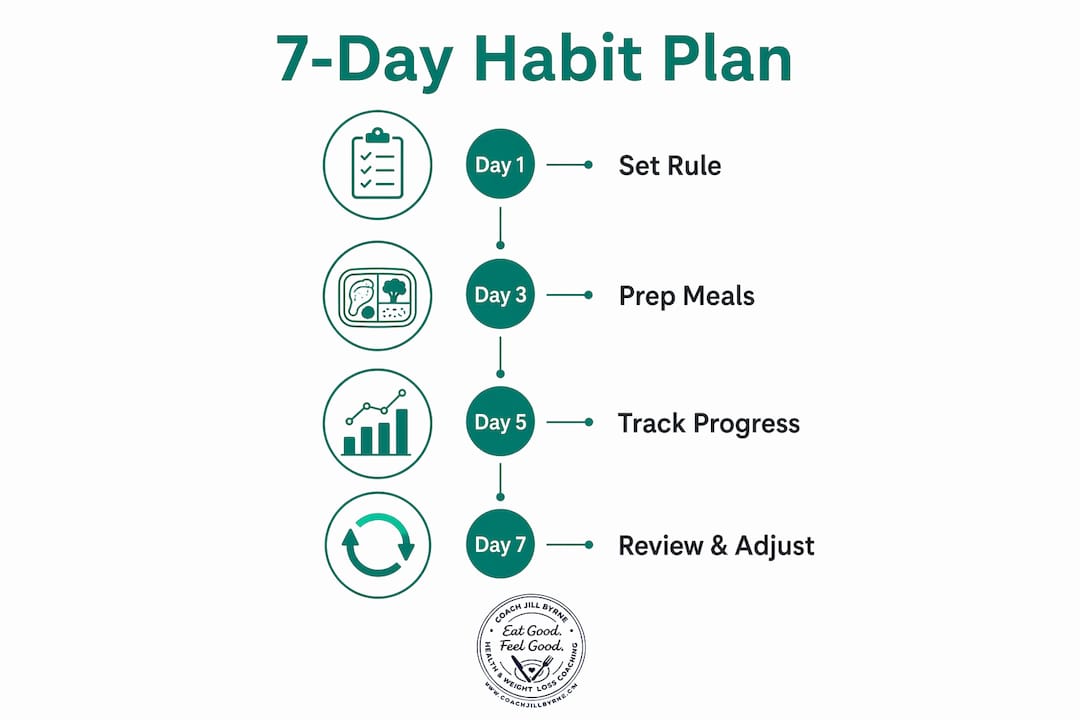
A structured first week converts good intentions into repeated behavior. The goal is not perfection. It is one consistent action per day, supported by a few simple prep moves.

Day | Main Habit | Quick Swap | Evening Prep |
Monday | Half-plate veg at dinner | Swap white rice for brown rice or quinoa | Write Tuesday’s dinner plan |
Tuesday | Add beans to lunch | Replace chips with raw veggies + hummus | Batch-cook a pot of grains |
Wednesday | Plant-forward breakfast | Oatmeal + berries instead of sugary cereal | Portion and label leftovers |
Thursday | Meatless dinner | Bean tacos instead of ground beef | Check fridge; move aging produce to freezer |
Friday | Mindful eating: no screens at dinner | Add a side salad to any meal | Write weekend shopping list |
Saturday | Farmers market or seasonal produce shop | Choose one seasonal vegetable you rarely buy | Batch-cook a large soup or stew |
Sunday | Batch-cook and prep | Prep snack containers with cut vegetables | Set out Monday’s breakfast ingredients |
Week 1 checklist:
Write one shopping list covering the full week before you shop
Complete one batch-cook session (grains, a soup, or roasted vegetables)
Set up a compost container or designated food-scrap bag
Identify two fallback rules for social eating: (1) always choose a vegetable side, (2) eat a small protein-rich snack before a restaurant meal so you order from a place of fullness, not hunger
For more structured approaches to healthy eating routines, the principles behind this week map directly to proven behavioral strategies.
How long does it actually take to form a sustainable eating habit?
Habit design, not willpower, is the fastest route to lasting dietary change. The structure is simple: a clear cue triggers a narrow routine, and a small reward reinforces it. The cue might be sitting down to dinner; the routine is filling half the plate with vegetables; the reward is the satisfaction of a completed, visible action.
Phillippa Lally’s research at UCL found that on average it takes a couple of months to form a new health behavior, though individual times vary widely. Missing one day did not derail the process, but people who were highly inconsistent did not form the habit at all.
Habit formation research finding: The 66-day average reflects behaviors performed in a consistent context. Narrow, repeatable actions reach automaticity faster than broad, complex changes.
The practical implication is clear: choose one specific behavior (not “eat healthier” but “add a half-cup of beans to dinner”) and attach it to a fixed daily context. That specificity is what speeds habit acquisition according to behavioral research. Trying to overhaul five eating behaviors at once slows the process for all of them.
Pro Tip: Reduce the number of decisions required. Pre-portion snacks on Sunday, keep a default dinner formula (protein + produce + whole grain), and let the system do the thinking so you do not have to.
Which plate swaps improve your health and lower your environmental impact?
Small, specific plate changes deliver both health and environmental benefits without requiring a complete dietary overhaul. Prioritizing plants, reducing meat as the centerpiece of a meal, and adding legumes and whole grains are the highest-leverage moves available. Harvard’s Healthy Eating Plate recommends filling half your plate with vegetables and fruits, a guideline that aligns directly with reducing freshwater use and deforestation associated with animal agriculture.
Concrete swaps by meal:
Breakfast: Oatmeal with berries and a handful of walnuts instead of sweetened boxed cereal
Lunch: A grain bowl with chickpeas, roasted vegetables, and tahini instead of a deli-meat sandwich
Dinner: Bean and vegetable tacos instead of ground beef; lentil soup instead of a meat-based stew
Snacks: Raw vegetables with hummus or a small handful of nuts instead of packaged crackers
Top 8 high-impact swaps to try this week:
Replace ground beef with black beans or lentils in one dinner
Add a leafy green side to every lunch
Choose whole-grain bread, pasta, or rice over refined versions
Use eggs or tofu as the protein in one meal per day
Swap a sugary snack for a piece of seasonal fruit
Add frozen spinach or peas to soups, sauces, and stir-fries
Try one seasonal vegetable you do not normally buy
Replace a processed snack food with raw nuts or seeds
CDC guidance reinforces this approach: slicing vegetables for snacks and adding beans to salads are among the simplest, most repeatable behavioral examples for building nutrient-dense eating patterns. When sourcing ingredients, seasonal and local produce tends to cost less and carry a lower environmental footprint. A community-supported agriculture (CSA) share or a weekly farmers market visit can make this habit automatic.
How do meal planning and smart shopping cut food waste fast?
Meal planning and precise shopping are the two fastest sustainability levers available, and they also make healthy eating considerably easier on a busy week. The FDA estimates that food waste accounts for 30–40% of the food supply in the United States. Most of that loss happens at the household level, which means your shopping list and storage habits have a direct environmental impact.
Food waste fact: 30–40% of the U.S. food supply is lost or wasted. Meal planning and mindful prep are among the most effective household-level responses.
Practical tactics that work immediately:
Write a weekly meal plan before shopping, then build your list from it
Use FIFO storage (first in, first out): move older items to the front of the fridge and pantry
Batch-cook one large item per week (a grain, a soup, or roasted vegetables) and portion it into labeled containers
Freeze portions before they spoil rather than after
Plan one “use-it-up” meal per week that draws on whatever is left in the fridge
Pro Tip: Label every container with the date it was made. A piece of tape and a marker takes five seconds and prevents the guessing game that leads to throwing food away.
What kitchen shortcuts keep healthy eating realistic when you’re busy?
A small set of pantry and freezer staples, combined with three reliable shortcuts, prevents the late-day decision fatigue that drives most people toward ultra-processed convenience foods. Mayo Clinic guidance specifically recommends planning ahead, preparing portable make-ahead meals, and selecting frozen options that include whole grains and are lower in sodium per serving.
Pantry and freezer staples to keep on hand:
Canned beans (black, chickpea, kidney)
Canned tomatoes (diced and crushed)
Frozen vegetables (peas, spinach, broccoli, edamame)
Whole grains (brown rice, quinoa, oats, whole-wheat pasta)
Eggs
Olive oil, garlic, and a few dried spices
Three shortcuts that consistently work for busy schedules:
Batch-cook on Sunday. One hour of cooking produces four to five ready-to-assemble meals.
Frozen vegetables as a default. Add them directly to soups, stir-fries, or pasta without any prep.
Sheet-pan or one-pot meals. Combine a protein, a vegetable, and a grain on one pan or in one pot. Cleanup is minimal and the formula is repeatable. Meal prep shortcuts like these scale easily from weeknights to busier holiday periods.
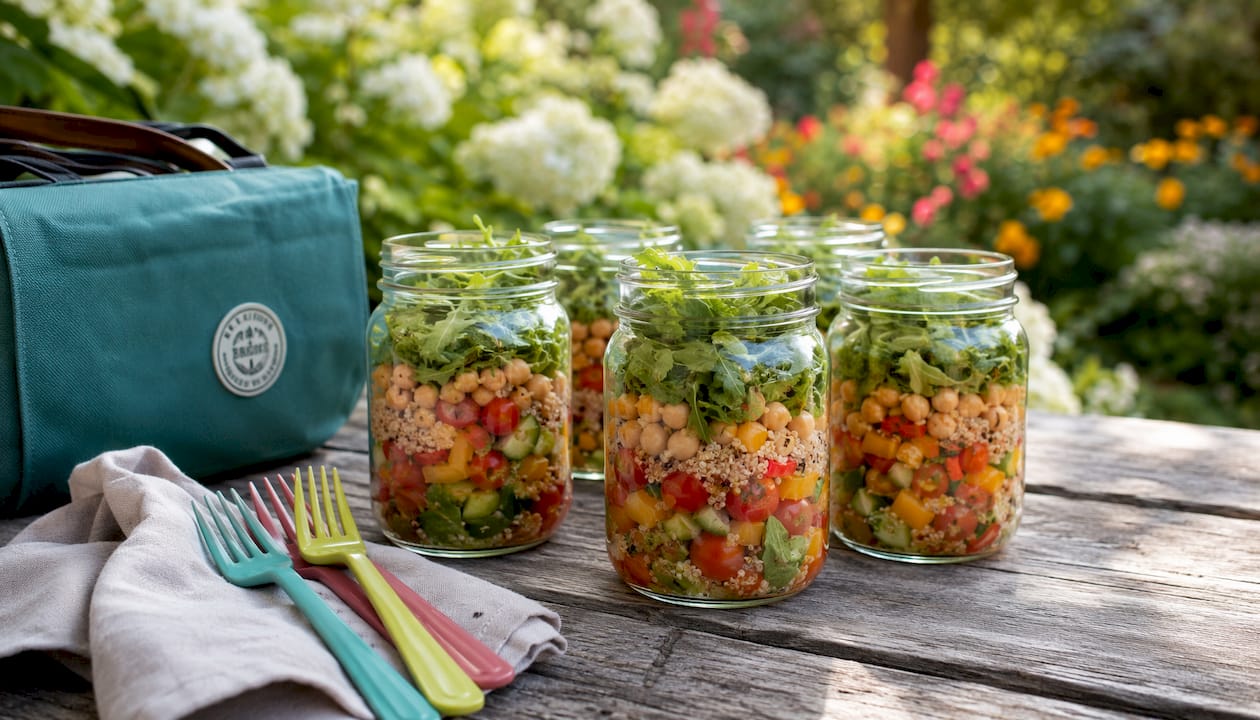
Pro Tip: Mason-jar salads and overnight oats take under five minutes to assemble the night before and eliminate the “I have nothing ready” problem that leads to skipped meals or drive-through stops.
How do you track progress without becoming obsessive about it?
Tracking a small number of objective, easy-to-measure indicators is enough to stay motivated and course-correct without turning eating into a data project. Two or three metrics, reviewed weekly, give you a clear picture of progress.
Metric | How to measure | Target frequency |
Plant-forward meals per week | Count meals where plants are the main component | Aim for 4+ per week |
Vegetable servings per day | Count servings at each meal (1 serving = ½ cup cooked or 1 cup raw) | Aim for 3–5 per day |
Meal plan completed | Did you follow your weekly plan? Yes/No | Weekly review |
Food waste reduction | Count spoiled items discarded or estimate bin weight | Track weekly; aim for fewer each week |
The 2025–2030 Dietary Guidelines for Americans recommend keeping sodium under 2,300 mg per day and limiting added sugars. These two numbers serve as simple flags when reading labels on packaged foods.
Four quick tracker ideas:
Habit streak: Mark each day you completed your one narrow plate rule
Plate score: Rate each dinner 1–3 on how plant-forward it was
Food-waste count: Note how many items you threw away spoiled each week
Weekly plan completion: Did you write and follow a meal plan? Track as a simple yes or no
How does personalized coaching speed up sustainable habit change?
Individualized coaching shortens the path to habit automaticity by tailoring cues to your specific schedule, simplifying choices, and providing consistent accountability. The research on habit formation is clear that specificity and consistency matter more than motivation, and a coach’s role is to supply both.
Coachjillbyrne’s approach centers on habit-based coaching, real-food meal planning, portion training, and structured accountability. Rather than prescribing a rigid diet, the coaching process identifies the behaviors that fit your existing routine and builds from there. Clients working through the program report meaningful improvements in energy, food confidence, and long-term weight management through changes that feel practical rather than punishing.
A first coaching session with Coachjillbyrne typically covers a baseline assessment of current eating patterns, identification of two or three high-leverage habit targets, and a customized version of the 7-day fast-start plan above. From there, weekly accountability check-ins reinforce the habit loop and adjust the plan as your routine evolves. For clients on GLP-1 medications, the coaching also addresses the specific nutritional needs that arise during that process.
Key Takeaways
Building sustainable eating habits fast comes down to one narrow plate rule, a structured first week, and one simple metric tracked consistently over time.
Point | Details |
Start with one rule | Pick one specific plate habit (half-plate veg at dinner) and attach it to a daily cue. |
Expect 66 days to automaticity | Research shows an average of 66 days (range: 18–254 days) for a new health behavior to become automatic; narrow behaviors get there faster. |
Meal planning cuts waste | The FDA estimates that a significant portion of the U.S. food supply is wasted; planning meals in advance can help reduce this waste. |
Track two or three metrics | Count plant-forward meals per week and vegetable servings per day; review weekly to stay on course. |
Coachjillbyrne accelerates the process | Personalized habit-based coaching from Coachjillbyrne tailors cues, simplifies choices, and provides accountability for faster, lasting results. |
The narrow rule is the whole strategy
Most people approach sustainable eating as a complete lifestyle renovation. They plan to buy all organic, eliminate meat entirely, meal prep every Sunday, track every macro, and compost religiously, all starting Monday. By Wednesday, the complexity collapses and they are back to their previous patterns.
The research does not support that approach. What it supports is specificity and repetition in a consistent context. One narrow rule, repeated daily, builds the neural pathway that eventually makes the behavior automatic. The environmental and health benefits compound from there, not because you did everything at once, but because one reliable habit created the conditions for the next one.
The clients who make the fastest progress are not the most motivated ones. They are the ones who designed a system simple enough to survive a bad week. That is the real work of sustainable eating: not finding the perfect diet, but building a structure that holds when life gets complicated.
Personalized support for building habits that actually last
Coachjillbyrne offers a direct alternative to generic diet plans for people who want real, lasting results without the guesswork of going it alone. The coaching program covers habit-based nutrition, real-food meal planning, portion training, accountability check-ins, and specialized support for clients using GLP-1 medications. The focus is always on practical changes that fit your actual life, not an idealized version of it.

The process starts with a discovery session that includes a baseline nutrition assessment and a customized fast-start plan built around your schedule, preferences, and goals. From there, weekly coaching sessions reinforce the habit loop, track your metrics, and adjust the plan as your routine changes. Clients typically begin seeing measurable progress within the first two to three weeks.
If you are ready to move from intention to consistent action, visit coachjillbyrne.com to book your first session and receive a personalized assessment along with a sample meal plan to get started.
Useful sources
UCL Habit Research (Phillippa Lally): The original study establishing the 66-day average for habit automaticity and the role of consistent context cues.
Harvard Nutrition Source: Sustainable Eating: Practical guidance on plant-forward eating and its dual health and environmental benefits.
FDA: Food Loss and Waste: U.S. government data on household food waste and practical reduction strategies.
CDC: Healthy Eating Tips: Behavioral examples for building nutrient-dense eating patterns through small, repeatable swaps.
Mayo Clinic Health System: Healthy Eating in a Hurry: Practical shortcuts for busy schedules, including sodium thresholds for frozen meal selection.
Dietary Guidelines for Americans, 2025–2030: Official nutrient targets, sodium limits, and added-sugar guidance for the general U.S. population.
British Psychological Society: How to Form a Habit: Research-backed guidance on narrow behavior selection and consistent context cues for faster habit formation.
FAQ
La recherche de Phillippa Lally à l’UCL a trouvé une moyenne de 66 jours pour qu’un nouveau comportement de santé devienne automatique, avec une variation individuelle allant de 18 à 254 jours. Les comportements étroits, répétés dans un contexte quotidien cohérent, atteignent l’automaticité plus rapidement.
What is the 3-3-3 rule for eating?
The 3-3-3 rule is not a standardized nutrition guideline with a single canonical definition. A common version used in practical nutrition coaching refers to eating three meals, three snacks, and three liters of water per day, though definitions vary by source and context.
How do you build sustainable eating habits quickly?
Pick one narrow plate rule (such as filling half your plate with vegetables at dinner), attach it to a daily cue, and repeat it consistently. Adding a weekly meal plan and one batch-cook session accelerates progress by reducing daily decisions.
What is the single most impactful food change for sustainability?
Shifting toward plant-forward meals, particularly replacing meat as the main protein in one or two meals per week, reduces freshwater use and environmental impact while supporting personal health, according to Harvard’s Nutrition Source.
Can personalized coaching help you build these habits faster?
Yes. Coachjillbyrne’s habit-based coaching tailors cues, simplifies food choices, and provides weekly accountability, which addresses the consistency gap that prevents most people from reaching the automaticity threshold on their own.
Recommended
Comments