
How to Teach Children Healthy Eating Habits That Last
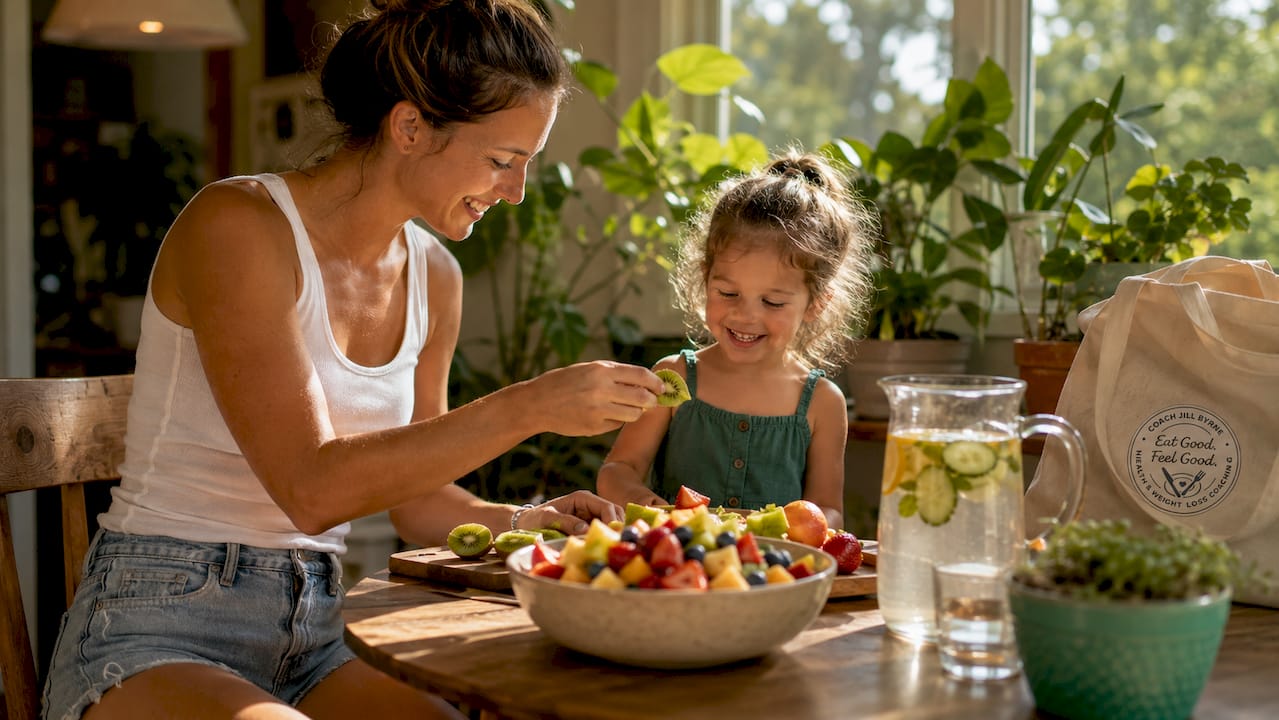
Teaching children healthy eating habits means guiding them to understand nutrition, listen to their bodies, and enjoy a variety of wholesome foods without judgment. Pediatric nutrition experts, including the USDA MyPlate program, the American Academy of Pediatrics (AAP), and the Society of Behavioral Medicine (SBM), agree that caregivers are the most powerful influence on a child’s food choices. The habits children build before age 10 tend to follow them into adulthood. That makes the strategies you use now more consequential than any single meal or snack.
What are the right nutritional guidelines for children?
Balanced nutrition for children is defined as a daily diet that includes fruits, vegetables, whole grains, protein foods, and dairy, while limiting added sugars, salt, and saturated fats. The NIDDK confirms that a balanced plate covers all five food groups consistently. That variety gives children the vitamins, minerals, and energy they need to grow and concentrate in school.
Sugar limits are one of the most specific and actionable guidelines available. Children aged 4–6 should consume no more than 19g of free sugars per day, which equals roughly 5 teaspoons. That limit rises to 24g for ages 7–10, and 30g for ages 11 and up. A single fruit-flavored yogurt or juice box can easily exceed the younger age group’s daily limit, so reading nutrition labels matters.
Milk intake is another area where parents often overshoot without realizing it. Allowing children to fill up on milk between meals reduces their appetite for nutrient-dense foods at mealtimes. The recommended maximum is 350 mL per day for children over one year old, roughly equivalent to one and a half cups.
Age Group | Max Free Sugar per Day | Max Daily Milk Intake |
4–6 years | 19g (5 teaspoons) | 350 mL |
7–10 years | 24g (6 teaspoons) | 350 mL |
11+ years | 30g (7 teaspoons) | 350 mL |
How can caregivers model healthy eating without creating food fears?
The language caregivers use around food shapes a child’s relationship with eating for life. The SBM recommends avoiding food labels like “good” or “bad,” because those labels teach children to feel guilt or shame around certain foods. Instead, frame food by its purpose: “This gives your muscles energy,” or “This helps your eyes stay sharp.”
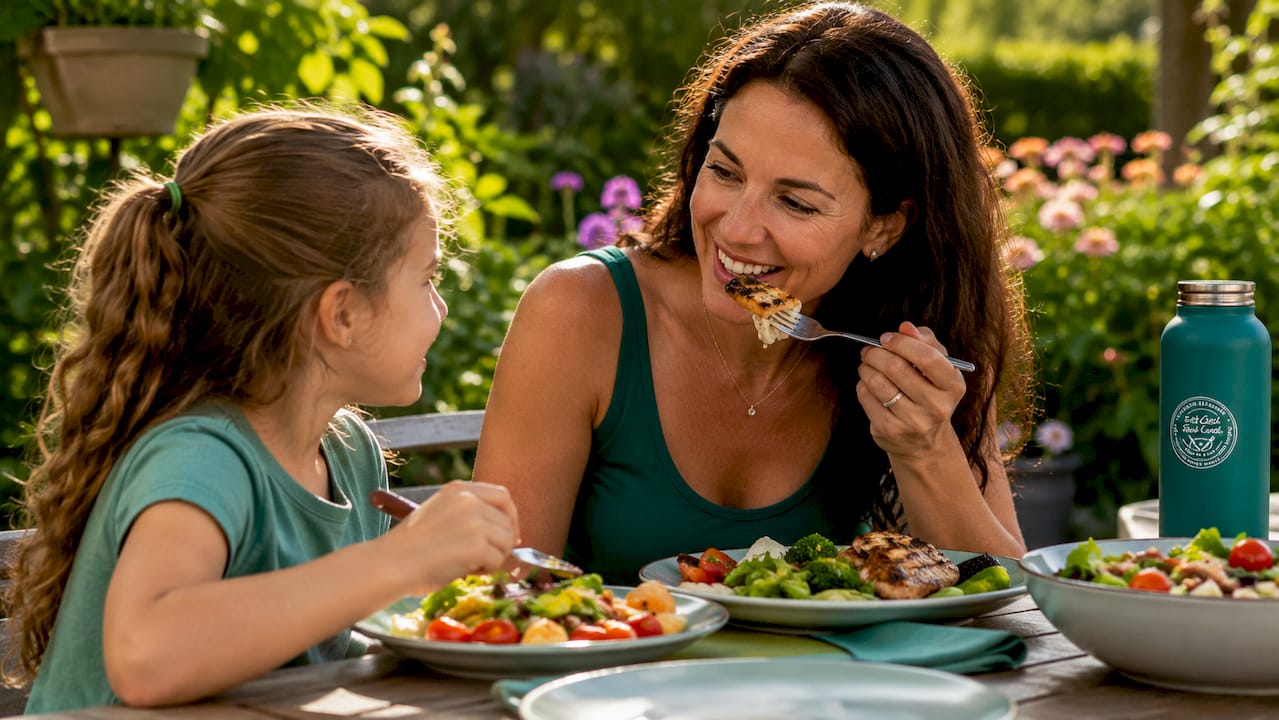
Mindful eating is the practice of paying attention to taste, texture, hunger, and fullness during a meal. It is the recognized clinical term for what most parents call “slowing down at the table.” Encourage your child to notice when they feel satisfied rather than pushing them to finish everything on the plate. That builds internal appetite regulation, which is far more durable than external rules.
Family mealtimes are one of the most effective tools available. The SBM notes that family meals promote both connection and the modeling of healthy behaviors. When children watch adults choose vegetables, try unfamiliar foods, and eat without distraction, they absorb those behaviors naturally.
Discuss food’s role in energy, growth, enjoyment, and cultural identity.
Avoid using food as a reward or comfort. The SBM confirms that food as reward fosters unhealthy emotional eating patterns. Offer quality time or a favorite activity instead.
Introduce new foods alongside familiar favorites to reduce resistance.
Serve the same meal to the whole family rather than cooking separate “kid food.”
Praise curiosity about food, not just consumption.
Pro Tip: Remove screens from the table during meals. Screen-free mealtimes improve mindful eating by keeping children focused on hunger and fullness cues rather than external distractions.
What practical steps involve children in healthy meal planning?
Children who participate in choosing and preparing food are more likely to eat it. The AAP confirms that kids who help shop and cook show more consistent healthy eating habits over time. That ownership effect is real and measurable. Giving a child the job of picking the salad greens or washing the vegetables creates a direct connection between effort and the meal on the table.
Age-appropriate tasks build both confidence and skill. A five-year-old can rinse produce and tear lettuce. A nine-year-old can measure ingredients and stir sauces. A twelve-year-old can follow a simple recipe from start to finish. Each task teaches a practical skill while reinforcing the idea that cooking is a normal, enjoyable part of daily life. The role of home cooking in family health extends well beyond nutrition.
Let children choose one fruit or vegetable per grocery trip.
Assign a weekly “sous chef” role that rotates among family members.
Use family-style serving so children can self-regulate portion sizes.
Ask children to name a dish or suggest a topping to increase buy-in.
Try meal prep together on weekends to simplify weeknight dinners.
Pro Tip: Batch-cook grains, proteins, and roasted vegetables on Sunday. When children help assemble their own bowls during the week, they practice portion awareness and food variety at the same time.
How to establish structured mealtime routines and healthy snacking habits?
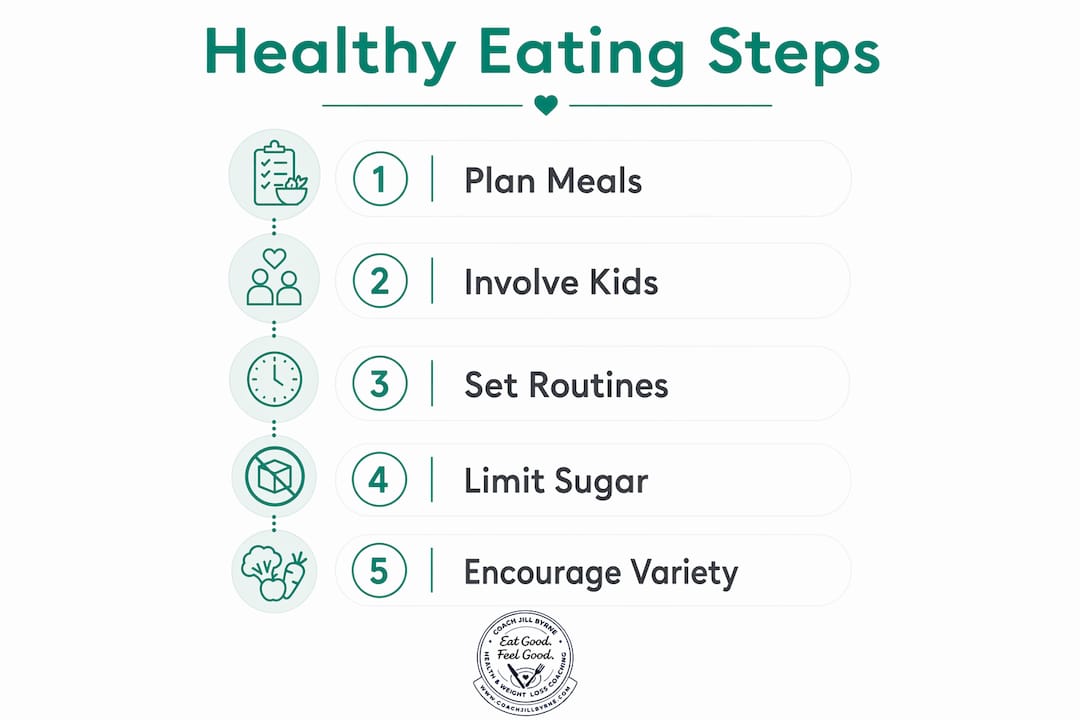
Consistent meal and snack times are the foundation of appetite regulation. When children eat at predictable intervals, they arrive at meals hungry rather than grazing all day on low-nutrient foods. Grazing patterns make it harder for children to recognize genuine hunger and fullness, which undermines the mindful eating skills you are building.
Healthy snacking is not about restriction. It is about offering foods that provide real nutritional value between meals. Water is the best default drink. The NIDDK recommends that caregivers use water as the primary beverage and limit sugar-sweetened drinks consistently. A single can of soda can exceed a child’s entire daily free sugar limit.
Strong snack options include:
Vegetable sticks with hummus or a yogurt-based dip
Fresh fruit with a small portion of nut butter
Whole grain crackers with cheese
Plain yogurt with berries
Hard-boiled eggs
Mealtime best practices worth building into your routine:
Set three meals and one to two planned snacks per day.
Eat at the table, not in front of a screen or in the car.
Offer water at every meal and snack.
Keep processed snacks and sugary drinks out of regular rotation.
Avoid letting children fill up on milk between meals.
Pro Tip: Never use food as a behavioral bribe. Offering dessert as a reward for eating vegetables teaches children to devalue vegetables and overvalue sweets. Praise the behavior instead.
What are effective ways to overcome picky eating?
Picky eating is normal, and it does not require a battle at the dinner table. The NIDDK confirms that children need repeated exposure to new foods before they accept them. A child may need to see a food on the plate ten or more times before they try it. Patience is not passive. It is a deliberate strategy.
Preparation method matters as much as the food itself. A child who refuses cooked broccoli may accept it raw with a dip. A child who dislikes whole tomatoes may enjoy them grated into a sauce. Offering the same vegetable in multiple forms increases the chance of finding one that works. Involve children in choosing new recipes to give them a sense of control over the process.
Approach | What to Do | What to Avoid |
Repeated exposure | Offer new foods alongside familiar ones | Removing the food after one rejection |
Preparation variety | Serve raw, cooked, grated, or blended | Serving only one preparation method |
Positive reinforcement | Praise trying, not finishing | Punishing refusal or forcing bites |
Child involvement | Let kids pick recipes or toppings | Cooking separate “kid-only” meals |
Low-pressure environment | Keep meals relaxed and conversational | Making food refusal a source of conflict |
Key Takeaways
Teaching children healthy eating habits requires consistent modeling, structured routines, and a positive food environment built over time, not a single conversation.
Point | Details |
Follow age-specific sugar limits | Children aged 4–6 should consume no more than 19g of free sugars daily. |
Avoid food labeling | Calling foods “good” or “bad” creates unhealthy emotional relationships with eating. |
Involve kids in food prep | Children who help shop and cook show more consistent healthy habits over time. |
Set structured meal times | Predictable meal and snack schedules support appetite regulation and reduce grazing. |
Use repeated exposure for picky eating | Offer new foods alongside familiar ones many times before expecting acceptance. |
What I have learned from watching families build food habits
The parents who see the most lasting change are not the ones who overhaul everything at once. They are the ones who pick one or two habits and hold the line consistently. I have seen families spend months debating whether to cut out sugar entirely, while the real issue was that their children had never once seen an adult genuinely enjoy a salad. Children do not do what you tell them. They do what they see you do.
The concept of a healthy food culture at home is not about perfection. It is about creating an environment where nutritious food is normal, cooking is shared, and meals are free from stress and judgment. That environment is built in small moments: a parent choosing water over soda, a child helping rinse strawberries, a family sitting together without phones.
Picky eating is the issue I hear about most, and my honest view is that most of it resolves when pressure is removed. The moment a meal becomes a conflict, the food itself becomes the enemy. Take the pressure off. Keep offering. Keep modeling. Progress is not linear, and that is completely fine.
— Coach Jill
Nutrition support for your whole family from Coachjillbyrne
Building healthy habits for your children starts with building them for yourself. Coachjillbyrne offers practical nutrition coaching and guidance designed around real food, real life, and sustainable change. Whether you are working on your own eating habits or looking for strategies to bring the whole family on board, the resources at Coachjillbyrne cover meal planning, clean eating, and habit-based approaches that fit into a busy household.

The blog at Coachjillbyrne includes in-depth content on clean eating for kids and family nutrition that goes well beyond the basics. When you model the habits you want your children to build, the whole family benefits.
FAQ
How much sugar can a child have per day?
Children aged 4–6 should consume no more than 19g of free sugars daily. That limit rises to 24g for ages 7–10 and 30g for ages 11 and up.
How do I encourage a picky eater to try new foods?
Offer new foods alongside familiar favorites without pressure, and repeat the exposure many times. Children often need ten or more encounters with a food before they accept it.
Should I label foods as healthy or unhealthy for my child?
Avoid labeling foods as “good” or “bad.” The SBM recommends discussing food’s purpose, such as energy, growth, or enjoyment, to build a positive and balanced relationship with eating.
How much milk should a child drink per day?
Children over one year old should drink no more than 350 mL of milk per day. Exceeding that amount can reduce appetite for nutrient-dense foods at mealtimes.
What is the best way to involve children in healthy eating?
Let children choose a fruit or vegetable at the grocery store and assign age-appropriate cooking tasks at home. The AAP confirms that children who participate in shopping and cooking develop more consistent healthy eating habits over time.
Recommended
Comments