
Muscle Loss Risks for GLP-1 Users: What to Know

GLP-1 medications like Ozempic and Wegovy are producing real, measurable weight loss results for millions of Americans. But roughly 25%–40% of total weight lost during GLP-1 therapy may come from lean body mass, not fat alone. That figure deserves your attention, not panic. Much of that lean mass loss is preventable with two well-supported steps: adequate daily protein intake and consistent resistance training. A DXA scan gives you the clearest baseline picture of where you stand before or during treatment. The rest of this article explains why muscle loss risks for GLP-1 users are real, who faces the highest risk, and exactly what to do about it.
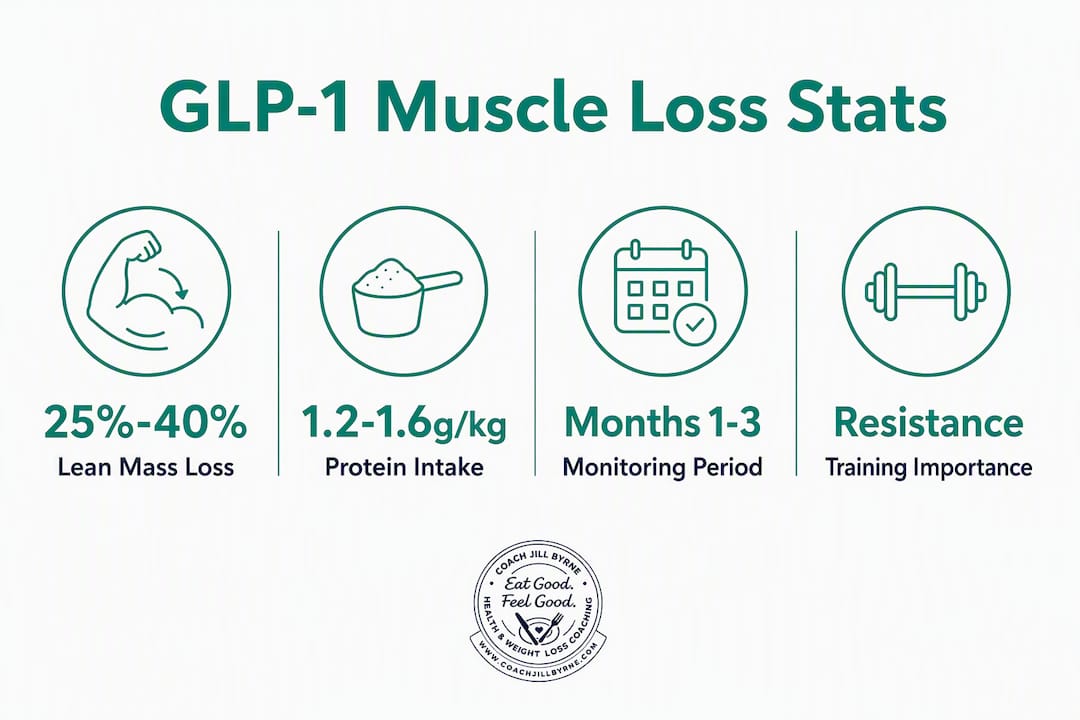
Table of Contents
How much lean mass do you actually lose on GLP-1 therapy?
The short answer: it varies, but the range seen across clinical trials is meaningful. Review evidence places lean body mass at roughly 25%–40% of total weight lost in GLP-1 trials. Weight loss includes lean mass alongside fat, but exact amounts vary widely depending on individual factors.

One important distinction: lean body mass (LBM) is not the same as skeletal muscle. LBM includes organs, water, bone mineral, and connective tissue. When a DXA scan reports a drop in LBM, some of that reflects reduced organ size, lower glycogen stores, and fluid shifts that accompany weight loss, not pure muscle fiber loss.
Trial / Source | Weight Loss | Lean Mass Contribution |
GLP-1 review (Mass General) | Varies by dose/duration | ~25%–40% of total loss |
Cell Reports Medicine (2026) | Predominant fat loss | Small absolute LBM decrease; relative strength preserved |
Acta Diabetologica review (2025) | Caloric deficit driven | Mechanistic LBM risk confirmed |
Timing matters too. Measurable LBM changes tend to appear within the first several months of treatment and continue across longer trial durations of 68–72 weeks. The rate of weight loss influences how much lean mass is involved: faster loss generally means a higher lean-mass proportion, which is one reason slower, sustainable weight loss tends to protect body composition better.
Why GLP-1 medications can contribute to muscle loss
The core driver is a sustained negative energy balance. GLP-1 receptor agonists suppress appetite significantly, which reduces total caloric intake. When the body runs a consistent calorie deficit, it draws on stored energy from both fat and lean tissue.
Several biological pathways converge to reduce muscle protein synthesis during this process:
Reduced mTOR signaling: mTOR is the primary cellular switch for muscle protein synthesis. Caloric restriction suppresses it, slowing the rate at which muscle fibers are repaired and rebuilt.
Lower insulin and IGF-1 signaling: Both hormones have anabolic effects on muscle. A sustained caloric deficit reduces circulating insulin and IGF-1, reducing the anabolic stimulus.
Increased proteolysis: The body breaks down muscle protein for gluconeogenesis when caloric intake is low, especially if dietary protein is insufficient.
Hormonal shifts: Cortisol tends to rise during prolonged caloric restriction, further promoting muscle protein breakdown.
Behavioral factors compound these biological ones. Nausea is a common early side effect of semaglutide-based medications like Ozempic and Wegovy. Smaller meals, skipped meals, and food aversions reduce total protein intake at exactly the time the body needs more of it to offset the catabolic pressure of a caloric deficit. Reduced physical activity, whether from fatigue or simply eating less, removes the mechanical loading stimulus that signals muscles to maintain their mass.
The appetite suppression that makes GLP-1 medications effective for weight loss is also the mechanism that makes deliberate protein planning non-negotiable. Without a structured approach to hitting protein targets, the caloric deficit that drives fat loss will pull from lean tissue as well.
Pro Tip: If nausea is reducing your appetite in the first 4–8 weeks of GLP-1 treatment, prioritize liquid protein sources like Greek yogurt, protein shakes, or cottage cheese. They are easier to tolerate in small volumes and still deliver meaningful protein per serving.

Who is most likely to lose clinically important muscle on GLP-1s?
Not everyone on semaglutide or another GLP-1 medication faces the same degree of risk. Several factors increase the likelihood that lean mass loss will be clinically significant rather than a minor compositional shift.
Higher-risk profiles include:
Older adults (60+): Baseline muscle mass declines with age, and the anabolic response to protein is blunted, meaning older adults need more protein per kilogram to achieve the same muscle-preserving effect.
Postmenopausal women: Estrogen plays a role in muscle protein synthesis. Its absence after menopause reduces the anabolic response to both protein and exercise.
People with low baseline muscle mass: Starting with less muscle means any absolute loss carries greater functional consequences.
Rapid or large weight loss: Losing weight quickly increases the proportion of lean mass in total weight lost, as noted in Mayo Clinic patient guidance.
Low protein intake: Consistently eating below 1.0 g/kg/day while in a caloric deficit accelerates lean mass loss.
Sedentary lifestyle: Without resistance training, there is no mechanical signal to preserve muscle during weight loss.
Type 2 diabetes or frailty: Both conditions are independently associated with reduced muscle mass and impaired protein metabolism.
The highest-risk combination is an older adult with low baseline muscle, rapid weight loss, low protein intake, and no structured exercise. That profile warrants early monitoring and a referral to a registered dietitian and physical therapist before or shortly after starting treatment.
Pro Tip: Ask your prescribing clinician for a baseline body composition assessment, ideally a DXA scan, before starting GLP-1 therapy if you are over 60, have a history of low muscle mass, or are planning aggressive weight loss targets. Early data makes later comparisons meaningful.
Why preserving muscle matters beyond the scale
Muscle is metabolically active tissue. Losing it has consequences that extend well beyond how you look or feel in the short term.
Short- and long-term risks of significant muscle loss include:
Reduced strength and functional capacity: Everyday tasks like climbing stairs, carrying groceries, or getting up from a chair become harder.
Higher fall and fracture risk: Muscle weakness is one of the strongest predictors of falls in older adults, and falls are a leading cause of injury-related hospitalization in the United States.
Sarcopenia: Clinically low muscle mass combined with reduced function is classified as sarcopenia, a condition associated with increased morbidity and mortality in older populations.
Lower resting metabolic rate: Muscle burns more calories at rest than fat. Losing it reduces your baseline caloric expenditure, making weight regain more likely after treatment ends.
Worsened insulin resistance in some contexts: Skeletal muscle is the primary site of glucose disposal. Significant muscle loss can impair glucose metabolism, which is particularly counterproductive for people using GLP-1s to manage type 2 diabetes.
A Wiley review on incretin-mimetic drug strategies makes the case explicitly: preserving muscle mass should be treated as a co-equal treatment goal alongside fat loss, not an afterthought. For older or frail individuals, the functional consequences of unchecked lean mass loss can outweigh the metabolic benefits of weight reduction.
Evidence-backed priorities to reduce muscle loss on GLP-1 treatment
Two interventions have the strongest support for muscle preservation in GLP-1 users: adequate protein intake and resistance training. Used together with GLP-1 medication, this combined approach produces better lean-mass outcomes than diet or exercise alone.
Protein targets:
Aim for 1.2–1.6 g of protein per kilogram of body weight per day. For a 180-pound (82 kg) person, that is roughly 98–131 g of protein daily.
Distribute protein across meals. Aim for 25–40 g per meal to maximize muscle protein synthesis at each eating occasion.
Prioritize high-quality, complete protein sources: eggs, chicken, fish, Greek yogurt, cottage cheese, legumes, and whey or plant-based protein supplements when whole-food intake falls short.
Resistance training targets:
Train 2–3 times per week, targeting all major muscle groups (legs, back, chest, shoulders, arms).
Progressive overload matters: gradually increase resistance or volume over time to maintain the anabolic stimulus.
Even bodyweight exercises (squats, push-ups, rows with resistance bands) are effective for beginners or those without gym access.
Supplements with evidence:
Creatine monohydrate has a well-established safety profile and supports muscle strength and power output, particularly in older adults. A standard dose of 3–5 g/day is commonly used.
Rapid weight loss can deplete fat-soluble vitamins and minerals. A basic multivitamin and adequate calcium and vitamin D intake are reasonable precautions, particularly for postmenopausal women.
Pro Tip: When appetite suppression makes hitting protein targets feel impossible, shift to protein-dense, low-volume foods: two eggs with cottage cheese delivers roughly 30 g of protein in under 300 calories. Pair that with a small Greek yogurt and you have covered half your daily target in two small meals.
Practical meal, supplement, and workout tactics when appetite is low
Appetite suppression is the most common barrier to meeting protein targets on Ozempic or Wegovy. The solution is not eating more volume but choosing foods with a high protein-to-calorie ratio and eating on a schedule rather than relying on hunger cues.
High-protein, low-volume food options:
Greek yogurt (plain, 2%): ~17 g protein per 6 oz serving
Cottage cheese (low-fat): ~14 g protein per half cup
Canned tuna or salmon: ~20–25 g protein per 3 oz serving
Eggs: ~6 g protein per egg; two eggs plus one egg white delivers ~15 g
Whey or plant-based protein shake: ~20–25 g protein per scoop
Edamame: ~17 g protein per cup (cooked)
For portion control on GLP-1s, the goal is not a large plate but a protein-first plate. Build every meal around the protein source first, then add vegetables and a small amount of complex carbohydrate.
Resistance training templates:
Beginner (home-based, 3x/week): Bodyweight squats, push-ups, resistance band rows, glute bridges, and plank holds. Three sets of 10–15 reps per exercise. Sessions run 20–30 minutes.
Gym-based (2–3x/week): Goblet squats, dumbbell rows, chest press, Romanian deadlifts, and shoulder press. Three sets of 8–12 reps with progressive load increases every 1–2 weeks.
People with cardiovascular disease, joint issues, or diabetes should confirm exercise parameters with their physician before starting a new resistance program.
Supplement notes:
Creatine monohydrate: 3–5 g/day, taken consistently. Safe for most healthy adults; those with kidney disease should consult their clinician first.
Vitamin D and calcium: particularly relevant for postmenopausal women and older adults losing weight rapidly.
Avoid high-dose single-nutrient supplements without clinical guidance; rapid weight loss already stresses micronutrient balance.
Pro Tip: Set a phone reminder for protein-focused mini-meals every 3–4 hours rather than waiting for hunger. On GLP-1 medications, hunger signals are suppressed, so scheduled eating is the most reliable way to hit daily protein targets.
How to monitor muscle and coordinate with your care team
Monitoring body composition during GLP-1 therapy gives you objective data to guide decisions, not just a number on the scale. Three tools are commonly used, each with different trade-offs.
Monitoring methods:
DXA (dual-energy X-ray absorptiometry): The clinical standard for body composition. Measures lean soft tissue, fat mass, and bone density with high precision. Limitation: cannot distinguish between muscle, organ tissue, glycogen, and water. Best used at baseline and every 6–12 months during active treatment.
Bioelectrical impedance analysis (BIA): Available in many gyms, clinics, and consumer scales. More accessible than DXA but sensitive to hydration status. Useful for tracking trends over time when conditions are standardized (same time of day, same hydration level).
Functional tests: Handgrip strength (measured with a dynamometer) and the timed up-and-go test provide direct measures of muscle function. Pairing DXA with functional testing gives a more complete clinical picture than composition data alone.
Monitoring checklist for your clinician appointment:
Request a baseline DXA before or within the first 3 months of GLP-1 treatment if you are over 60 or have low baseline muscle.
Ask about handgrip strength testing or a functional mobility assessment.
Discuss protein intake targets and whether a referral to a registered dietitian is appropriate.
Review your resistance training plan and ask for a physical therapist referral if you have joint, balance, or mobility limitations.
Schedule a follow-up body composition assessment at 6 months.
Pro Tip: When speaking with your prescribing clinician, use specific language: “I’d like to track lean mass separately from total weight loss. Can we schedule a DXA at baseline and at six months?” Clinicians respond well to specific, informed requests.
A coach-led 4-week action plan to protect muscle on GLP-1s
This plan is designed for GLP-1 users who want a structured starting point. Adjust protein targets to your body weight and modify exercise intensity based on your fitness level and any comorbidities.
Week 1: Establish your baseline. Weigh yourself and, if possible, schedule a DXA or BIA assessment. Calculate your daily protein target (body weight in kg × 1.2 to 1.6). Log food for 3–5 days to see where you currently stand on protein intake. Begin 2 resistance sessions using the beginner template above.
Week 2: Build the protein habit. Restructure meals around protein-first eating. Identify 3–5 high-protein, low-volume foods you tolerate well on your current GLP-1 dose. Set meal reminders. Continue 2–3 resistance sessions. Note any nausea patterns and adjust meal timing accordingly.
Week 3: Add progressive load. Increase resistance or reps in your training sessions. Add creatine monohydrate (3–5 g/day) if cleared by your clinician. Review your protein log and close any gaps with a protein shake or high-protein snack. Check in with your care team if you are experiencing significant nausea or food aversions.
Week 4: Assess and adjust. Compare current weight and, if available, body composition data to your week-1 baseline. Evaluate strength progress (can you do more reps or lift more weight?). Adjust protein sources if any foods are no longer tolerable. Schedule your 6-month DXA if not already booked.
A registered dietitian or nutrition coach can personalize this plan for your specific GLP-1 dose, side-effect profile, and food preferences. For sustainable fat loss habits that extend beyond the first month, behavior-based coaching provides the accountability structure most people need to stay consistent.
Pro Tip: If you have kidney disease or are at risk for it, consult your clinician before increasing protein intake significantly. High protein targets are appropriate for most GLP-1 users but require medical clearance for those with compromised kidney function.
Limitations of the evidence and common misconceptions
The research on GLP-1s and muscle loss is growing rapidly, but several important limitations shape how to interpret the numbers.
Most trials measure LBM using DXA, which, as noted earlier, captures organ tissue, glycogen, and fluid alongside skeletal muscle. This means the 25%–40% lean mass figure likely overstates actual muscle fiber loss. A 2026 Cell Reports Medicine analysis00082-0) found that GLP-1 medicines primarily reduce fat mass, with small absolute decreases in LBM, and that relative strength and functional measures were often preserved or improved. Losing some absolute lean mass while improving your strength-to-weight ratio is a meaningfully different outcome than losing muscle function.
A second misconception is that GLP-1 medications cause muscle loss independently of caloric deficit. Current evidence points to the caloric deficit and reduced protein intake as the primary drivers, not a direct pharmacological effect on muscle tissue. The medication creates the conditions for muscle loss; behavior determines whether that loss occurs.
Variability across trials is also real. Age, baseline muscle mass, protein intake, and exercise habits all influence outcomes significantly. A 35-year-old with high baseline muscle who trains consistently will have a very different body composition result than a sedentary 65-year-old on the same medication.
Pro Tip: Never adjust your GLP-1 dose or discontinue medication based on body composition concerns alone. Any medication decision must be made with your prescribing clinician, who can weigh the full picture of your metabolic health.
Key Takeaways
GLP-1 users who combine adequate protein intake with consistent resistance training preserve significantly more lean mass than those who rely on medication alone.
Point | Details |
Lean mass loss range | Roughly 25%–40% of total weight lost during GLP-1 therapy may be lean body mass, not all of which is skeletal muscle. |
Top prevention steps | Aim for 1.2–1.6 g of protein per kg of body weight daily and complete resistance training 2–3 times per week. |
Monitoring recommendation | Request a baseline DXA scan and pair it with functional strength testing; reassess at 6 months during active treatment. |
Highest-risk groups | Older adults, postmenopausal women, and people with low baseline muscle or rapid weight loss should prioritize early monitoring and specialist referral. |
Coachjillbyrne support | Coachjillbyrne offers GLP-1 nutrition support and meal planning designed to help clients meet protein targets and build consistent resistance training habits. |
What actually works when the evidence meets real life
The research on GLP-1s and muscle loss is clear enough on the priorities: protein, resistance training, and monitoring. What the studies cannot fully capture is how hard it is to hit a 120-gram daily protein target when you are nauseous, eating half your normal volume, and managing a full schedule.
That gap between knowing what to do and actually doing it consistently is where most people struggle. The clients who protect their muscle best are not the ones who follow the most aggressive protocol. They are the ones who build a small, repeatable routine: a protein-first breakfast they can tolerate, two resistance sessions per week they actually show up for, and a scheduled check-in that keeps them accountable when motivation dips.
The evidence also supports a more reassuring framing than most GLP-1 coverage offers. Losing some lean body mass during significant weight loss is normal and expected. The goal is not zero LBM loss. It is preserving enough muscle to maintain strength, metabolic function, and quality of life while the fat loss does its work. That is an achievable target for most people, with the right structure in place.
Personalized GLP-1 nutrition support with Coachjillbyrne
Managing protein intake, resistance training, and body composition monitoring while navigating GLP-1 side effects is a lot to coordinate on your own. Coachjillbyrne provides personalized nutrition coaching built specifically for GLP-1 users: meal planning for low appetite, protein-first eating strategies, resistance training guidance, and accountability support that keeps the plan moving week to week.

The first session focuses on your current protein intake, your GLP-1 dose and side-effect profile, and your realistic training capacity. From there, the plan is adjusted to your body weight targets, food preferences, and schedule. Clients who follow a structured nutrition and training plan alongside their GLP-1 medication consistently report better energy, maintained strength, and more sustainable results than medication alone delivers.
Ready to protect your muscle and get the most from your GLP-1 treatment? Schedule a coaching consult with Coachjillbyrne to build a plan that works with your medication, not against it.
This article is for general informational purposes only and does not constitute medical or nutritional advice. Consult your prescribing clinician or a registered dietitian for guidance specific to your health situation.
Useful sources
Preserving Lean Body Mass in Patients Taking GLP-1 for Weight Loss — Mass General Advances in Endocrinology. Clinical review summarizing lean mass ranges and the combined intervention approach. Practice-oriented recommendations on protein and exercise.
Do GLP-1s cause muscle loss? — Medical News Today. Patient-facing summary of protein targets (1.2–1.6 g/kg/day) and resistance training frequency. Useful for protein and training guidance.
Muscle loss and GLP-1R agonists use — Acta Diabetologica / Springer, 2025. Primary mechanistic review covering mTOR, insulin/IGF-1, and proteolysis pathways. Primary trial and mechanistic reference.
Weight loss with GLP-1 medicines does not result in a disproportionate loss of muscle mass or function00082-0) — Cell Reports Medicine, 2026. Preclinical and proof-of-concept trial data showing predominant fat loss and preserved relative strength. Primary trial data; also covers DXA limitations.
GLP-1 medications and muscle loss: what to know about nutrition and supplements — Mayo Clinic patient education. Covers appetite suppression, rapid weight loss risk, and practical nutrition tactics. Clinical guidance and patient-facing counseling reference.
Strategies for minimizing muscle loss during use of incretin-mimetic drugs — Obesity Reviews / Wiley. Review-roundtable recommendations for integrating nutrition and resistance training into GLP-1 treatment programs. Practice-oriented clinical guidance.
FAQ
Do GLP-1 medications like Ozempic and Wegovy directly cause muscle loss?
GLP-1 medications do not appear to directly destroy muscle tissue. The primary driver is the caloric deficit and reduced protein intake that appetite suppression creates, not a direct pharmacological effect on muscle.
How much muscle loss is typical on semaglutide?
Clinical reviews report that roughly 25%–40% of total weight lost during GLP-1 therapy may be lean body mass, though not all of that is skeletal muscle. Absolute muscle loss varies significantly based on protein intake, exercise habits, and age.
What is the best way to prevent muscle loss on GLP-1s?
The most effective approach combines a protein intake of 1.2–1.6 g per kg of body weight daily with resistance training 2–3 times per week. This combined strategy outperforms diet or exercise alone for preserving lean mass.
When should I get a DXA scan during GLP-1 treatment?
Request a baseline DXA before or within the first 3 months of starting treatment, particularly if you are over 60 or have low baseline muscle mass, and schedule a follow-up at 6 months to track changes.
Can a nutrition coach help with muscle preservation on GLP-1s?
A nutrition coach or registered dietitian can help you build a protein-first meal plan, manage side effects like nausea, and structure a resistance training routine. Coachjillbyrne offers GLP-1-specific nutrition support designed to address exactly these challenges.
Recommended
Comments