
Why Stress Affects Weight Loss: What You Need to Know

Stress is defined as the body’s physiological and psychological response to perceived threats, and it directly disrupts weight loss through hormonal, metabolic, and behavioral pathways. Understanding why stress affects weight loss matters because the mechanisms go well beyond willpower or calorie counting. Cortisol, the body’s primary stress hormone, alters appetite, promotes fat storage, and slows calorie burn. At the same time, stress drives emotional eating and cravings for high-fat, sugary foods. Addressing stress is not optional for effective weight management. It is a core part of the process.
How stress hormones like cortisol drive weight gain
Cortisol is the central hormone explaining the stress impact on weight. When the brain perceives a threat, the adrenal glands release cortisol to mobilize energy quickly. That response is useful in short bursts. When stress becomes chronic, cortisol stays elevated, and the body pays a steep metabolic price.
Elevated cortisol stimulates the brain’s reward system, increasing cravings for high-fat and sugary foods. This is called hedonic eating, meaning you eat for pleasure and comfort rather than hunger. The result is a predictable pattern of reaching for chips, cookies, or fast food precisely when your body is under the most pressure.

Cortisol also directly promotes fat storage, particularly around the abdomen. Visceral fat, the fat that accumulates around internal organs, is metabolically active and linked to insulin resistance and cardiovascular risk. Chronic stress does not just make you gain weight. It directs that weight to the most harmful location.
Here is what chronic cortisol elevation does to your body:
Increases blood glucose by signaling the liver to release stored sugar, which raises insulin levels and promotes fat storage
Slows digestion and reduces the rate at which your body burns calories at rest
Amplifies cravings for energy-dense comfort foods by activating dopamine pathways
Suppresses satiety signals, making it harder to recognize when you are full
Disrupts sleep, which further elevates cortisol the following day and compounds the cycle
Pro Tip: Track your stress levels alongside your food log for one week. You will likely see a direct pattern between high-stress days and increased cravings or larger portion sizes.
How does stress-driven eating make weight loss harder?
Stress changes eating behavior in ways that go beyond simple hunger. Food craving mediates approximately 19% of the relationship between psychological distress and BMI. That means nearly one-fifth of the weight gain associated with stress is explained specifically by cravings, not by hunger or caloric need.
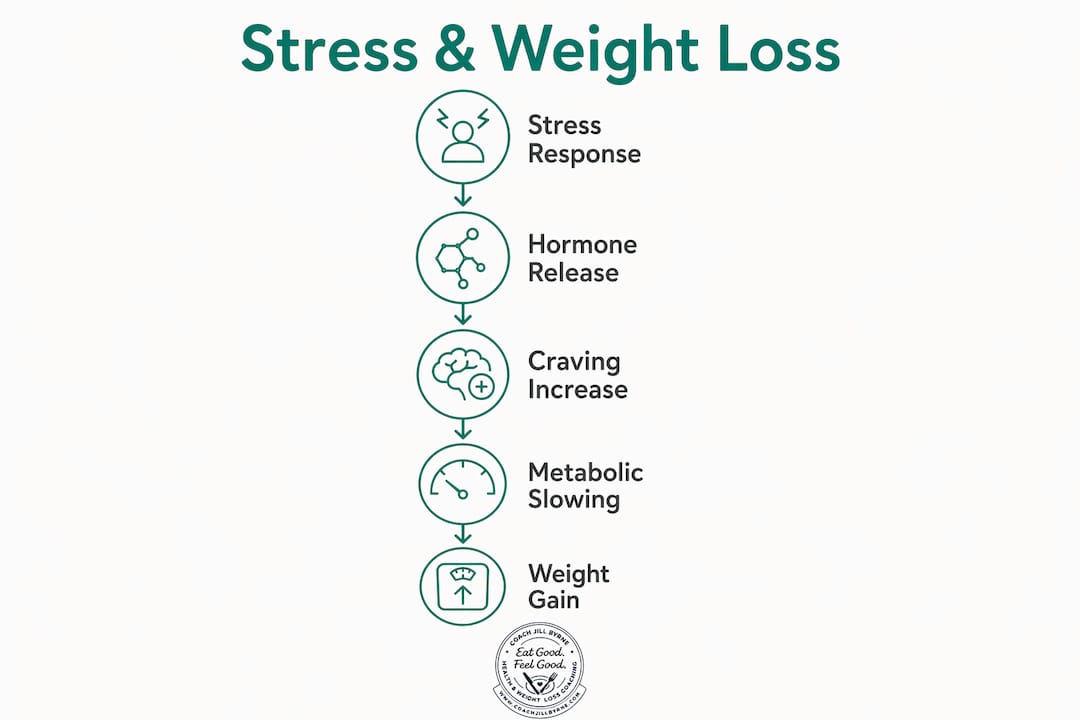
Emotional eating is the most visible form of stress-driven behavior. People eat in response to anxiety, frustration, or boredom, not because their body needs fuel. The foods chosen during emotional eating are almost always calorie-dense and nutritionally poor. A single stress-eating episode can undo several days of careful eating.
The stress-eating cycle tends to follow a predictable sequence:
Stress trigger occurs (work deadline, conflict, financial pressure)
Cortisol rises, activating the brain’s reward system
Cravings intensify for sugary or fatty comfort foods
Emotional eating follows, often without awareness of hunger
Guilt or shame sets in, which itself becomes a new stressor
The cycle repeats, making the pattern harder to break over time
Individual differences matter here. Not every person responds to stress by overeating. Some people lose appetite under acute stress. The key variable is whether stress becomes chronic. Sustained psychological distress consistently predicts higher BMI through the craving pathway, regardless of whether someone consciously feels hungry.
Pro Tip: Before eating during a stressful moment, pause for 90 seconds. Research on emotional regulation shows that the urge to eat often peaks and then drops if you do not act on it immediately. Use that window to drink water or take a short walk.
Does stress slow your metabolism even without overeating?
Stress slows metabolism through both hormonal and behavioral pathways, independent of what you eat. Stressed women burned approximately 104 fewer calories per day compared to non-stressed women, and they also showed higher insulin levels. Sustained over a year, that calorie deficit in reverse could translate to meaningful fat accumulation without any change in diet.
Stress effect | Mechanism | Weight impact |
Elevated cortisol | Increases insulin, promotes fat storage | Abdominal fat gain |
Reduced physical activity | Fatigue and low motivation from chronic stress | Lower daily calorie burn |
Poor sleep quality | Disrupts leptin and ghrelin, hunger hormones | Increased appetite next day |
Slower resting metabolism | Hormonal suppression of thermogenesis | Fewer calories burned at rest |
Behavioral consequences of stress, including reduced physical activity and disrupted sleep, significantly compound the hormonal effects. A person who is stressed often skips workouts, stays sedentary, and sleeps poorly. Each of those behaviors independently reduces calorie expenditure. Together, they create conditions where weight loss stalls even when food intake appears unchanged.
Pro Tip: Prioritize sleep as a metabolic tool, not just a recovery tool. Seven to nine hours of sleep per night directly supports healthy cortisol rhythms and reduces the next-day appetite surge caused by elevated ghrelin.
Why does your stress mindset change what you eat?
The way you interpret stress, not just the stress itself, shapes your eating behavior. A person’s stress mindset moderates the link between threat appraisals and comfort food intake. People who view stress as a threat consume more high-calorie snacks after a stressful event than people who view the same stress as a challenge.
This distinction matters practically. Two people facing the same work deadline can have completely different eating responses based on how they frame the situation. The person who thinks “this is overwhelming and I cannot cope” is more likely to reach for comfort food. The person who thinks “this is difficult but I can handle it” is more likely to stay on track.
Individual differences in stress appraisals explain why people exposed to identical stressors show different weight outcomes. This is not about personality or weakness. It is about learned cognitive patterns that can be changed. Cognitive reframing, the practice of consciously shifting how you interpret a stressor, directly reduces the intensity of stress-eating urges.
Key mindset shifts that reduce stress-driven eating:
Replace “I have no control” with “I can manage one thing at a time”
Recognize that discomfort is temporary and does not require a food response
Separate physical hunger from emotional urgency before eating
Practice labeling the emotion (“I am anxious”) rather than acting on it with food
What are the most effective strategies to manage stress for weight loss?
Stress management is not a soft add-on to weight loss. It is a direct intervention on the hormonal and behavioral drivers of weight gain. Psychological interventions that address cravings and emotional regulation produce measurably better outcomes in obesity management than dietary changes alone.
The most effective strategies target multiple pathways at once:
Regular aerobic exercise lowers cortisol, improves mood, and increases daily calorie burn. Even 20–30 minutes of walking reduces cortisol levels measurably.
Mindfulness practice builds awareness of emotional eating triggers before they lead to action. Apps like Headspace or Calm offer structured programs for beginners.
Cognitive behavioral techniques help identify and reframe the thought patterns that connect stress to food. Working with a counselor or coach accelerates this process.
Consistent sleep hygiene stabilizes cortisol rhythms and reduces next-day appetite. A fixed bedtime, no screens for 30 minutes before sleep, and a cool room temperature all support this.
Planned healthy swaps reduce the damage when cravings do hit. Keeping whole food options accessible means stress-eating is less likely to derail progress entirely.
Stress-induced unhealthy behaviors like reduced activity and poor sleep are significant contributors to weight gain beyond cortisol alone. Addressing behavior directly, not just the hormone, is what produces lasting results. Sustainable weight loss requires managing the full picture, including how you respond to stress day to day.
Pro Tip: Build a “stress menu” of non-food responses you can reach for when cravings hit. Options like a five-minute walk, a glass of water, or a brief breathing exercise give your nervous system a reset without adding calories.
Key Takeaways
Stress disrupts weight loss through cortisol-driven fat storage, craving-mediated overeating, and metabolic slowdown, making stress management a non-negotiable part of any effective weight loss plan.
Point | Details |
Cortisol promotes fat storage | Chronic cortisol elevation directs fat to the abdomen and slows resting metabolism. |
Cravings mediate stress and BMI | Food craving explains a measurable share of the link between psychological distress and weight gain. |
Metabolism slows under stress | Stressed individuals burn fewer calories daily even without changing their diet. |
Mindset shapes eating behavior | Threat appraisals increase comfort food intake more than challenge appraisals do. |
Behavioral strategies work | Exercise, sleep, mindfulness, and cognitive reframing directly reduce stress-driven weight gain. |
What I have learned coaching clients through stress and weight loss
Stress affects both sides of the energy equation, not just what goes in. That is the part most people miss. Clients come to me frustrated because they are eating the same foods but not losing weight. When we dig into their lives, the common thread is almost always elevated stress, poor sleep, and reduced movement. The calories look the same on paper. The body is not responding the same way.
The other thing I see consistently is that craving management gets overlooked. People focus on meal plans and macros, which matter, but they skip the work of understanding why they are reaching for certain foods at certain times. Cravings are data. They tell you something about your stress state, your sleep, and your emotional needs. Learning to read that data instead of just reacting to it is one of the most powerful shifts a person can make.
I also want to be direct about individual variability. There is no single stress management protocol that works for everyone. Some clients respond immediately to adding a daily walk. Others need structured cognitive work before behavioral changes stick. That is why starting weight loss without restriction and building from your actual life circumstances matters more than following a generic plan. Be patient with yourself. The hormonal and behavioral patterns that stress creates took time to develop. They take time to change. Progress is still progress.
— Coach Jill
Personalized coaching that addresses stress and weight loss together
Stress management sits at the center of effective, lasting weight loss. Coachjillbyrne builds this understanding into every client program, addressing not just what you eat but why you eat and how your daily stress patterns affect your results.

Coachjillbyrne offers personalized nutrition coaching that integrates craving management, mindset work, and practical meal planning into one structured program. Clients receive accountability support and guidance tailored to their specific stress triggers, lifestyle demands, and weight loss goals. The focus is always on sustainable habits, not short-term fixes. If stress has been quietly working against your progress, a personalized plan can change that.
FAQ
Why does stress cause weight gain even without overeating?
Stress elevates cortisol, which slows resting metabolism, raises insulin levels, and promotes abdominal fat storage. Stressed individuals burn fewer calories daily, which means weight gain can occur even when food intake stays the same.
Can stress hinder weight loss progress completely?
Chronic stress can stall weight loss by simultaneously increasing calorie intake through cravings and reducing calorie burn through metabolic and behavioral changes. Both sides of the energy balance are affected, which is why stress management is a direct weight loss intervention.
What is the connection between emotional eating and stress?
Food craving partially mediates the relationship between psychological distress and BMI, meaning stress drives weight gain partly through craving-triggered eating rather than true hunger.
Does mindset actually change how stress affects your weight?
Yes. Stress mindset moderates the link between how you appraise a stressor and how much comfort food you consume afterward. Viewing stress as a challenge rather than a threat measurably reduces stress-eating intensity.
What is the fastest way to break the stress-eating cycle?
Building non-food stress responses, such as short walks, breathing exercises, or mindfulness practice, interrupts the automatic link between stress and eating. Pairing these habits with clean eating swaps reduces the caloric impact when cravings do occur.
Recommended
Comments