
How to Lose 15 Pounds Fast Without Losing Muscle

Losing 15 pounds fast is realistic for most healthy adults over a period considered safe and sustainable with careful, supervised safeguards. That range is based on widely accepted safe weekly weight loss rates without risking muscle loss, energy crashes, or nutrient deficiencies.
The CDC sets the safe, sustainable pace at 1 to 2 pounds per week. Push harder than 2 pounds a week and you’re in rapid weight loss territory, where the risk of losing lean muscle, disrupting electrolytes, and burning out mentally goes up sharply.
Here’s what a realistic breakdown looks like depending on your starting point and how aggressive you’re willing to be:
Moderate pace (1 lb/week): 15 weeks, lowest risk, best for people with less to lose or slower metabolisms.
Standard fast pace (1.5 to 2 lb/week): 8 to 10 weeks, the sweet spot for most healthy adults chasing a quick but sound result.
Aggressive pace (2+ lb/week): 6 to 8 weeks, only appropriate with medical oversight, higher starting body weight, or short-term structured programs.
By the numbers: Since one pound of fat represents roughly 3,500 calories, losing 15 pounds requires a cumulative deficit of about 52,500 calories, whether that’s spread across 6 weeks or 15.
Pro Tip: Pick your timeline based on your starting weight, not your patience. Someone starting at 220 pounds can safely lose faster than someone starting at 140 pounds, because a larger body typically supports a bigger calorie deficit without tipping into starvation-mode territory.
Key Takeaways
Losing 15 pounds fast works when it combines a moderate calorie deficit, high protein intake, and consistent resistance training over a typical safe and sustainable timeframe.
Point | Details |
Target weekly loss | Aim for 1 to 2 pounds per week; faster paces need medical supervision. |
Daily calorie deficit | A 500 to 750 kcal daily deficit drives 1 to 1.5 pounds of weekly loss safely. |
Protein target | Eat 0.7 to 1 gram of protein per pound of body weight to protect muscle. |
Resistance training frequency | Train with weights at least 3 times weekly to prevent losing lean mass. |
Guided support option | Coachjillbyrne provides individualized calorie targets, training plans, and weekly accountability for readers who want faster, structured results. |
Table of Contents
How to Lose 15 Pounds Fast: The Calorie-Deficit Math
Every fast, safe weight-loss plan runs on the same equation: calories in versus calories out. To lose 15 pounds, you need a sustained deficit of about 52,500 calories total, and how you spread that deficit across days and weeks determines your timeline.
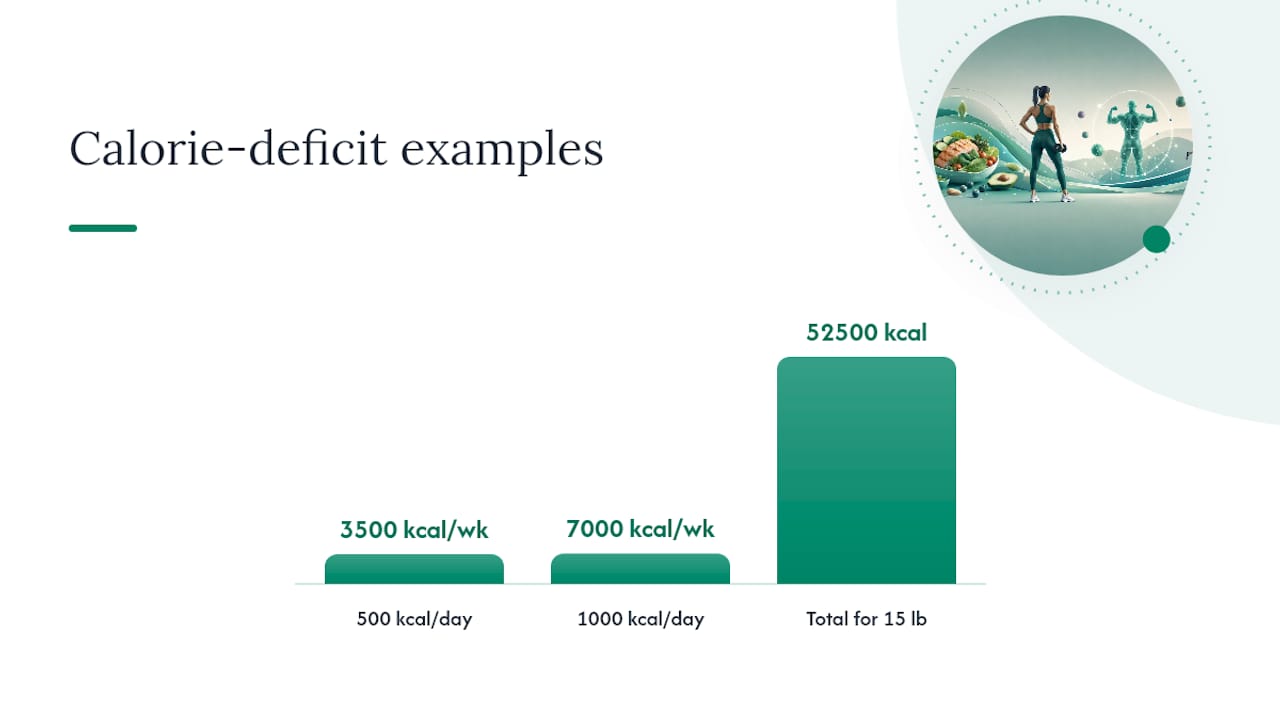
The classic shorthand is that 3,500 calories equals roughly one pound of body fat. It’s an approximation, not a law of physics; individual metabolism, water fluctuations, and muscle changes shift the real number slightly. But it’s accurate enough to plan around, and it’s the same heuristic Harvard Health uses when explaining sustainable calorie deficits.
Here’s how the deficit size translates into speed:
A 500 calorie/day deficit produces about 1 pound of loss per week.
A 1,000 calorie/day deficit roughly doubles that, to about 2 pounds per week, but demands tighter food choices and usually more activity to hit safely.
Deficits beyond 1,000 calories/day rarely make sense outside of short, medically supervised protocols, because the body starts pulling harder on muscle tissue for energy.
The formula in practice: Maintenance calories minus target deficit equals daily calorie target, and daily calorie target times 7 equals weekly deficit, which divided by 3,500 equals projected weekly loss.
One detail people consistently miss: your maintenance calories drop as you lose weight, because a lighter body needs less energy to function. A plan built on your starting maintenance number in week 1 will stop working by week 6 unless you recalculate. Some clinicians rely on indirect calorimetry to pin down resting energy expenditure precisely, though Harvard Health notes that online calculators still give a workable estimate for most people getting started.
How Fast Is Too Fast to Lose Weight Safely?
The 1 to 2 pound per week range isn’t a conservative suggestion; it’s the line where fast weight loss stays safe and where it starts costing you muscle, energy, and long-term progress. The CDC treats anything above 2 pounds per week as rapid weight loss, with a higher likelihood of muscle and bone loss attached to it.
There are legitimate exceptions. Very-low-calorie diets (VLCDs), typically 800 calories a day or fewer, and certain prescription medications can produce faster loss, but only under direct medical supervision. These approaches require blood work, electrolyte monitoring, and a provider who can adjust the plan in real time. They are not a DIY weekend project, and they’re not designed for open-ended use.
Watch for these markers that a pace has become unsafe rather than just uncomfortable:
Persistent fatigue that doesn’t improve with a good night’s sleep.
Dizziness or lightheadedness when standing up.
Noticeable mood swings, irritability, or brain fog.
Hair thinning or unusually cold hands and feet.
Missed or irregular periods in women.
If any of those show up, the fix isn’t willpower. It’s easing the deficit, adding calories back, and talking to a provider if symptoms persist more than a few days.
Pro Tip: Track your resting heart rate each morning for a week. A sudden jump of 8 to 10 beats per minute above your normal baseline often shows up before you consciously feel run down, giving you an early warning that your deficit is too aggressive.
For a deeper look at why pacing yourself pays off long term, Coachjillbyrne’s breakdown of sustainable weight loss walks through the biology behind slower, steadier results.
What Should You Eat to Lose 15 Pounds Fast?
Fast fat loss without muscle loss comes down to two numbers: your calorie deficit and your protein intake. Get both right and the scale moves quickly while your strength and energy hold steady.
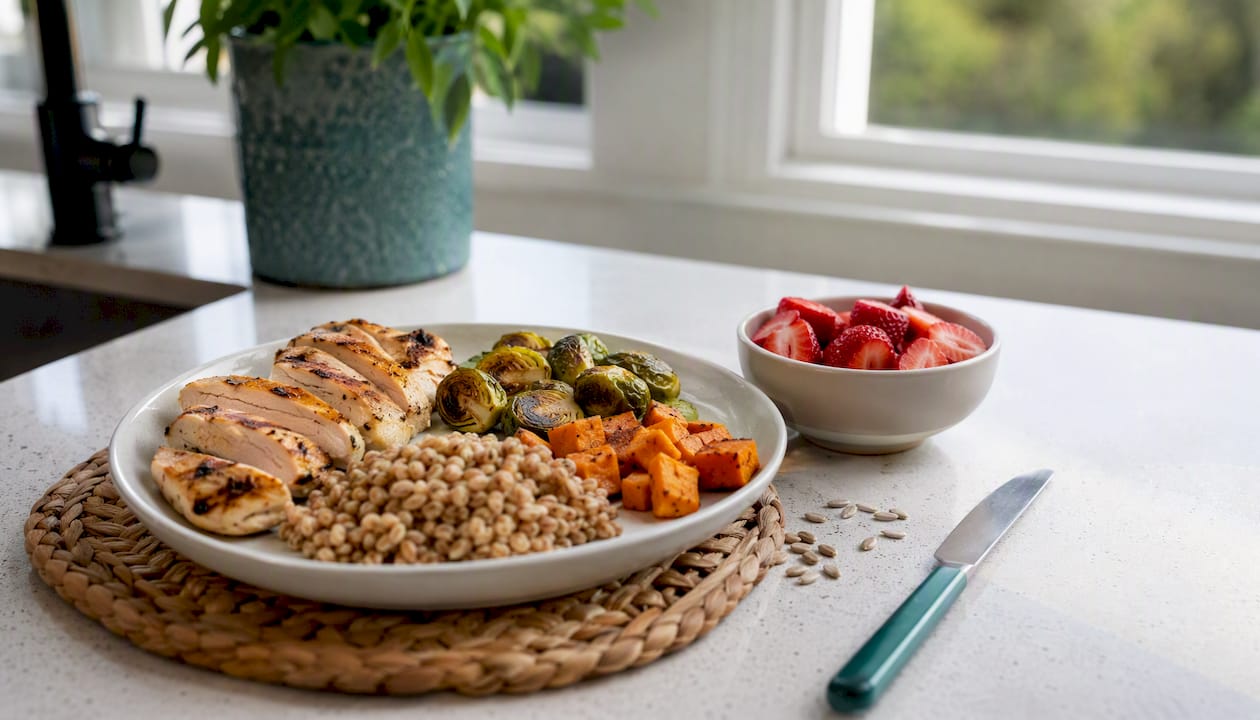
Start with protein. Research on resistance training combined with higher protein intake shows it preserves lean mass significantly better than dieting alone. A practical target for someone in an active fat-loss phase is 0.7 to 1 gram of protein per pound of body weight. A 170-pound person, for example, would aim for roughly 120 to 170 grams of protein daily, split across three to four meals.
Prioritize these foods:
Lean protein: chicken breast, turkey, egg whites, white fish, Greek yogurt, tofu.
Nonstarchy vegetables: broccoli, spinach, peppers, zucchini, cucumber.
High-fiber carbs: oats, lentils, beans, quinoa, berries.
Healthy fats in modest portions: olive oil, avocado, nuts.
Limit or cut these:
Sugar-sweetened beverages (soda, sweetened coffee drinks, juice).
High-calorie alcohol (craft beer, cocktails, wine in large pours).
Highly processed snacks (chips, pastries, fast food).
Cutting liquid calories alone is one of the fastest levers available, since alcohol and sugary drinks are calorie-dense but don’t fill you up the way solid food does. A single mixed drink can carry 250 to 400 calories, more than half of what many people cut from an entire day’s meal plan.
A sample day at roughly 1,500 to 1,600 calories with 130+ grams of protein might look like this:
Breakfast: 3 egg whites plus 1 whole egg scrambled, spinach, half an avocado. (~350 kcal, 25g protein)
Lunch: Grilled chicken breast over mixed greens with chickpeas and olive oil vinaigrette. (~450 kcal, 40g protein)
Snack: Greek yogurt with berries. (~180 kcal, 20g protein)
Dinner: Baked white fish, roasted broccoli, quinoa. (~500 kcal, 40g protein)
For sodium and water weight: cutting processed food naturally lowers sodium, which reduces the water retention that masks early fat loss on the scale. Don’t panic if the first week’s number looks smaller than expected; a lot of it is fluid shifting, not a sign the plan isn’t working.
Pro Tip: Craving something sweet? Swap a candy bar for frozen grapes or a protein shake with cocoa powder. Same satisfaction, a fraction of the sugar spike.
For concrete swap ideas beyond this list, Coachjillbyrne’s clean eating swaps guide covers common cravings in more detail, and the MyPlate Plan tool is a solid free option for estimating portions if you’re building menus from scratch.
What’s the Best Exercise Plan for Fast Fat Loss?
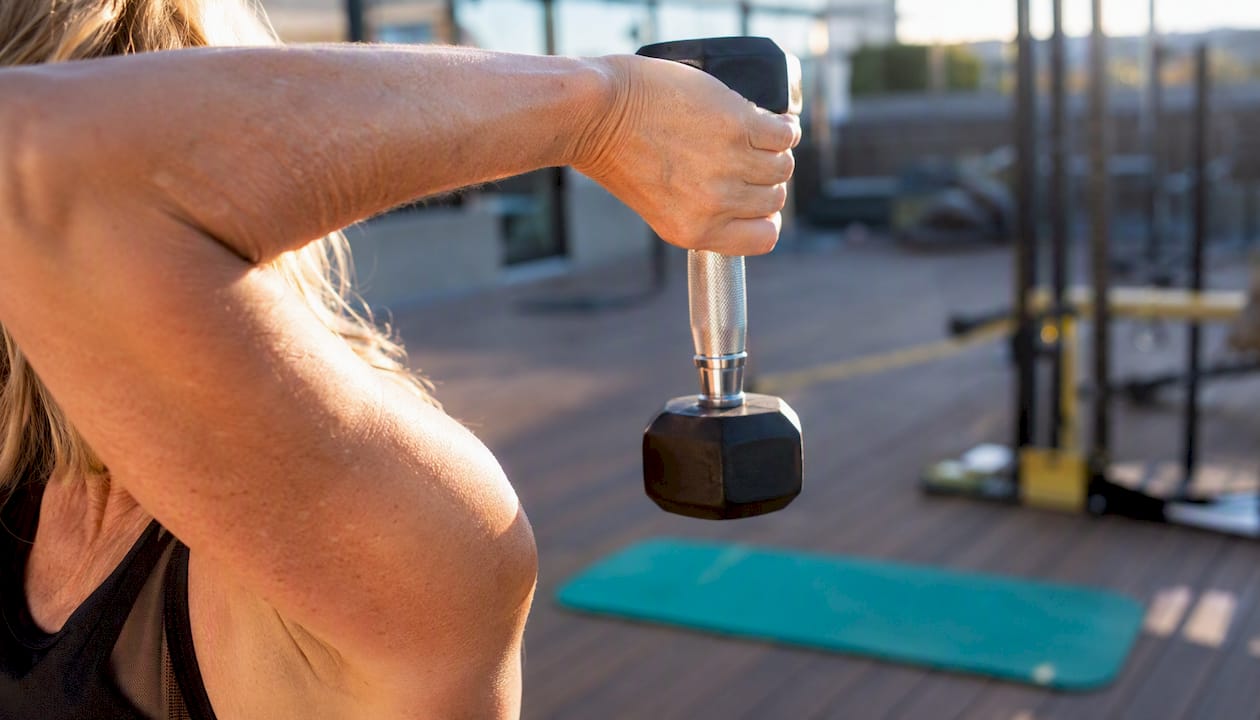
Resistance training is the piece most fast weight-loss plans skip, and it’s the one that determines whether the pounds you lose come from fat or from muscle. The Physical Activity Guidelines for Americans recommend at least 150 minutes of moderate aerobic activity weekly plus strength training on two or more days. A fast-loss plan should treat that as a floor, not a ceiling.
A sample week that balances both:
Monday: Full-body resistance training (45 minutes).
Tuesday: Moderate cardio, brisk walk or cycling (30 to 40 minutes).
Wednesday: Full-body resistance training (45 minutes).
Thursday: Active recovery: light walk, stretching, or yoga.
Friday: Full-body resistance training (45 minutes).
Saturday: Longer cardio session (40 to 50 minutes) or an active hobby like hiking.
Sunday: Rest.
A sample strength session for that Monday/Wednesday/Friday rotation:
Goblet squats: 3 sets of 10 to 12 reps.
Push-ups or bench press: 3 sets of 8 to 12 reps.
Dumbbell rows: 3 sets of 10 to 12 reps per side.
Romanian deadlifts: 3 sets of 10 reps.
Plank: 3 sets, 30 to 45 seconds.
Progressive overload is the difference between a workout that maintains muscle and one that builds it. That simply means adding a little more weight, a rep, or a set every one to two weeks as the current load starts to feel easy.
Pro Tip: Don’t skip rest days to “speed things up.” Muscle repairs and grows during recovery, not during the workout itself. Two rest days a week isn’t lazy; it’s part of the mechanism that keeps the weight loss coming from fat instead of muscle.
What Habits Actually Prevent Weight Regain?
The habits that support fast weight loss are almost embarrassingly simple, and that’s exactly why people underestimate them. Food tracking, sleep, and cutting liquid calories consistently outperform more complicated interventions.
Start with tracking. Logging meals, even loosely, keeps portion creep in check and makes the calorie math from earlier sections something you can actually see play out day to day. Set two-week checkpoints rather than obsessing over daily fluctuations; weight naturally bounces a pound or two from water and digestion, and short checkpoints smooth that noise out.
Sleep deserves more attention than most fast weight-loss plans give it. Adults generally need 7 to 9 hours a night, and short sleep disrupts hunger hormones, making cravings harder to manage exactly when you’re already running a calorie deficit. Simple sleep hygiene moves help: a consistent bedtime, dimmer lights an hour before bed, and cutting caffeine after early afternoon.
Alcohol deserves a second mention here, this time from a habit angle rather than a calorie one. Even moderate drinking a few nights a week can quietly erase a 500-calorie daily deficit. The NIAAA’s alcohol calorie calculator is worth a few minutes if you want to see exactly how much your usual drink adds up to.
Habit-tip callout: Behavioral research from the CDC points to a pattern worth borrowing: focus on two or three consistent behaviors rather than overhauling your entire lifestyle at once. Something like “track meals, cut soda, walk 20 minutes daily” beats a 15-point new-year resolution list every time.
Pro Tip: Pick your two or three habits and write them on your bathroom mirror. Not your phone. Somewhere you’ll see them without unlocking a screen full of distractions.
For readers who want a deeper case for why the habit-first approach beats restriction, Coachjillbyrne’s guide on starting weight loss without extreme dieting covers the reasoning in more depth.
What Are the Health Risks of Losing Weight Too Fast?
Rapid weight loss carries specific, well-documented risks, and knowing them upfront lets you catch problems before they become dangerous. The biggest one: muscle loss. During fast weight loss, roughly 25% of total weight lost can be lean muscle mass rather than fat, unless resistance training and adequate protein counteract it. That’s not a cosmetic issue; muscle drives your metabolic rate, so losing it makes the next round of weight loss, or maintenance, harder.
Other risks that show up with overly aggressive plans include electrolyte imbalances (from low food intake or excessive water loss), nutrient deficiencies (particularly iron, B vitamins, and calcium), and gallstones, which become more likely with very rapid loss. There’s also a psychological dimension: extreme restriction can tip into disordered eating patterns, especially in people with a history of restrictive dieting.
Certain symptoms need prompt medical attention, not a “push through it” mindset:
Fainting or near-fainting episodes.
Severe or worsening weakness.
Heart palpitations or an irregular heartbeat.
Persistent vomiting, diarrhea, or GI distress lasting more than a couple of days.
By the numbers: Losing more than 2 pounds per week consistently is classified as rapid weight loss by the CDC, the threshold where muscle and bone loss risk climbs meaningfully.
Supervised VLCDs, prescription weight-loss medications, and GLP-1 therapies can be appropriate tools for some people, but they work best alongside dietary coordination, not instead of it. If you’re on a GLP-1 medication and hitting a wall, Coachjillbyrne’s plateau checklist for semaglutide users covers common troubleshooting steps, and Legacy Meds’ GLP-1 FAQ breaks down program logistics and safety considerations for people exploring that route.
Does Coaching Help You Lose Weight Faster and Keep It Off?
A coach’s real value in a fast weight-loss plan isn’t motivation. It’s precision: individualized calorie and protein targets instead of generic calculators, a resistance training plan matched to your current fitness level, and someone tracking your progress closely enough to catch a stall before it becomes three flat weeks on the scale.
That last point matters more than people expect. Plateaus are common around week 3 to 5 of a fast-loss plan, often because maintenance calories have dropped as you’ve lost weight but the plan hasn’t been recalculated. A coach catches that shift and adjusts the numbers; most people trying to self-manage don’t notice until frustration sets in.
If you’re evaluating a coach or program, a short checklist helps separate solid guidance from marketing noise:
Are calorie and protein targets individualized, or copy-pasted from a template?
Does the program include resistance training guidance, not just cardio or “burn calories” advice?
Is there a clear process for adjusting the plan when progress stalls?
If you’re using a GLP-1 medication, does the coach offer nutrition support specific to appetite changes and nutrient needs on that medication?
Is there regular, structured check-in and accountability, rather than a one-time plan handed off with no follow-up?
Pro Tip: Ask any prospective coach how they handle a plateau. If the answer is “just be more consistent,” that’s a red flag. A good coach recalculates your numbers and adjusts training, they don’t just repeat the original advice louder.
Sample 8 to 12 Week Plan to Lose 15 Pounds
A week-by-week structure keeps a fast weight-loss plan from becoming guesswork, and it gives you built-in checkpoints to catch problems early.
Sample Week 1 (illustrative day-by-day structure):
Set calorie target using your maintenance number minus 500 to 750 kcal.
Log every meal for the full week, even imperfectly.
Complete 3 resistance sessions using the strength template from earlier.
Cut sugary drinks and alcohol entirely for the week to establish a baseline.
Track morning weight and resting heart rate daily; average the week rather than reacting to single days.
Sample Week 6 (illustrative day-by-day structure):
Recalculate maintenance calories based on current weight, not your starting weight.
Increase resistance training weights slightly on at least two exercises.
Add one additional 20-minute walk to daily routine if energy allows.
Reassess protein intake against your new (lighter) body weight.
If weight hasn’t moved in 10 to 14 days despite adherence, trim an additional 100 to 150 calories or add one cardio session.
Adjustment checklist if progress stalls after 2 to 4 weeks:
Confirm you’re still logging accurately; portion creep is the most common silent culprit.
Recalculate maintenance calories, since your body needs less energy than it did at your starting weight.
Check sleep quality; poor sleep alone can stall a plateau even with perfect eating.
Add 10 to 15 minutes of additional daily movement before cutting calories further.
How Do You Keep the Weight Off After Losing 15 Pounds?
Moving into maintenance is a deliberate phase, not something that happens automatically once you hit your goal weight. The safest transition adds calories back gradually over 2 to 4 weeks while watching the scale closely, rather than jumping straight from a deficit to unrestricted eating.
A practical ramp: add roughly 100 to 150 calories per week back into your daily target, checking your weight every few days. If weight stays stable or drifts up only slightly, keep adding until you land at a number where your weight holds steady, that’s your new maintenance level, and it will be lower than your original starting maintenance because you’re carrying less body weight.
Behavioral tactics that actually prevent regain:
Keep tracking food at least loosely for the first 8 to 12 weeks of maintenance, even if you stop counting every gram.
Continue resistance training at least twice weekly; this is nonnegotiable for keeping the metabolic benefit of the muscle you preserved.
Build in a planned “treat strategy,” a weekly meal or dessert you allow without guilt, rather than an all-or-nothing mentality that tends to backfire.
Weigh in weekly rather than daily during maintenance to smooth out normal fluctuation.
For protein and activity, maintenance targets don’t drop off dramatically from the weight-loss phase: aim for 0.6 to 0.8 grams of protein per pound of body weight, keep the 150 minutes of weekly activity from the Physical Activity Guidelines, and protect 7 to 9 hours of sleep, since sleep debt undermines appetite regulation in maintenance just as much as it does during active loss.
By the numbers: People who lose weight gradually tend to keep more of it off long term than those who lose it rapidly without a structured maintenance transition, one reason the CDC’s guidance frames sustainable pacing as a maintenance strategy, not just a loss strategy.
For more on why this transition matters so much, Coachjillbyrne’s piece on long-term weight management and the maintenance importance guide both go deeper into the psychology of holding a result once you’ve earned it.
Why Habits Beat Quick Fixes for Lasting Results
The uncomfortable truth about fast weight loss is that speed and sustainability aren’t opposites, but most fad approaches treat them that way. Extreme restriction produces fast numbers on the scale and almost nothing durable behind them. The plans that actually work, even the fast ones, run on the same handful of levers: a moderate calorie deficit, enough protein to protect muscle, consistent resistance training, and two or three habits practiced relentlessly instead of a dozen practiced poorly.
What I see repeatedly in client patterns is that the people who lose 15 pounds and keep it off aren’t the ones who suffered the most in the process. They’re the ones who built a system boring enough to repeat on a bad week. Preserving muscle through resistance training and protein isn’t a bonus feature of a good plan, it’s the entire reason a fast loss doesn’t become a fast regain three months later. If you want faster results, get more structure, not more restriction. That’s where guided support closes the gap between a plan you read and a plan you actually follow.
Ready to Lose 15 Pounds With a Plan Built Around You?
Most fast weight-loss advice online gives you a calorie number and leaves you to figure out the rest alone, which is exactly where plans fall apart around week three. Coachjillbyrne’s coaching closes that gap with an individualized calorie and protein target, a resistance training plan matched to your schedule, and weekly check-ins that catch a plateau before it turns into three frustrating weeks.

A new client working toward a 15-pound goal typically gets a custom calorie and macro plan based on their actual maintenance needs, a structured resistance training schedule designed to protect muscle while the number on the scale drops, and accountability check-ins that adjust the plan as your weight (and your calorie needs) change. For clients using GLP-1 medications, coaching includes specific nutrition support to manage appetite changes and protect nutrient intake while the medication works.
Personalized calorie and protein targets, recalculated as you progress.
Resistance training guidance built around your current fitness level.
Weekly accountability check-ins to catch plateaus early.
GLP-1 nutrition support for clients on medication-assisted plans.
If you’re ready for a plan built around your numbers instead of a generic calculator, start with a consultation at Coachjillbyrne and get a calorie target and training plan matched to your actual goal and timeline.
Sources
This article provides general information and isn’t a substitute for personalized medical advice. Confirm any rapid weight-loss plan, especially one involving medication or a very-low-calorie diet, with a qualified healthcare provider.
This article is general information, not a substitute for advice from a qualified doctor. Consult a qualified healthcare professional about your own circumstances before acting on anything here.
FAQ
How quickly can I lose 15 pounds?
Most healthy adults can safely lose 15 pounds in 8 to 12 weeks at a rate of 1 to 2 pounds per week, following CDC guidance. Faster timelines are possible but require medical supervision to manage risk.
Can I lose 15 pounds in 3 weeks?
Losing 15 pounds in 3 weeks would require roughly 5 pounds a week, well above the 2-pound-per-week threshold the CDC considers safe. It’s not a realistic or advisable target for most people without significant health risk.
What is the easiest way to burn fat quickly?
The most effective low-effort lever is cutting liquid calories, sugary drinks and alcohol, since they add up fast without filling you up, paired with a consistent 500-calorie daily deficit and regular resistance training.
How did Kim Kardashian lose 16 pounds in 3 weeks?
Specific celebrity weight-loss methods and results aren’t independently verified and typically involve extreme, short-term measures not recommended for general use. That pace far exceeds the CDC’s safe weight-loss guidance of 1 to 2 pounds per week and isn’t something to replicate without medical supervision.
Do I need a coach to lose 15 pounds fast?
A coach isn’t required, but individualized calorie targets, structured resistance training, and regular accountability, the core offerings at Coachjillbyrne, consistently help people avoid plateaus and preserve muscle better than generic plans.
Recommended
Comments