
Hit 25–30 g Protein Per Meal on Ozempic to Prevent Muscle Loss
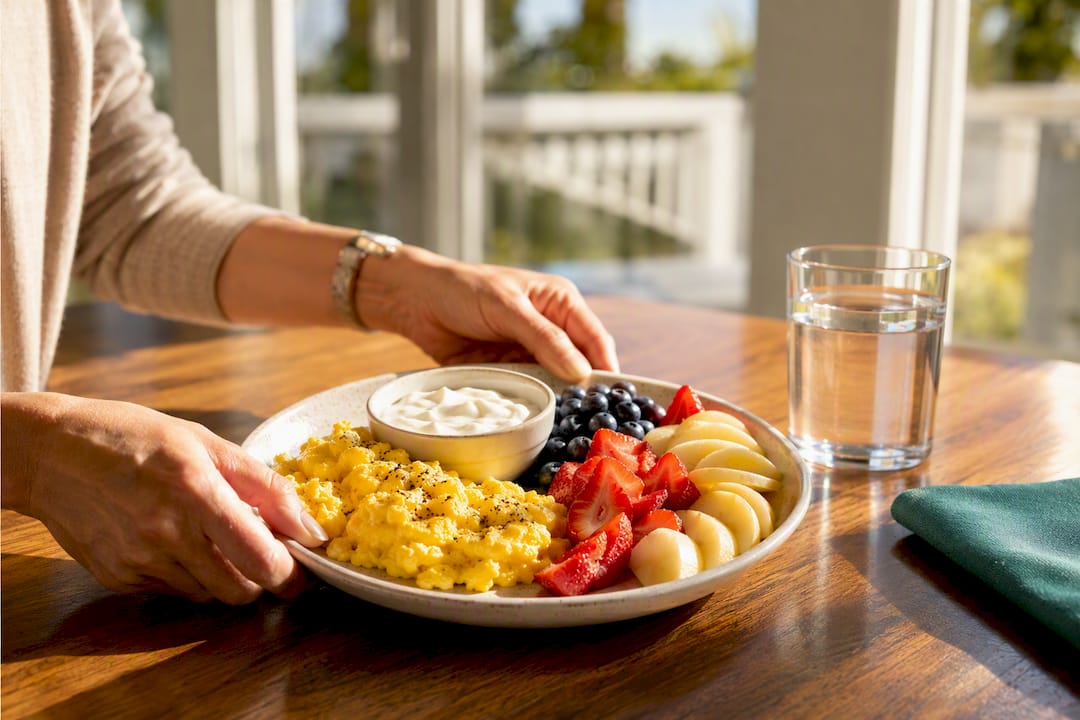
Aim for roughly 1.2 to 1.6 grams of protein per kilogram of body weight daily, spread across 25 to 30 grams per meal. Prioritize your protein at whichever meal your appetite is strongest, usually earlier in the day, and pair it with regular resistance training several times a week. If you manage kidney disease or another chronic condition, confirm these targets with your doctor before adjusting your diet.
TL;DR:
People targeting 1.2 to 1.6 grams of protein per kilogram of body weight should prioritize consuming it earlier in the day when appetite is strongest.
Older adults and women need closer to 1.4 to 1.6 grams per kilogram because of reduced muscle response to protein intake.
Eating 20 to 30 grams of protein per meal, especially breakfast, helps maximize muscle retention under appetite-suppressing medications.
High-protein, low-volume foods like Greek yogurt, canned fish, eggs, and protein shakes are essential for hitting daily targets with limited appetite.
Resistance training two to four times weekly is critical, and signs of muscle loss should prompt increased protein, especially if strength and recovery decline.
Table of Contents
Why Protein Matters More on Ozempic and Other GLP-1 Medications
GLP-1 medications work by slowing digestion and quieting appetite signals, which is exactly why they’re effective for weight loss. But that same appetite suppression creates a real problem: when total food intake drops sharply, the body doesn’t just burn fat. It burns muscle too, especially when protein intake falls short of what the body needs to preserve lean tissue.
Clinician guidance for GLP-1 users specifically flags this risk, noting that reduced appetite means every bite has to work harder nutritionally, which is why Mayo Clinic Press recommends prioritizing nutrient-dense, protein-forward foods over calorie-dense but nutritionally thin ones. Reporting on the topic backs this up: increasing protein intake alongside resistance training appears to help prevent the muscle loss that often accompanies GLP-1-driven weight loss.
Older adults and women face a higher stake in this equation. Both groups tend to experience anabolic resistance, a condition where muscle tissue responds less efficiently to the protein you do eat, meaning you need more of it to trigger the same muscle-building response a younger or male body gets from a smaller amount. That’s part of why research on protein needs in older populations points to the higher end of the 1.2 to 1.6 gram range rather than the lower end.
Beyond muscle, protein plays a quieter role in keeping your metabolism from downshifting as aggressively during rapid weight loss, and it supports satiety in a way that carbohydrates and fats don’t match. If you have kidney disease, liver disease, or another condition affecting protein metabolism, talk to your prescribing clinician before increasing your intake substantially.
How Much Protein Should You Eat Daily?
The daily protein on Ozempic target most clinicians and practitioners recommend sits between 1.2 and 1.6 grams per kilogram of body weight. If you’re older, doing regular resistance training, or several months into active weight loss, lean toward the upper end of that range. Practitioner-focused reviews increasingly suggest an even more assertive target of 1.4 to 1.6 g/kg/day for people actively trying to preserve muscle while losing fat.
Here’s how to turn that into an actual number. First, convert your weight from pounds to kilograms by dividing by 2.2. Then multiply by your target range.
150 lbs ÷ 2.2 = 68 kg → 82 to 109 grams of protein per day
180 lbs ÷ 2.2 = 82 kg → 98 to 131 grams of protein per day
200 lbs ÷ 2.2 = 91 kg → 109 to 145 grams of protein per day
Once you have a daily number, break it into per-meal targets. Aim for 20 to 40 grams per eating occasion, with 25 to 30 grams as the practical sweet spot for most adults across three to four meals a day, according to research on muscle protein synthesis. Older adults often benefit from slightly larger protein portions per meal due to reduced efficiency in utilizing dietary protein.
Recalculate every 10 to 15 pounds lost. Your protein target shifts as your body weight changes, and staying anchored to an old number means you’ll eventually fall short without realizing it.
Practical Ways to Hit Your Protein Target When Appetite Is Low
Knowing your number is the easy part. Actually eating it when a GLP-1 medication has flattened your appetite is the real challenge, and it usually comes down to choosing foods with a high protein-per-bite ratio rather than trying to eat larger volumes.
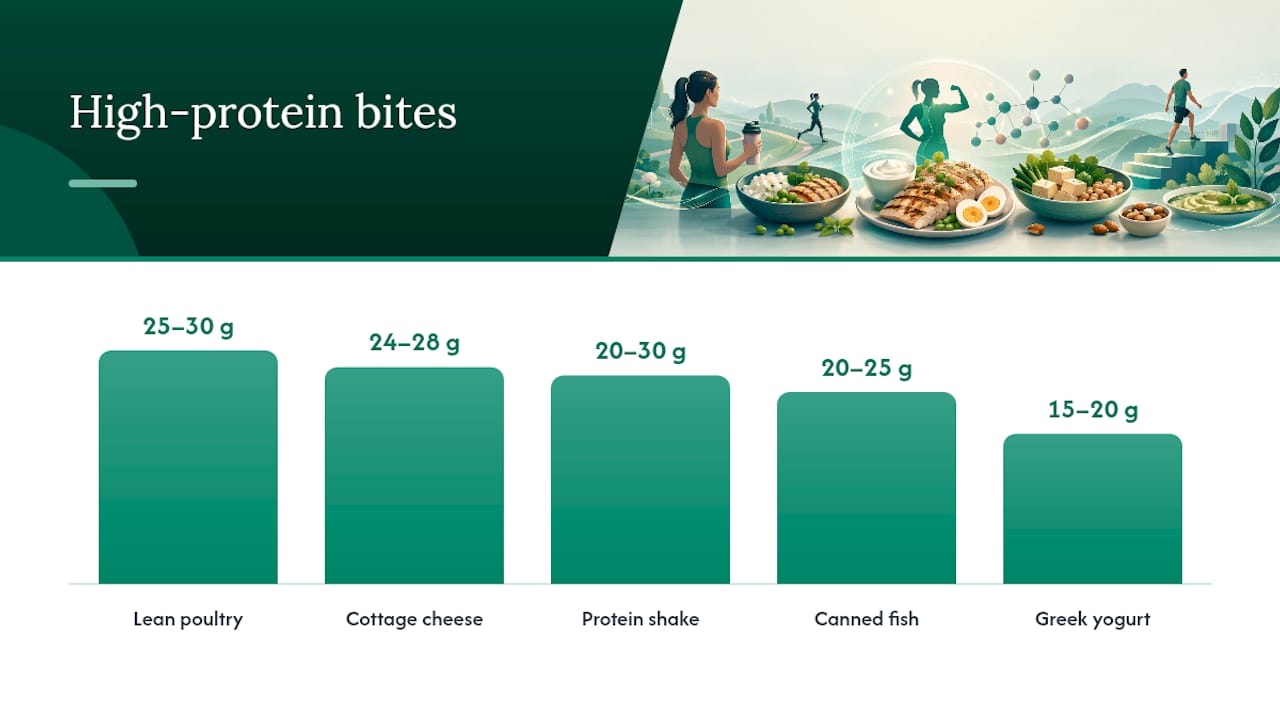
High-protein, low-volume foods worth stocking:
Greek yogurt (15 to 20 grams per cup, and spoonable when appetite is low)
Cottage cheese (24 to 28 grams per cup, versatile in both sweet and savory combinations)
Canned fish like tuna or salmon (20 to 25 grams per can, no cooking required)
Eggs (6 grams each, quick to prepare in bulk)
Tofu and tempeh (15 to 20 grams per half cup, useful for plant-based eaters)
Lean poultry (25 to 30 grams per 4-ounce portion)
Protein shakes deserve a specific mention because they solve a problem solid food can’t: volume. When nausea or early fullness makes chewing feel like a chore, a shake gets 20 to 30 grams of protein in without the bulk. Look for options with less than 5 grams of fat and low sugar, since heavier, sweeter shakes are more likely to trigger the nausea GLP-1 users already fight. Whey protein isolate tends to be absorbed efficiently and provides all essential amino acids; plant-based powders like pea protein may be good alternatives for those sensitive to dairy. Ready-to-drink options offer convenience at a higher cost, which can be helpful when effort is limited.
Pro Tip: Sip shakes slowly between meals rather than chugging them right before you eat. Drinking a shake fast, right before a meal, fills you up on liquid and leaves less room for the solid protein you actually planned to eat.

Sequencing matters as much as food choice. Eating your protein source first at every meal, before vegetables or starches, means you get your target amount in even if fullness cuts the meal short. And because many GLP-1 users report their appetite is strongest earlier in the day, anchoring your largest protein serving to breakfast rather than dinner often produces better daily totals than trying to save it for later. Small concentrated bites work too: a scoop of cottage cheese, a spoonful of nut butter on a single cracker, or a hard-boiled egg eaten standing at the counter all count. For more food-first strategies, building a rotating list of go-to options prevents the fatigue that comes from eating the same three foods every day.
Strength Training and Watching for Muscle Loss
Protein alone won’t protect your muscle. Resistance training two to four times a week provides the actual signal that tells your body to keep muscle rather than burn it, and evidence suggests training frequency matters more than fine-tuning protein intake by a few grams here or there. If you have to choose one thing to prioritize, choose the workouts.
That said, watch for warning signs that your current approach isn’t working:
Noticeable strength loss on familiar lifts or exercises
Slower recovery between workouts than you’re used to
Persistent low energy that doesn’t track with sleep or stress
Clothes fitting looser everywhere, including areas like shoulders or thighs where muscle, not fat, typically sits
If you’re seeing two or more of these signs, it’s worth increasing protein toward the top of your range (1.6 g/kg) before assuming the medication itself is the problem. Anyone with existing kidney concerns should get a basic kidney function check before pushing protein intake higher, since the safety margin narrows for that population specifically. The order of priority that actually protects muscle: training first, total protein second, meal-by-meal distribution third.
How Coaching Turns These Numbers Into a Daily Plan
Knowing your target number is one thing. Building a week of meals around it while managing nausea, low appetite, and a full schedule is another. That gap is exactly where Coachjillbyrne’s coaching approach fits, particularly for clients navigating GLP-1 nutrition support alongside real-life constraints like family meals and work travel.
A typical coaching relationship starts with calculating your personal protein target based on body weight, training status, and age, then building a 7-day eating plan around real food, not restrictive meal replacements. That includes sequencing guidance (protein first, largest portion when appetite is highest) and a liquid-backup plan for days when solid food isn’t happening. Clients working through habit-based coaching with Jill have reported meaningful, sustainable shifts in both eating habits and energy levels.
Coaching like this complements the care you’re already getting from your prescribing physician. It doesn’t replace medical monitoring, medication management, or lab work, and any changes to your health plan should still go through your clinician first.
Why “Eat More Protein” Advice on Ozempic Falls Short
Most protein advice for GLP-1 users stops at a gram target and calls it done. That’s incomplete. A number on a page doesn’t help someone whose appetite disappears by 2 PM and who can’t face a chicken breast at dinner. The real skill isn’t knowing you need 100 grams of protein. It’s knowing how to get 30 of those grams into a body that genuinely doesn’t want to eat right now.
The conventional wisdom also underweights timing. Most people default to their largest protein serving at dinner out of habit, when GLP-1 appetite patterns often make breakfast or lunch the better window. Flip that sequence and daily totals tend to climb without any change in willpower.
Training gets shortchanged too. People fixate on hitting a protein number while skipping the resistance sessions that actually tell the body to keep the muscle that protein builds. If you do only one thing differently after reading this, make it the workouts, then build the eating plan around when your appetite actually shows up, not when convention says a meal should happen.
— Coach Jill
Ready to Build a Protein Plan That Fits Your Appetite?
Personalized coaching provides an alternative to generic meal plans and app-based calorie trackers for GLP-1 users: instead of a static gram target you’re left to figure out alone, you get a plan built around your actual appetite patterns, medication timeline, and food preferences.

The first session may cover a full nutrition assessment, daily and per-meal protein targets, a 7-day eating plan built around real food, and a liquid-backup strategy for the days appetite disappears entirely. This approach is designed to adapt to how the body is responding to treatment, week by week, with active monitoring instead of solely app-based tracking. If you’re managing a plateau alongside your protein goals, troubleshooting strategies get folded into the same plan.
If you’re ready to stop guesstimating your protein needs and want a plan built around your specific weight, appetite, and schedule, book a session with Coach Jill Byrne to get started.
Sources
This article is general information, not a substitute for advice from a qualified doctor. Consult a qualified healthcare professional about your own circumstances before acting on anything here.
FAQ
Should I drink protein shakes on Ozempic?
Yes, shakes are a practical tool when solid food feels like too much, especially options with 20 to 30 grams of protein, low fat, and low sugar to avoid worsening nausea.
What’s the best protein to eat on Ozempic?
Lean, high protein-per-bite foods work best: Greek yogurt, cottage cheese, eggs, canned fish, tofu, and lean poultry all deliver 15 to 30 grams without requiring large volumes.
What happens if you don’t eat enough protein on semaglutide?
Insufficient protein alongside appetite suppression raises your risk of losing muscle instead of just fat, which can slow metabolism and reduce strength and energy over time.
What is the best way to get protein while taking a GLP-1 medication?
Eat protein first at every meal, anchor your largest serving to whichever meal your appetite is strongest, and keep a low-fat protein shake on hand for low-appetite days.
Recommended
Comments