
Why Wedding Weight Loss Differs Long-Term

Wedding weight loss is defined as a short-term, deadline-driven effort that produces results lasting far less time than the effort required to achieve them. Nearly 90% of brides attempt intense weight modification before their wedding day, yet approximately 80% of dieters regain their weight within a decade. Understanding why wedding weight loss differs long-term requires looking beyond willpower. The real causes are metabolic, psychological, and social, and they begin the moment the dress is ordered and end long after the honeymoon is over.
Why wedding weight loss differs long-term: the core science
The body does not distinguish between a crash diet for a wedding and any other form of severe calorie restriction. It responds the same way every time: by slowing down.

Metabolic slowdown and muscle loss
Crash diets can slow metabolism by up to 23% and cause muscle loss of 25–30%. That combination is the primary reason post-wedding weight loss challenges are so common. Less muscle means the body burns fewer calories at rest, making weight regain almost automatic once normal eating resumes.
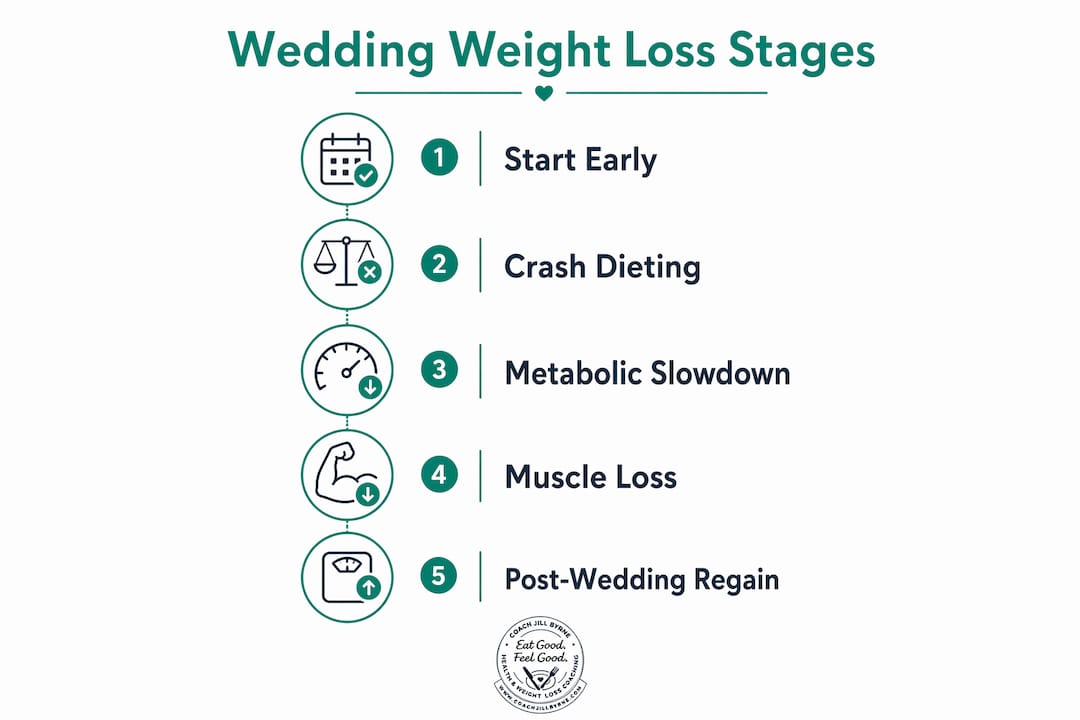
The hormone ghrelin, which signals hunger, rises sharply after a period of calorie restriction. This is not a lack of discipline. It is a biological response designed to restore lost weight. Brides who restrict heavily in the months before their wedding often find themselves significantly hungrier in the months after it.
GLP-1 medications like tirzepatide have become a popular pre-wedding tool, but they carry a specific risk. The SURMOUNT-4 trial found that up to 82% of people who stopped GLP-1 medications regained at least 25% of their lost weight within a year. Without the lifestyle habits to support the loss, the medication only delays the regain.
Metabolic rate drops by up to 23% during extreme calorie restriction, making maintenance harder.
Muscle loss of 25–30% from crash dieting reduces the body’s resting calorie burn.
Ghrelin spikes after dieting, increasing hunger and cravings for weeks or months.
GLP-1 medication stops without habit support leads to rapid weight regain in most cases.
Pro Tip: Prioritize strength training over cardio during wedding prep. Preserving muscle mass is the single most effective way to protect your metabolism and keep results after the wedding.
What psychological factors make wedding weight loss less sustainable?
The mindset behind wedding weight loss is fundamentally different from the mindset required for long-term success. Most brides are “training for a date,” not “training for life.” That distinction matters more than any diet plan.
The project mindset problem
A wedding creates a clear finish line. Once crossed, the behaviors that produced the results stop. This is the project mindset at work. The brain treats weight loss as a completed task rather than an ongoing practice. Research confirms that identity-based lifestyle maintenance produces far better long-term outcomes than project-based dieting. Changing what you do is temporary. Changing who you are is permanent.
Crash dieting also depletes mental energy. Constant calorie counting, food restriction, and hunger management consume cognitive resources that would otherwise support good decision-making. By the time the wedding arrives, many brides are mentally exhausted. That exhaustion does not disappear after the ceremony.
Vague goals compound the problem. “I want to look good in my dress” gives the brain no instruction for what to do on day 366. Realistic, specific goals tied to health behaviors rather than a dress size create the internal structure needed for lasting change.
Here is how to shift from a project mindset to a lifestyle mindset:
Replace the deadline with a direction. Instead of “lose 15 pounds by June,” set a goal like “build the habit of eating protein at every meal.”
Measure behaviors, not just outcomes. Track how often you strength train or cook at home, not only what the scale says.
Plan for the day after the wedding. Write down three specific habits you will continue after the honeymoon.
Attach your goals to identity. “I am someone who moves daily” outlasts “I want to fit into a size 8.”
Pro Tip: Write your post-wedding health plan before the wedding. Clients who plan for weight loss maintenance after a major milestone are significantly more likely to sustain their results.
How does the “shaadi effect” drive post-wedding weight regain?
The “shaadi effect” is the term fitness coaches use to describe the pattern of weight gain that follows marriage due to merged routines, increased social obligations, and elevated stress. It is not a cultural stereotype. It is a documented behavioral and physiological pattern.
Merged routines and social eating
Merged routines in newlyweds tend to adopt the least healthy habits of each partner. If one partner eats late, skips breakfast, or rarely cooks at home, those patterns often become shared defaults. Social eating obligations also double after marriage. Family dinners, celebrations, and couples’ outings all center on food, and the frequency increases significantly in the first year.
Post-wedding weight gain is linked to hormonal stress, sleep disruption, and lifestyle merging, with most regain occurring within one to two years of the wedding. Cortisol, the primary stress hormone, promotes abdominal fat storage when chronically elevated. The transition into married life, regardless of how positive, is a significant stressor for most people.
Factor | Effect on weight after marriage |
Merged eating routines | Defaults to least healthy habits of either partner |
Increased social events | More food-centric occasions and larger portion environments |
Elevated cortisol | Promotes abdominal fat storage and increases cravings |
Sleep disruption | Raises ghrelin and reduces leptin, increasing appetite |
Reduced solo exercise time | Shared schedules often reduce individual workout frequency |
Shared grocery shopping tends to include more indulgent items when both partners influence choices.
Cooking for two often means larger portions and richer recipes.
Reduced accountability after the wedding removes the social pressure that motivated pre-wedding discipline.
How can brides shift from wedding dieting to lasting weight management?
Sustaining weight loss post-wedding requires a different strategy than losing weight before it. The goal shifts from reduction to maintenance, and the tools required are not the same.
Start earlier and move slower
Clinical guidelines recommend starting weight loss 6–9 months before the wedding to allow for a steady loss of 1–2 pounds per week. This rate avoids the 20–30% metabolic rate decline triggered by extreme short-term restriction. Brides who start earlier arrive at their wedding in better metabolic health and find it far easier to maintain results afterward.
Slow, gradual weight loss builds the habits and routines that make maintenance possible. Rapid loss does not. The difference is not just physical. It is behavioral. A bride who has spent six months building consistent meal habits has a foundation to stand on after the wedding. A bride who crash-dieted for eight weeks does not.
Practical strategies for long-term success
Prioritize protein at every meal. Strength training and protein intake preserve muscle mass and prevent the metabolic “hangover” that follows crash dieting.
Replace processed foods rather than counting calories. Eliminating inflammatory, ultra-processed foods produces more durable results than calorie fixation.
Build couple accountability. Losing weight together as a couple reduces the shaadi effect by creating a shared healthy environment.
Set post-wedding habits before the wedding. Decide which routines you will carry forward before the event, not after.
Use sustainable nutrition strategies rather than restriction. Real food, portion awareness, and consistent meal timing outlast any short-term diet plan.
The transition from wedding diet to long-term lifestyle is not automatic. It requires a deliberate decision to reframe the goal from “looking a certain way on one day” to “feeling a certain way every day.”
Key Takeaways
Wedding weight loss fails long-term because crash dieting triggers metabolic slowdown, muscle loss, and hormonal hunger responses that make regain nearly inevitable without a deliberate shift to sustainable habits.
Point | Details |
Metabolic damage from crash dieting | Extreme restriction slows metabolism by up to 23% and causes significant muscle loss. |
Psychological project mindset | Deadline-driven motivation ends at the wedding, leaving no behavioral foundation for maintenance. |
The shaadi effect | Merged routines and elevated cortisol after marriage drive weight regain within one to two years. |
Start earlier for lasting results | Beginning weight loss 6–9 months before the wedding prevents metabolic slowdown and builds real habits. |
Couple accountability matters | Shared healthy routines reduce post-wedding weight regain by creating a supportive environment. |
What I have learned from watching brides lose and regain
Every bride I have worked with who struggled to maintain her results had one thing in common: she treated her body like a project with a deadline. The wedding was the finish line, and once she crossed it, the behaviors stopped. The weight did not.
The clients who kept their results did something different. They stopped asking “how do I look in my dress?” and started asking “how do I want to feel in ten years?” That shift sounds simple. It is not. It requires letting go of the scale as the primary measure of success and replacing it with something more durable: consistent daily habits.
What I have found is that the brides who build strength, eat real food, and plan for the day after the wedding are the ones who call me two years later to say they are still at their goal weight. The ones who restrict, deprive, and white-knuckle their way to a number on a tag rarely do. The wedding is a beautiful reason to start. It is not a good reason to stop.
Confidence built through resistance training and protein-rich nutrition lasts longer than any number on a scale. The goal was never just the dress. It was always the life you wear it into.
— Coach Jill
Personalized support for weight management beyond the wedding day
Coachjillbyrne works with brides and individuals who want results that last well past the wedding day.

The coaching approach at Coachjillbyrne focuses on real food nutrition, habit-based accountability, and strength-preserving strategies that protect your metabolism while you lose weight. Every plan is built around your schedule, your goals, and your life after the wedding. Whether you are six months out from your date or already navigating post-wedding weight challenges, personalized coaching provides the structure and support that short-term diets never can. Visit Coachjillbyrne to learn more about sustainable weight management programs designed for real, lasting results.
FAQ
Why do most brides regain weight after the wedding?
Most brides regain weight because pre-wedding diets are built around a deadline rather than sustainable habits. Without the behavioral foundation that gradual, habit-based weight loss creates, the body’s hormonal and metabolic responses drive regain within months.
How long before a wedding should weight loss begin?
Clinical guidelines recommend starting at least 6–9 months before the wedding to allow for a safe rate of 1–2 pounds per week. This timeline prevents metabolic slowdown and builds the routines needed for long-term maintenance.
What is the “shaadi effect”?
The shaadi effect describes the pattern of post-marriage weight gain caused by merged routines, increased social eating, and elevated cortisol. Research shows most regain occurs within one to two years of the wedding.
Does strength training matter more than cardio for wedding weight loss?
Strength training preserves muscle mass and prevents metabolic rebound, making it more valuable than excessive cardio for long-term results. Brides who prioritize resistance training maintain better body composition after the wedding.
Can GLP-1 medications support lasting wedding weight loss?
GLP-1 medications produce significant short-term results, but the SURMOUNT-4 trial found that up to 82% of people who stopped the medication regained at least 25% of their lost weight within a year. Lasting results require lifestyle habits that continue after the medication ends.
Recommended
Comments