
How to Sync Healthy Eating Habits with Your Partner

Syncing healthy eating habits with your partner is defined as building a shared food routine that aligns both of your nutrition goals, respects individual preferences, and reduces the daily friction of deciding what to eat. Couples who coordinate their dietary habits report lower grocery spending, less decision fatigue, and stronger relationship connection around food. The process draws on practical tools like shared meal planning apps, joint grocery lists, and digital calendars to make coordination sustainable. This article covers the specific strategies, systems, and mindset shifts that help couples align their nutrition goals without conflict or compromise fatigue.
How to sync healthy eating habits with your partner from day one
The foundation of any successful shared nutrition routine is a clear, honest conversation about what each person actually needs from food. Before you plan a single meal together, both partners should identify their individual health priorities, taste preferences, and any dietary restrictions or medical considerations. One partner may be focused on weight management while the other prioritizes energy for athletic performance. These goals are not incompatible, but they do require explicit discussion rather than assumption.
Start by answering three questions together:
What are your individual health goals? Weight loss, improved energy, blood sugar management, or general wellness each point toward different food choices.
What are your non-negotiables? Allergies, intolerances, ethical food choices, or strong dislikes that cannot be negotiated away.
Where do your preferences overlap? Identifying shared favorites creates the easiest starting point for joint meals.
Once you have that picture, agree on two or three shared nutrition goals that serve both of you. Common examples include reducing processed food intake, cooking at home at least four nights per week, or hitting a shared vegetable serving target. Documenting these in a shared Google Doc or a notes app both partners can access keeps the goals visible and easy to revisit.
Pro Tip: Schedule a 20-minute “nutrition check-in” once a month to review whether your shared goals still reflect both partners’ current needs. Bodies, schedules, and priorities change, and your plan should change with them.
Couples who approach this as a collaborative project rather than a negotiation tend to stay aligned longer. The goal is not for both people to eat identically. The goal is for both people to feel supported in their individual health needs while sharing a food environment that makes healthy choices the default.
How does meal planning together actually save time and money?
Coordinated meal planning reduces grocery budgets by 30% on average and significantly lowers the mental load of daily food decisions. That reduction comes from consolidated shopping, fewer impulse purchases, and the elimination of duplicate ingredients bought separately. For couples, the financial and cognitive savings are immediate.
The most effective system is a weekly planning session, sometimes called a Sunday Sync-Up. Here is a practical four-step process:
Review the week ahead. Check both calendars for late nights, travel, or events that affect dinner timing before choosing meals.
Choose 3 to 5 shared dinners. Selecting 3 to 5 shared meals per week eliminates daily decision fatigue and reduces last-minute takeout. Leave two nights flexible for leftovers or individual preferences.
Build a shared grocery list. Apps like AnyList, OurGroceries, or the notes function in Google Keep allow both partners to add items and check them off in real time. A real-time shared list prevents duplicate purchases and keeps both partners informed even when only one person shops.
Assign roles clearly. Decide in advance who shops, who preps, and who cooks each night. Shared digital tools and explicit task division prevent the miscommunication that leads to one partner carrying the entire mental load.
Task | Suggested approach |
Weekly meal selection | Alternate who chooses meals each week to keep both partners invested |
Grocery shopping | One partner shops with a shared digital list; the other handles prep |
Weeknight cooking | Rotate cooking nights or cook together on two nights per week |
Batch prep | Dedicate 30 to 45 minutes on Sunday to chopping, marinating, or pre-cooking grains |
Pro Tip: Set a recurring 15-minute calendar block every Sunday evening labeled “Meal Plan.” Treating it as a fixed appointment prevents it from being skipped during busy weeks.
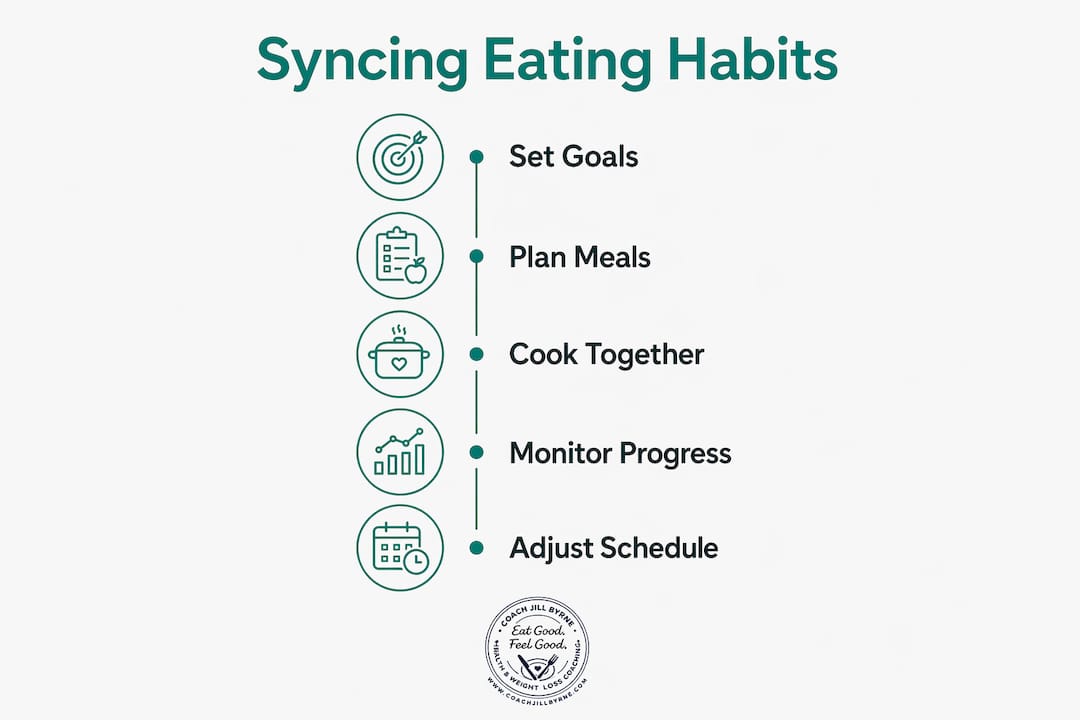
The planning session does not need to be elaborate. Spending 20 minutes weekly on meal decisions eliminates the daily stress of answering “what’s for dinner?” and removes the conditions that lead to poor food choices. That is a significant return on a small time investment.
What cooking strategies work when partners have different diets?
Different dietary needs do not require cooking two completely separate meals every night. Modular cooking is the most practical solution for couples with differing preferences or restrictions. The approach involves preparing a shared base and then customizing individual portions with different proteins, toppings, or sauces.
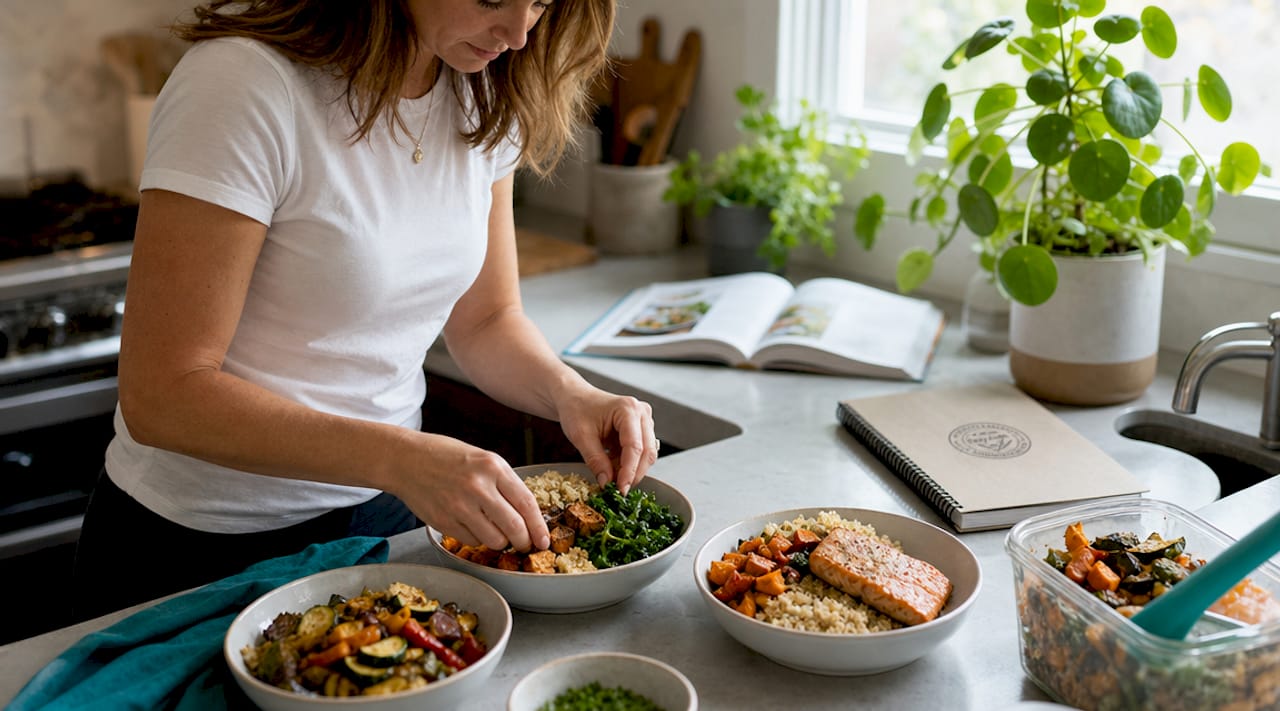
Modular cooking with a shared base and separate customizations adds roughly 10 extra minutes to a meal rather than the full time required to cook two distinct dinners. That efficiency makes it sustainable long-term.
Practical examples of modular meals include:
Grain bowls. Cook a shared base of brown rice or quinoa. One partner adds grilled chicken; the other adds roasted chickpeas or tofu. Both use the same roasted vegetables and dressing.
Taco nights. Shared tortillas, salsa, and toppings. Proteins are cooked separately in the same pan with a divider or in sequence.
Pasta dishes. One pot of pasta with a shared marinara base. One portion gets added ground turkey; the other gets sautéed mushrooms and spinach.
Sheet pan meals. Vegetables roast together. Proteins are placed on separate sections of the pan with different seasonings.
Beyond the cooking method, rotating menu responsibility is equally important. Planned rotation ensures both partners feel equally supported over time and prevents the resentment that builds when one person always compromises. A simple alternating system, where each partner selects two meals per week and one meal is chosen together, distributes both the decision-making and the satisfaction fairly.
Approach | Best for |
Modular base meals | Different protein needs or one vegetarian partner |
Rotating menu selection | Preventing one partner from always compromising |
Shared toppings, separate proteins | Flavor preferences that differ but are easy to split |
Batch-cooked grains and vegetables | Busy weeknights when cooking time is limited |
Eating together does not require identical plates. The psychological and relational benefits of a shared mealtime routine come from the connection at the table, not from eating the same food. Even one or two shared meals per week anchor the habit and reinforce the partnership around food.
How do you keep shared habits on track with conflicting schedules?
Conflicting schedules are the most common reason couples abandon shared nutrition goals. One partner works late three nights a week. The other has early morning workouts that shift their appetite. These realities do not have to derail a shared eating plan if the system is built with flexibility from the start.
Batch cooking and calendar-integrated reminders are the two most effective tools for reconciling different schedules. Batch cooking means preparing larger quantities of proteins, grains, and roasted vegetables on the weekend so that weeknight assembly takes under 15 minutes regardless of who is home and when.
Practical strategies for busy couples include:
Designate two “anchor meals” per week. These are shared dinners that both partners commit to eating together, regardless of schedule. They serve as connection points and reinforce the shared habit even when the rest of the week is fragmented.
Use calendar integration. Adding meal prep reminders to a shared Google Calendar or Apple Calendar keeps both partners aware of what is planned and who is responsible. This removes the need for daily check-ins.
Prepare portable options. Mason jar salads, overnight oats, and pre-portioned snack containers allow the partner with an earlier or later schedule to eat well without waiting or cooking separately.
Build a “flex meal” into the plan. One night per week with no assigned meal gives both partners freedom without breaking the overall structure.
For couples with sustainable weight loss as a shared goal, consistency matters more than perfection. A flexible plan that accommodates real schedules will outperform a rigid plan that gets abandoned by Wednesday. Adjusting expectations and sharing responsibility dynamically, rather than assigning fixed roles permanently, keeps both partners engaged over time.
Pro Tip: If one partner eats dinner two hours earlier than the other, cook once and plate separately. The later partner reheats their portion. This preserves the shared meal without requiring synchronized schedules.
Key takeaways
Couples who sync their eating habits through shared planning, modular cooking, and clear role division build sustainable nutrition routines that support both individual health goals and relationship connection.
Point | Details |
Start with shared goals | Identify individual priorities first, then agree on two to three goals that serve both partners. |
Plan weekly, not daily | A 15 to 20 minute Sunday planning session eliminates daily decision fatigue and reduces takeout. |
Use modular cooking | A shared base with customized proteins adds 10 minutes, not a full second meal. |
Rotate menu choices | Alternating who selects meals prevents resentment and keeps both partners invested. |
Build in flexibility | Batch cooking and anchor meals keep habits aligned even when schedules conflict. |
What I have learned from working with couples on nutrition alignment
Working with couples on nutrition goals has taught me one thing above everything else: the biggest obstacle is almost never food. It is the unspoken assumption that one partner’s needs are more important than the other’s. That assumption does not announce itself. It shows up as one person quietly eating what they do not want, or one person doing all the planning while the other just shows up to eat.
The couples who make the most progress are not the ones who agree on every food choice. They are the ones who build a system that makes both people feel seen. That usually means one honest conversation at the start, a simple weekly planning habit, and a willingness to rotate who gets to pick the meal. Those three things solve about 80% of the friction I see.
I also want to push back on the idea that healthy eating as a couple requires both people to be equally motivated at the same time. That is not realistic. What works is having one person hold the structure on the weeks the other person is depleted, and then switching. The role of cooking habits in long-term weight management is well documented, and for couples, those habits are most durable when they are shared rather than individually maintained.
Small wins matter more than people expect. Cooking together twice a week, even if the meals are simple, builds a shared identity around food that makes the harder choices easier over time. Celebrate those wins. They are the foundation of everything else.
— Coach Jill
How Coach Jill Byrne supports couples building shared nutrition habits
Aligning nutrition goals as a couple is exactly the kind of challenge that benefits from structured, personalized support. Coach Jill Byrne’s approach focuses on practical habit formation, realistic meal planning, and accountability systems that fit into real life rather than requiring a complete lifestyle overhaul.

Whether you are both starting from scratch or one partner is further along in their health journey, the coaching philosophy at Coachjillbyrne is built around sustainable change, not short-term restriction. Couples working with Coach Jill Byrne receive guidance on shared nutrition goals, portion awareness, and the kind of consistent accountability that keeps habits in place when motivation dips. If you are ready to build a food routine that works for both of you, this is where to start.
FAQ
What does it mean to sync healthy eating habits with a partner?
Syncing healthy eating habits with a partner means creating a shared food routine that aligns both people’s nutrition goals, respects individual preferences, and reduces daily decision fatigue through coordinated meal planning and grocery shopping.
How do couples handle different dietary needs without cooking two separate meals?
Modular cooking solves this effectively. Couples prepare a shared base meal such as grains or roasted vegetables and customize individual portions with different proteins or toppings, adding roughly 10 extra minutes rather than cooking two full meals.
How often should couples plan meals together?
A weekly planning session of 15 to 20 minutes covers 3 to 5 shared dinners, builds a consolidated grocery list, and assigns prep roles. This single weekly habit eliminates daily meal decisions and significantly reduces impulsive food choices.
What tools help couples coordinate grocery shopping and meal planning?
Apps like AnyList, OurGroceries, and Google Keep allow both partners to edit a shared grocery list in real time, preventing duplicate purchases. Google Calendar or Apple Calendar with shared meal prep reminders keeps both partners aligned on responsibilities throughout the week.
Can couples with very different schedules still maintain shared nutrition habits?
Yes. Batch cooking on weekends, designating two anchor meals per week, and building one flexible night into the plan allow couples with conflicting schedules to stay aligned. The key is designing the system around real schedules rather than ideal ones.
Recommended
Comments