
Kid-Friendly Healthy Dinner Ideas for Busy Families
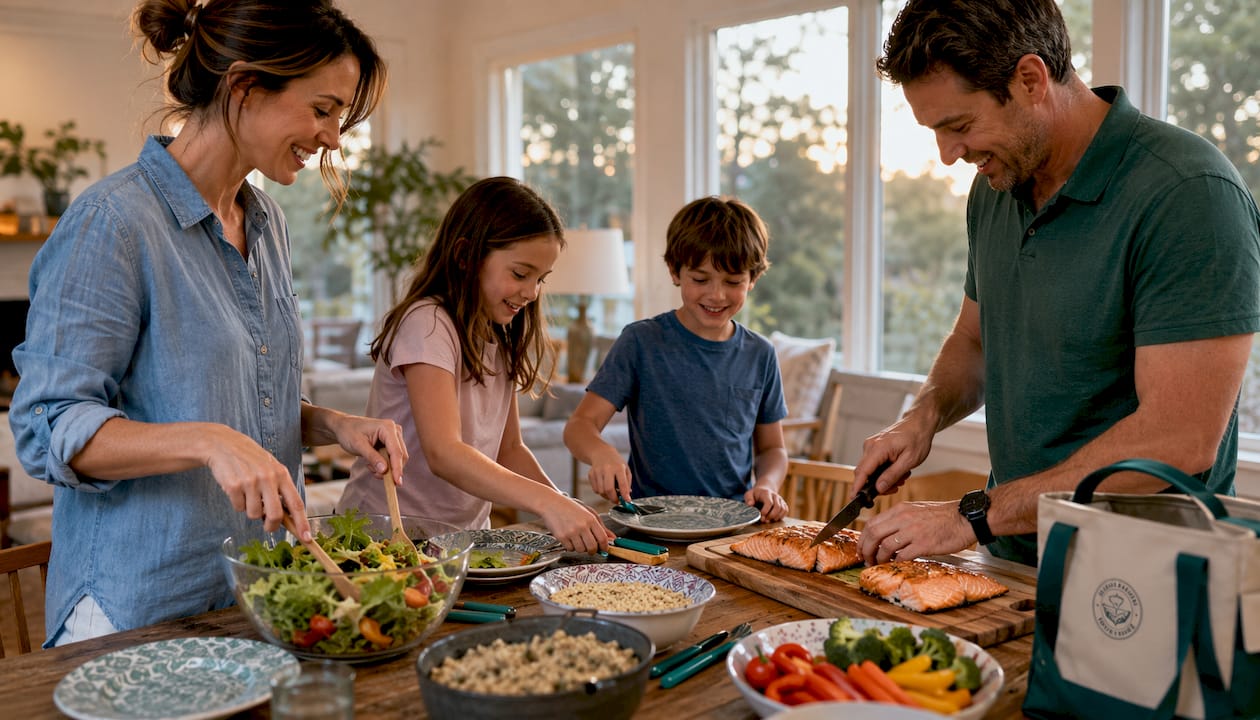
Here are 8 quick, nutritious dinner ideas you can use tonight — no separate “kid meal” required:
Taco bar: seasoned ground beef or black beans, corn tortillas, shredded cheese, salsa
Sheet-pan chicken and vegetables: chicken thighs, broccoli, sweet potato, olive oil, baked at a moderate oven temperature for about 25 minutes
Grain bowl: cooked brown rice, rotisserie chicken, frozen peas, simple soy-lime drizzle
Hidden-veg pasta: whole-wheat spaghetti with marinara blended with pureed carrots or spinach
Egg fried rice: leftover rice, eggs, frozen mixed vegetables, low-sodium soy sauce
Baked salmon with roasted potatoes: sheet pan, 20 minutes, mild seasoning
Build-your-own quesadillas: whole-wheat tortillas, cheese, beans, any leftover protein
Breakfast for dinner: scrambled eggs, whole-grain toast, sliced fruit, a handful of cherry tomatoes
Tonight’s one-sentence action: cook one safe base (rice, pasta, or roasted chicken), add one vegetable, and let each child choose a topping. That single habit, repeated consistently, is the foundation of sustainable family nutrition.
Table of Contents
Why the “base food plus toppings” approach helps kids eat healthier
Simple planning habits and batch-cooking hacks that save time
How much to serve children: quick portion guidance using MyPlate
How personalized coaching from Coachjillbyrne turns these ideas into lasting habits
Coachjillbyrne can help you build a plan that actually sticks
Why the “base food plus toppings” approach helps kids eat healthier
Predictable base foods paired with real choice reduce mealtime resistance and increase food acceptance over time. When children know what to expect at the table, anxiety drops and curiosity about new foods has room to grow. The AAP recommends that children over one year can eat most family foods with simple modifications — reduced salt, minimal added sugar — which means a single well-planned dinner genuinely works for everyone.
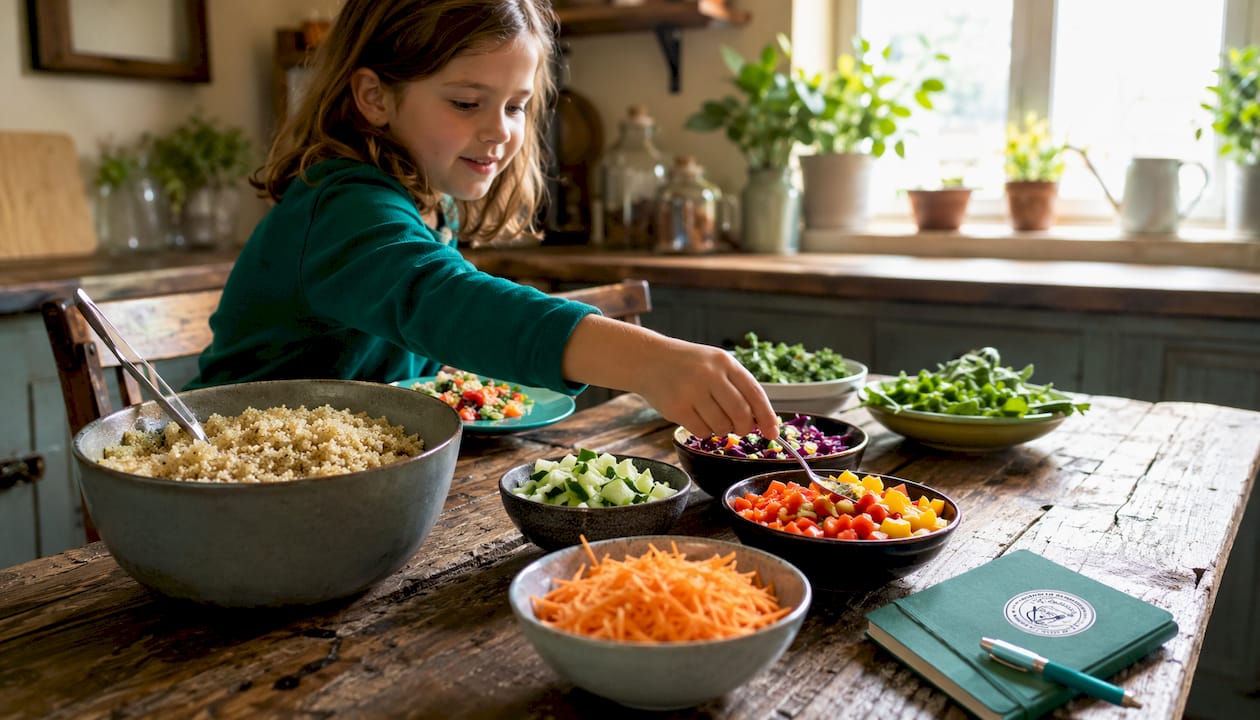
USDA MyPlate provides a practical framework for building those dinners: half the plate vegetables and fruit, one quarter lean protein, one quarter whole grain. Applying that structure to a taco bar or grain bowl takes seconds and removes the guesswork from “is this balanced?”
CDC feeding guidance recommends building vegetable exposure through predictable, calm presentations rather than hiding vegetables every time. Repeated, low-pressure exposure is what actually broadens a child’s palate over months.
Pro Tip: Introduce one new vegetable alongside two familiar foods. No pressure to eat it — just seeing it on the plate repeatedly is the mechanism that builds acceptance.
Adaptable recipe templates you can rotate all week
These templates are modular: swap proteins, grains, or vegetables based on what is in the fridge, and adjust seasoning or presentation for different ages. Each takes around half an hour.
Build-your-own taco bar (15 min): seasoned ground turkey or black beans, corn or flour tortillas, shredded lettuce, cheese, salsa on the side. Gluten-free: use corn tortillas. Dairy-free: skip cheese, add avocado.
Sheet-pan chicken and broccoli (25 min): chicken thighs, broccoli florets, olive oil, garlic powder. Swap chicken for salmon or tofu for variety.
Hidden-veg tomato sauce over pasta (20 min): blend spinach, carrots, or zucchini into store-bought marinara. Works over whole-wheat pasta, rice, or zucchini noodles. Gluten-free: use rice pasta.
Grain bowls (10 min with pre-cooked grain): brown rice or quinoa base, rotisserie chicken or canned chickpeas, roasted vegetables, simple lemon-olive oil dressing.
Egg fried rice (15 min): leftover rice, two eggs, frozen peas and carrots, low-sodium soy sauce. Nut-free, dairy-free, easily vegetarian.
Baked salmon with sweet potato (20 min): sheet pan, mild seasoning (lemon, garlic). Frozen fish retains peak nutrients and costs less than fresh.
Chicken and vegetable stir-fry (20 min): thinly sliced chicken breast, broccoli, snap peas, low-sodium teriyaki. Serve over rice or rice noodles for a gluten-free option.
Mini turkey meatballs with marinara (25 min): ground turkey, egg, breadcrumbs (or oat flour for gluten-free), baked at 400°F. Serve with whole-wheat pasta or zucchini noodles.
Black bean quesadillas (15 min): canned black beans, shredded cheese, whole-wheat tortilla, pan-toasted. Vegan: use dairy-free cheese.
Breakfast for dinner (15 min): scrambled eggs, whole-grain toast, sliced fruit. Universally accepted, protein-rich, and genuinely fast.
Blending vegetables into sauces keeps texture and flavor familiar, which is why hidden-veg pasta tends to work even on high-refusal nights.
Pro Tip: Batch one component on Sunday — a large pot of brown rice or a double batch of tomato sauce — and you have the base for three different dinners without any extra weeknight effort.
Simple planning habits and batch-cooking hacks that save time
A 3-night rotation plus one flexible night is the most repeatable structure for busy households. Keep three “safe” dinners the family reliably eats, add one gentle-stretch meal each week, and use one night for leftovers. That framework alone eliminates most weeknight decision fatigue.
Batch-cooking does not require a full Sunday prep session. Batch cooking a few key components like grains, vegetables, and proteins can help recompose varied meals during the week without repeating the exact same dish.
For home cooking that supports family health, a short weekly checklist helps: pick three dinners, write one shopping list, and assign one 20-minute prep task per week. That is the entire system.
Pantry, fridge, and freezer staples every family needs
A stocked pantry makes healthy dinners possible even on rushed nights. These 14 staples cover most of the templates above:
Canned black beans and chickpeas
Canned diced tomatoes and low-sodium marinara
Brown rice and quinoa
Whole-wheat pasta and corn tortillas
Low-sodium chicken or vegetable broth
Olive oil and low-sodium soy sauce
Frozen broccoli, peas, and mixed vegetables
Frozen fish fillets (salmon, tilapia, or cod)
Eggs
Rotisserie chicken (fresh or frozen)
Shredded cheese and plain Greek yogurt
Oats (double as a gluten-free binder in meatballs)
Garlic powder, cumin, and smoked paprika
Nut butter (sunflower seed butter for nut-free households)
Frozen vegetables retain peak nutrients and reduce waste, making them a smarter buy than fresh produce on a tight budget. For seasonal produce, buy what is cheapest at the market that week and roast or steam it as the vegetable component of any template. A full pantry guide for healthy family meals can help you build this list into a permanent shopping routine.
How much to serve children: quick portion guidance using MyPlate
Simple plate fractions work better than measuring cups for most families. USDA MyPlate recommends half the plate as vegetables and fruit, one quarter lean protein, and one quarter whole grain — a ratio that applies to adults and children alike, with serving sizes scaled by age.
Age Group | Vegetables | Protein | Grain | Notes |
Toddlers (1–3) | — | — | ¼ cup cooked | Soft textures; no added salt |
Preschool | ¼ cup per meal | — | ⅓ cup cooked | Minimal added sugar |
School-age | ½ cup per meal | — | ½ cup cooked | Reduce salt; involve in serving |
The AAP notes that children over one year generally do not need separate meals — the same balanced plate with milder seasoning and sauces served on the side covers every age at the table.
Pro Tip: Use the “one safe food plus one new food” rule at every meal. Children are more likely to try something unfamiliar when something familiar is already on the plate.
Low-pressure strategies that actually work for picky eaters
Mealtime battles usually escalate when children feel they have no control. These tactics shift that dynamic without requiring separate meals:
Deconstruct the plate: serve components separately so foods do not touch. A taco bar or grain bowl naturally does this.
Repeat without pressure: offer a familiar side alongside every new food. Acceptance typically builds after 10–15 calm exposures.
Involve kids in assembly: child involvement in kitchen tasks correlates with higher willingness to try new foods. Stirring, washing, or assembling their own bowl counts.
Keep portions small for new foods: a teaspoon-sized portion carries no pressure and no waste.
Accept a safe plate on hard nights: one familiar dinner per week is not failure. It is a sustainable strategy.
For deeper guidance on teaching children healthy eating habits that hold over time, the approach is the same: variety, autonomy, and consistency rather than pressure or restriction.
A copyable 3-night rotation and 7-night sample meal plan
3-Night Quick Rotation (batch one grain on Sunday):
Night | Dinner | Batch Reuse |
Monday | Sheet-pan chicken and broccoli over brown rice | Use leftover rice Tuesday |
Wednesday | Black bean tacos with corn tortillas | Leftover beans in Thursday’s grain bowl |
Friday | Hidden-veg pasta with turkey meatballs | Freeze extra meatballs |
7-Night Sample Plan:
Night | Dinner | Notes |
Monday | Sheet-pan chicken, broccoli, sweet potato | Batch rice for the week |
Tuesday | Grain bowls with leftover chicken and rice | 10-minute assembly |
Wednesday | Taco bar (ground turkey or black beans) | Kids assemble their own |
Thursday | Egg fried rice with frozen peas | Uses leftover rice |
Friday | Baked salmon with roasted potatoes | Sheet pan, 20 min |
Saturday | Flex night: pizza quesadillas or breakfast for dinner | Kid-choice night |
Sunday | Leftover remix or simple pasta with marinara | Freeze any extras |
A repeatable weekly meal plan built around this structure reduces decision fatigue and keeps grocery costs predictable.
How personalized coaching from Coachjillbyrne turns these ideas into lasting habits
Knowing what to cook is only part of the equation. Applying it consistently, adjusting for a child’s specific refusals, and connecting family meal habits to personal weight management goals is where structured coaching makes a measurable difference.
Coachjillbyrne’s approach is habit-based and grounded in real food: portion control, meal planning, clean eating strategies, and accountability support — not restrictive dieting. For parents also managing their own weight or navigating GLP-1 medication nutrition support, that personalization matters because the same dinner that works for a six-year-old needs to align with an adult’s nutritional targets too.
When a family is stuck in a cycle of short-order cooking, mealtime conflict, or repeated failed attempts at healthier eating, one-on-one coaching provides the troubleshooting and accountability that articles alone cannot. Coachjillbyrne works with clients to tailor meal templates, identify realistic habit targets, and build the kind of healthy food culture at home that sustains results long after the coaching engagement ends.
Key Takeaways
Sustainable family dinners rely on three habits: a rotating base of familiar meals, repeated low-pressure vegetable exposure, and involving children in meal assembly.
Point | Details |
Use a base-plus-toppings structure | One safe base food plus one vegetable and offered toppings reduces refusals and covers all ages. |
Batch one component weekly | Cooking rice, a sauce, or a protein in bulk creates three dinners from one prep session. |
Repeat exposure without pressure | Children typically need 10–15 calm exposures to a new food before accepting it. |
MyPlate as your portion guide | Half plate vegetables and fruit, one quarter protein, one quarter whole grain works for every age. |
Coachjillbyrne for personalized support | Habit-based nutrition coaching helps families apply these templates consistently and connect them to personal wellness goals. |
Sustainable wins matter more than perfect dinners
The most common mistake parents make is treating every dinner as a test. When a child refuses a vegetable, it feels like failure. It is not. It is a normal part of the exposure process, and the evidence-backed response is to keep offering, keep the atmosphere calm, and keep the meal structure predictable.
What actually moves the needle over months is not finding the perfect recipe. It is building a small, repeatable routine: three reliable dinners, one new food per week, and a pantry stocked well enough to execute on a tired Tuesday. Parents who focus on that consistency report less mealtime stress and, over time, children who eat a broader range of foods.
For parents who are also managing their own nutrition goals alongside feeding a family, the challenge is real. The same habits that support a child’s healthy eating — portion awareness, balanced plates, consistent meal timing — are the same habits that support long-term adult weight management. That overlap is not a coincidence. It is the foundation of a healthy household.
Coachjillbyrne can help you build a plan that actually sticks
Knowing the templates is one thing. Having a personalized plan that fits your family’s schedule, your children’s specific preferences, and your own nutrition goals is another. Coachjillbyrne offers habit-based nutrition coaching that bridges that gap — meal planning support, portion guidance, accountability check-ins, and GLP-1 nutrition support for clients navigating medication-assisted weight management.

The concrete next step: book a discovery session with Coachjillbyrne to get a meal plan tailored to your family’s needs and your personal wellness goals. No restrictive protocols, no separate kid menus — just practical, sustainable guidance you can apply starting this week. Schedule your session here and get a plan built around real food and real life.
Sources and further reading
USDA MyPlate — Age-appropriate food group and portion guidance for building balanced family plates.
CDC Feeding Guidance — Evidence-based recommendations on vegetable exposure and feeding practices for children.
American Academy of Pediatrics — Guidance on shared family meals and age-appropriate food modifications.
PubMed: Child Involvement and Eating Behavior — Research on how kitchen participation increases food acceptance in children.
NumYum: Picky Eater Dinner Ideas — Practical safe-base and build-your-own strategies for high-refusal nights.
NutriFix: Healthy Family Dinner Ideas — Guidance on blending vegetables into sauces and flexible family meal formats.
NYT Cooking: Kid-Friendly Family Dinners — Sheet-pan and one-pot recipes that reduce cleanup and support flexible meal planning.
Babysential: Dinner Ideas for Families — Budget tips and frozen-ingredient guidance for busy family cooking.
Why Clean Eating Matters for Kids — Coachjillbyrne’s guide to pediatric dietary principles and positive food environments.
9 Proven Ways to Rebuild Healthy Eating Routines — Habit-based steps for families rebuilding consistent meal routines.
Happy Teeth, Happy Kids: Dental Tips for Parents — Practical sugar-reduction and dental hygiene tips that complement healthy meal planning for families.
FAQ
What are the easiest kid-friendly healthy dinner ideas for busy nights?
Sheet-pan meals, taco bars, and egg fried rice are among the fastest options, each taking 15–25 minutes. All three allow children to customize their plates, which reduces refusals.
How do I get my picky eater to try vegetables?
Repeated, low-pressure exposure works better than pressure or hiding vegetables. Offer a small portion of a new vegetable alongside two familiar foods at least 10–15 times before drawing conclusions about acceptance.
Do I need to make separate meals for my kids?
No. The AAP advises that children over one year can eat most family foods with minor modifications — milder seasoning, sauces on the side, and softer textures for younger children.
How does Coachjillbyrne help families with meal planning?
Coachjillbyrne provides personalized meal planning support, portion guidance, and habit-based accountability coaching so families can apply healthy dinner templates consistently and connect them to long-term wellness goals.
What pantry staples make healthy dinners faster?
Canned beans, frozen vegetables, brown rice, whole-wheat pasta, eggs, and low-sodium marinara cover most quick dinner templates and keep costs manageable on a family budget.
Recommended
Comments