
30 Practical Ways to Improve Family Eating Habits
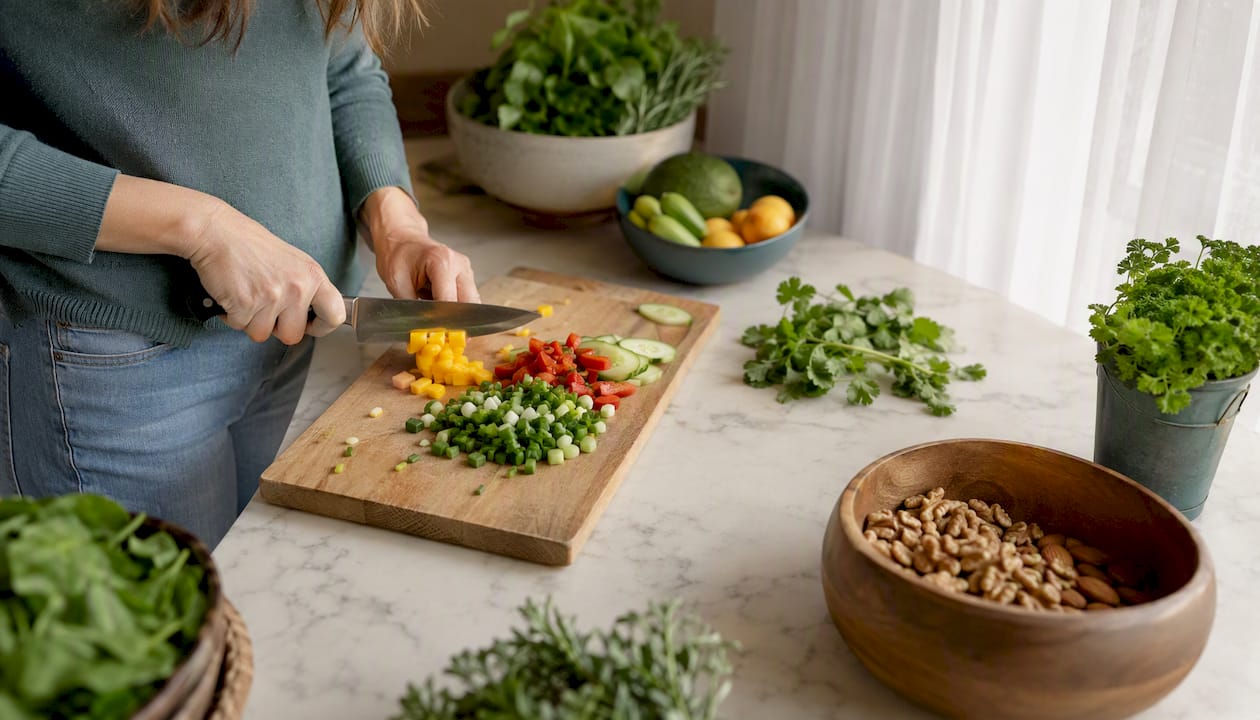
The single most effective shift you can make is this: eat together, follow a simple plate rule, and change one meal at a time. Research from Johns Hopkins Medicine confirms that regular family meals are associated with higher intake of calcium-rich foods, fruits and vegetables, fiber, folate, and vitamins A, C, E, and B6. You do not need a complete overhaul. You need a starting point.
Your 3-step quick start for this week:
Pick one meal (breakfast or dinner) and commit to eating it together as a family, screens off.
Apply the half-plate rule: fill half the plate with fruits or vegetables, a quarter with whole grains, a quarter with protein.
Make one small swap — replace a sweetened drink with water, or swap a packaged snack for fruit and a handful of nuts.
High-impact micro-actions to layer in over the next two weeks:
Swap soda or juice for sparkling water with a slice of fruit
Offer water first before any meal or snack
Plan one meatless dinner per week using beans or lentils
Involve kids in one cooking task per meal (stirring, washing, measuring)
Plan at least one full week of dinners before grocery shopping
Turn off screens during dinner, every night
Keep a fruit bowl on the counter and cut vegetables at eye level in the fridge
Replace one convenience snack with a whole-grain and protein pairing
The CDC confirms that healthy eating supports children’s growth and development and, when combined with family routines, can reduce risk factors for chronic disease. These ways to improve family eating habits are not about perfection. They are about building a pattern your family can sustain.
Key Takeaways
Eating together regularly, following the half-plate rule, and changing one meal at a time are the three most effective and sustainable ways to improve family eating habits.
Point | Details |
Eat together regularly | Family meals are linked to higher intake of fruits, vegetables, fiber, and key vitamins. |
Use the half-plate rule | Fill half the plate with fruits or vegetables, a quarter with whole grains, a quarter with protein at every meal. |
Change one meal at a time | Start with breakfast or dinner; overhauling everything at once leads to burnout and abandoned plans. |
Involve kids in cooking | Children who help prepare food are more willing to eat it; start with simple tasks matched to their age. |
Coachjillbyrne for structure | Personalized habit-based coaching provides the accountability and meal planning support that makes changes stick. |
Table of Contents
1. Build a kitchen and daily routine that makes healthy choices automatic
2. Plan meals and shop strategically so healthy food is always available
3. Get kids involved in the kitchen and at the grocery store
5. Build lasting habits with small, consistent changes over time
6. Create a positive mealtime environment that the whole family looks forward to
7. Reduce processed and convenience food without creating conflict
8. When targeted nutrition coaching makes sense for your family
1. Build a kitchen and daily routine that makes healthy choices automatic
The most underrated strategy for improving family nutrition is not what you buy — it is how you set up your kitchen and daily schedule. When healthy food is visible and convenient, it gets eaten. When processed food is hidden or absent, it gets skipped.
Kitchen setup:
Keep a fruit bowl on the counter at all times (bananas, apples, oranges)
Store cut vegetables (carrots, celery, bell pepper strips) in a clear container at the front of the fridge
Move chips, cookies, and sugary cereals to a high shelf or out of the house entirely
Keep a water pitcher or filtered water bottle on the counter so water is the default drink
Healthy swaps that stick:
Sweetened beverage → sparkling water with lemon or frozen berries
White bread → 100% whole-wheat bread (look for “whole wheat” as the first ingredient)
Flavored yogurt → plain Greek yogurt with fresh fruit and a drizzle of honey
Packaged crackers → whole-grain crackers with hummus or nut butter
Sugary breakfast cereal → whole-grain cereal with less than 5 grams of sugar per serving, paired with low-fat milk and fruit
Pro Tip: The one-swap rule works better than a full pantry purge. Choose one item to replace this week and do not move to the next swap until the first one feels normal. Visible placement seals the deal — healthy food at eye level gets eaten three times more often than food stored out of sight.
Meal timing and routine:
Set consistent meal and snack times so children are not grazing all day (grazing dulls hunger cues)
Offer snacks on a schedule: mid-morning and mid-afternoon, not on demand
Avoid skipping meals, which leads to overeating at the next one
Hydration:
Common Drink | Healthier Replacement |
Sweetened soda | Sparkling water with fruit slices |
Fruit juice | Whole fruit + plain water |
Flavored sports drink | Water with a squeeze of citrus |
Sweetened iced tea | Unsweetened herbal iced tea |
Flavored milk (high sugar) | Plain low-fat milk |
The American Heart Association recommends replacing sweetened beverages as one of the highest-impact daily changes a family can make. Sugary drinks add calories without nutrition and are strongly linked to excess weight gain in children. Water first, every time.
2. Plan meals and shop strategically so healthy food is always available
Healthy meal planning is the backbone of consistent family nutrition. Families who plan their meals before shopping spend less, waste less, and eat better. The goal is to make the healthy choice the easy choice before anyone is hungry and tired.
Step-by-step grocery strategy:
Check your pantry and fridge before writing a list — avoid buying duplicates
Plan meals around your actual weekly schedule (two low-prep nights, one batch-cook night)
Write a full shopping list organized by store section before you leave the house
Shop the perimeter of the store first: produce, proteins, dairy, whole grains
Avoid junk-food aisles when children are with you — what they do not see, they do not request
HealthyChildren.org advises treating grocery shopping as a strategic task: use a list, shop when not hungry, and choose frozen or canned produce with no added sugar or salt when fresh is not available or affordable. Frozen and canned vegetables retain their nutrients and are a practical, budget-friendly alternative to fresh.
Pantry staples to keep stocked:
Frozen vegetables (broccoli, peas, corn, edamame)
Canned beans (black beans, chickpeas, lentils — no added salt)
Whole grains (brown rice, oats, whole-wheat pasta, quinoa)
Eggs
Canned fish (tuna, salmon in water)
Nut butters (no added sugar)
Low-sodium canned tomatoes
Label literacy in 30 seconds:
Whole grain: “whole wheat” or “whole grain” must be the first ingredient
Added sugar: look for it in the ingredients list under names like cane sugar, corn syrup, dextrose, or fructose; aim for less than 6 grams of added sugar per serving for children’s foods
Sodium: choose products with less than 140 mg per serving when possible
Statistic to know: Harvard’s Food Fun Family guide recommends choosing whole-grain cereals with less than 5 grams of sugar per serving — a practical benchmark you can apply in the cereal aisle in seconds.
Quick weekly shopping list template:
Proteins: chicken thighs, eggs, canned beans, canned tuna
Grains: oats, brown rice, whole-wheat bread, whole-wheat pasta
Produce: bananas, apples, baby carrots, spinach, broccoli, bell peppers
Dairy: plain Greek yogurt, low-fat milk, shredded cheese
Pantry: olive oil, canned tomatoes, low-sodium broth, nut butter
For a detailed pantry staples checklist organized by category, that resource walks through exactly what to keep on hand and how to store it.
3. Get kids involved in the kitchen and at the grocery store
Children who help prepare food are more willing to eat it. That is not a theory — it is a consistent pattern that nutrition educators and pediatric dietitians observe across age groups. Involvement builds ownership, and ownership builds acceptance.
Age-based involvement ideas:
Toddlers (2–4): Wash fruits and vegetables, tear lettuce, stir batters, place items in a bowl
School-age (5–10): Measure ingredients, peel vegetables, assemble sandwiches or wraps, set the table
Tweens and teens (11+): Follow a simple recipe independently, plan one weekly dinner, help write the shopping list
At the grocery store, give children a small job: let them pick one new vegetable to try, find the whole-grain bread, or choose between two fruit options. This shifts the dynamic from passive passenger to active participant.
The Division of Responsibility is a framework developed by dietitian Ellyn Satter that many pediatric nutrition programs use. The parent controls what food is offered, when it is served, and where eating happens. The child controls whether to eat and how much. Implementing this boundary reduces pressure at the table and normalizes appetite cues over time, which is especially helpful for picky eaters.
Tactics for picky eaters:
Offer a new food alongside two familiar favorites — no pressure to eat it
Serve new foods in small amounts (one tablespoon) so the visual is not intimidating
Use family-style serving for older children so they can self-select; for toddlers, adult-plated portions tend to produce more balanced eating
Never use food as a reward or punishment — this creates unhealthy associations
Pro Tip: Repeated exposure without pressure is the most reliable way to expand a child’s food acceptance. Harvard’s Food Fun Family guide notes that it can take months of gentle, no-pressure exposure before a child accepts a new food. Offer it, move on, and offer it again next week.
Pro Tip: Cook one meal for the whole family, not separate “kid food.” Offer a safe familiar item alongside the new dish so no child goes hungry, but do not become a short-order cook.
Pro Tip: Let kids name dishes. “Dad’s Saturday Soup” or “Emma’s Taco Night” creates identity and anticipation around healthy meals.

For deeper guidance on teaching children healthy eating habits that last beyond childhood, that resource covers age-appropriate strategies in detail.
4. Use the half-plate rule at every meal
The MyPlate framework from the USDA recommends filling half your plate with fruits and vegetables, one quarter with whole grains, and one quarter with protein. It is the simplest, most research-supported plate rule available, and it requires no measuring cups or calorie counting.
What the plate looks like in practice:
Half: roasted broccoli and a side salad, or sliced fruit and steamed green beans
Quarter: brown rice, whole-wheat pasta, or a slice of whole-grain bread
Quarter: grilled chicken, baked salmon, eggs, beans, or tofu
Practical portion cues (no scale needed):
A protein serving for adults: roughly the size of your palm
A grain serving: about the size of a closed fist
A vegetable serving: at least one cupped hand, ideally two
A fat serving (olive oil, nut butter): about the size of your thumb
For children, portions are naturally smaller. A general rule: one tablespoon of each food per year of age for toddlers (a 3-year-old gets roughly 3 tablespoons of each item). School-age children self-regulate reasonably well when a variety of foods is offered without pressure.
A note on plating for young children: For toddlers and children under 5, adult-plated meals tend to produce more balanced eating than family-style self-serving. Johns Hopkins Medicine notes that younger children who self-serve tend to concentrate on preferred items and overfill their plates with them. Plate the meal for them, then let them decide how much of each item to eat.
MyPlate Kitchen also offers free, practical recipes and meal planning tools built around this model — a useful starting point for families building a healthy weekly meal plan.
5. Build lasting habits with small, consistent changes over time
Overhauling an entire family’s diet at once is one of the fastest paths to burnout. University of Arizona Cooperative Extension recommends improving one meal at a time, starting with breakfast or dinner, as the most sustainable approach to lasting dietary change. Small wins compound.
A 4–8 week habit-building sequence:
Week 1–2: Fix one meal. Commit to a consistent, balanced breakfast every day (oats with fruit, eggs with whole-grain toast, yogurt parfait).
Week 3–4: Add a family dinner routine. Eat together at least four nights per week, screens off.
Week 5–6: Introduce one new vegetable or whole grain per week. No pressure to love it immediately.
Week 7–8: Tackle snacks. Replace one packaged snack with a fruit-and-protein pairing for every family member.
Simple household rules that support consistency:
Water is the default drink at every meal
Screens off during dinner, every night
One dessert night per week (Friday works well for most families)
No food eaten in front of the TV or in bedrooms
Everyone tries one bite of everything on the plate (no forced eating beyond that)
Pro Tip: When a busy week derails the plan, the recovery rule is simple: the next meal is a fresh start. All-or-nothing thinking (“we already had fast food twice this week, so the week is ruined”) is the most common reason families abandon progress. One off-meal does not erase a week of good choices. Reset at the next meal, not the next Monday.
For a structured framework on rebuilding healthy eating routines after setbacks, that resource covers the behavioral steps in detail.
6. Create a positive mealtime environment that the whole family looks forward to
The physical and social environment at mealtimes shapes eating behavior as much as the food itself. Families who eat together regularly, without screens, in a calm setting tend to eat more nutritious food and less of it in a single sitting.
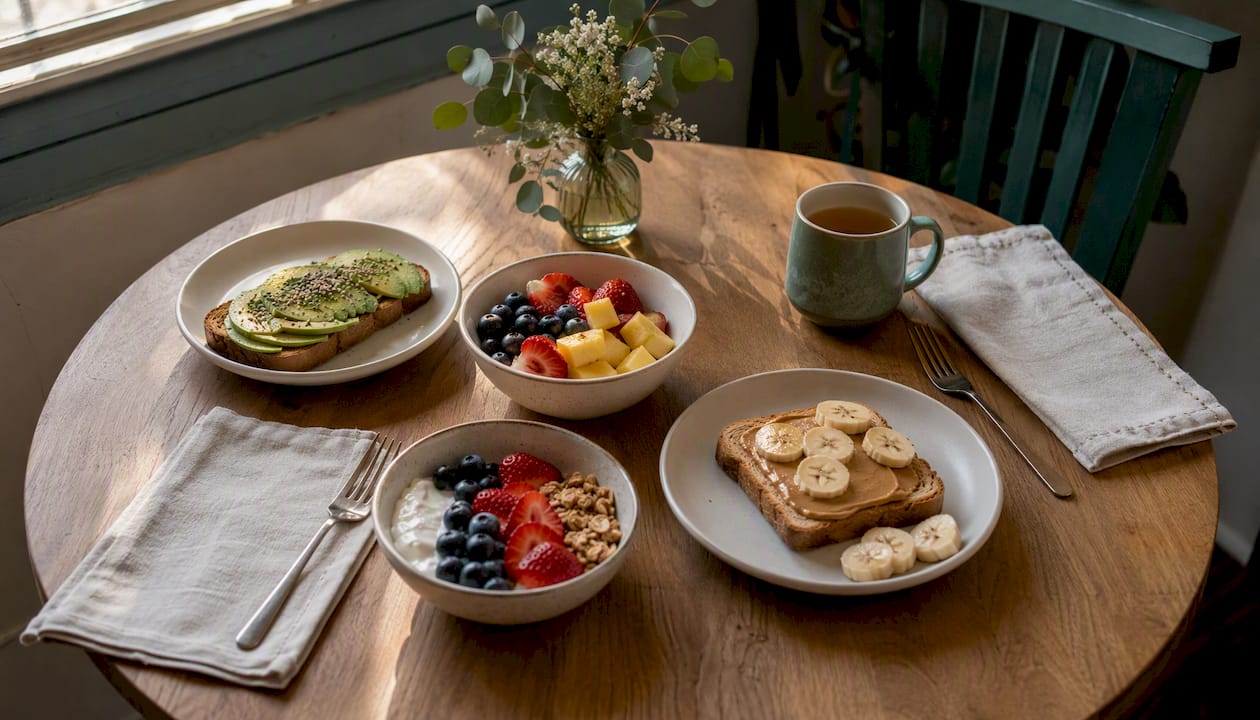
Screens at the table are a concrete problem: distracted eating disconnects children (and adults) from hunger and fullness cues, which leads to overeating. A simple rule — phones and tablets in another room during dinner — removes the friction entirely.
Conversation matters, too. Meals where family members talk about their day, share opinions, or even discuss the food itself create positive associations with the table. Children who associate mealtimes with connection rather than conflict are more likely to try new foods and eat a wider variety.
A few structural habits that reinforce a positive environment:
Eat at a table, not on a couch or in front of a screen
Keep the mood neutral around food — no commenting on how much or how little anyone eats
Involve children in setting the table so they feel part of the ritual
Aim for at least four shared dinners per week as a starting target
The home cooking connection is also worth noting: meals prepared at home consistently contain more fruits, vegetables, and whole grains than restaurant or fast-food meals, and they give parents direct control over ingredients, portions, and sodium levels.
7. Reduce processed and convenience food without creating conflict
Processed and convenience foods are not the enemy — they are a reality for busy families. The goal is not elimination but reduction, and the most effective approach is substitution rather than restriction.
When a family relies heavily on packaged meals, frozen pizza, or drive-through dinners, the shift toward home cooking works best when it is gradual. Replace one convenience meal per week with a home-cooked alternative. Over two months, that is eight meals shifted — a meaningful change without a dramatic overhaul.
Practical substitution targets:
Frozen pizza night → sheet-pan chicken with roasted vegetables (same effort, 20 minutes)
Drive-through breakfast → overnight oats prepared the night before
Packaged mac and cheese → whole-wheat pasta with olive oil, parmesan, and frozen peas
Deli meat sandwiches → egg salad or tuna on whole-grain bread with spinach
Cooking more at home also reduces sodium dramatically. Most packaged and restaurant meals contain far more sodium than home-cooked equivalents, even when the home version uses seasoning generously. For families with children, lower sodium intake during childhood tends to support healthier blood pressure patterns into adulthood.
The dental health connection is another practical reason to reduce sugary convenience foods: frequent sugar exposure from packaged snacks and sweetened drinks is a leading driver of tooth decay in children, making nutrition choices a dental health issue as much as a dietary one.
8. When targeted nutrition coaching makes sense for your family
Some families hit a wall that practical tips alone do not resolve. Persistent picky eating that limits a child’s nutrition, complex medical needs (food allergies, diabetes, GLP-1 medication use), significant weight concerns, or simply a schedule so demanding that meal planning feels impossible — these are situations where structured coaching provides what a checklist cannot.
A nutrition coach working with a family typically provides:
A personalized meal plan built around the family’s actual schedule, preferences, and budget
Habit-based goal setting with weekly check-ins to track progress and adjust
Portion training so parents understand appropriate serving sizes without weighing food
Accountability support that keeps families on track through busy weeks and setbacks
GLP-1 nutrition support for parents managing weight loss with medication who need guidance on protein, hydration, and meal timing
What to expect in an initial coaching engagement:
A full dietary and lifestyle assessment (current eating patterns, schedule, food preferences, goals)
A short, realistic 1–2 week starter plan with specific meals and snack ideas
A check-in at the end of week one to troubleshoot and adjust
Clear metrics to track (not just weight — energy, vegetable servings, family meals per week)
Coaching is not a replacement for a pediatrician or registered dietitian when a child has a diagnosed medical condition. For general family nutrition improvement, however, a habit-based coach provides the structure and accountability that most families need to move from knowing what to do to actually doing it consistently.
9. Try this one-week dinner plan and snack pairings
Decision fatigue is one of the biggest barriers to healthy family meals. A repeatable weekly template removes it. The plan below follows a simple structure: protein + grain + vegetable, with two low-prep nights and one leftovers night built in.
Day | Dinner | Key Shortcut |
Monday | Sheet-pan chicken thighs + roasted broccoli + brown rice | Prep rice in a rice cooker; roast everything on one pan |
Tuesday | Slow-cooker black bean soup + whole-grain bread | Start in the morning; zero active cook time at dinner |
Wednesday | Whole-wheat pasta + turkey meat sauce + side salad | Double the sauce and freeze half for next week |
Thursday | Leftovers from Monday or Tuesday | No cooking required |
Friday | Baked salmon + quinoa + steamed green beans | 20-minute meal; salmon bakes while quinoa cooks |
Saturday | Homemade tacos: ground turkey + corn tortillas + shredded cabbage + salsa | Kids assemble their own — built-in involvement |
Sunday | Egg frittata + whole-grain toast + sliced fruit | Budget-friendly; uses up remaining produce |
For more kid-friendly healthy dinner ideas that follow this same low-prep template, that resource includes additional recipes with simple ingredient lists.
Snack pairings (fruit/vegetable + whole grain or protein):
Apple slices + almond butter
Baby carrots + hummus
Plain Greek yogurt + fresh berries
Whole-grain crackers + low-fat cheese
Banana + a small handful of walnuts
Celery sticks + peanut butter
Hard-boiled egg + a piece of fruit
A balanced snack combines at least one fruit or vegetable with a whole grain or protein source. A cup of whole-grain cereal (under 5 g sugar) with low-fat milk and fresh fruit is a practical example that works for both children and adults.
Compact shopping list for the week above:
Proteins: chicken thighs, ground turkey, salmon fillets, eggs, canned black beans
Grains: brown rice, whole-wheat pasta, quinoa, whole-grain bread, corn tortillas
Produce: broccoli, green beans, cabbage, salad greens, fruit of choice, baby carrots
Dairy: low-fat milk, plain Greek yogurt, shredded cheese
Pantry: canned tomatoes, low-sodium broth, salsa, olive oil, nut butter
What realistic progress actually looks like for families
Most parents expect too much too soon and too little over time. The families who see lasting change are not the ones who overhaul everything in January — they are the ones who fix breakfast in week one, add a family dinner in week three, and quietly replace chips with apple slices by week six. Progress measured in months looks unremarkable week to week and significant at the three-month mark.
Perfection is not the standard. A week with four home-cooked dinners instead of seven is still a better week than one with zero. A child who tries a new vegetable and spits it out has still made progress — that exposure is doing its work even when it does not look like it. Rebuilding healthy eating routines after a setback is a skill, not a failure.
The one-week challenge: try the 3-step quick start from the opening of this article. Eat one meal together as a family, apply the half-plate rule at that meal, and make one swap. That is it. Two to eight weeks of consistently applying that pattern is where the shift becomes a routine.
Personalized coaching that fits your family’s real life
Knowing what to do and consistently doing it are two different problems. Coachjillbyrne addresses the second one. Rather than handing families a generic meal plan and wishing them luck, the coaching approach is habit-based and built around your actual schedule, your children’s preferences, and your specific goals — whether that is weight management, GLP-1 medication support, or simply getting more vegetables on the table without a battle.

A first session with Coachjillbyrne includes a full dietary and lifestyle assessment, a realistic starter meal plan, and a check-in within the first week to adjust what is not working. Ongoing support covers portion training, accountability, and meal planning guidance that evolves as your family’s needs change. Clients consistently report that the accountability structure is what finally makes the difference between knowing the right habits and actually building them.
Ready to get structured support for your family’s nutrition? Book a session with Coach Jill and get a personalized plan built around your family’s real life.
Sources
These public-health and academic resources provide the evidence base for the guidance in this article:
This article is general information, not a substitute for advice from a qualified doctor. Consult a qualified healthcare professional about your own circumstances before acting on anything here.
FAQ
What is the 80% rule in eating?
It is a practical mindful-eating habit that helps prevent overeating at family meals.
What is the 3-3-3 rule for eating?
The 3-3-3 rule is not a standardized nutrition framework with a single definition; the term is used differently across sources. A common family-focused version suggests offering three food groups at each meal, three meals per day, and three scheduled snacks — a structure that supports consistent energy and reduces grazing.
How will you practice healthier eating habits with your family?
Start with one shared meal per day, apply the half-plate rule (half fruits and vegetables, quarter whole grains, quarter protein), and make one food swap per week. Consistency over two to eight weeks is what turns these steps into routine.
How can you help a family member who struggles to eat nutritious food?
Remove barriers rather than adding pressure: keep healthy food visible and accessible, involve them in choosing and preparing meals, and offer new foods alongside familiar ones without forcing them. For persistent challenges tied to medical needs or significant picky eating, a habit-based nutrition coach can provide a structured, personalized plan.
What are the most effective ways to improve family eating habits long-term?
Eating together regularly, planning meals before shopping, involving children in food preparation, and changing one habit at a time are the most consistently effective strategies. Personalized coaching through a program like Coachjillbyrne adds the accountability layer that helps families maintain progress through busy weeks and setbacks.
Recommended
Comments